

Maddy summaryHF 3308 creates a new civil lawsuit option for individuals who experience nonconsensual condom removal during sexual activity. The bill defines "sexual battery" as contact with intimate parts after a condom is removed without consent, allowing victims to seek damages including up to $10,000 in civil penalties, attorney fees, and other remedies. It directly affects people who face nonconsensual condom removal and those who commit such acts. The law takes effect August 1, 2025, and provides confidential court filings to protect plaintiff privacy.
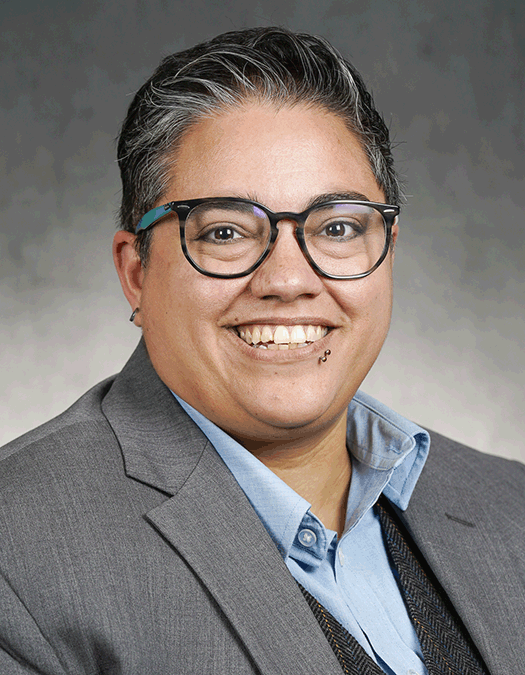
Rep. Brion Curran
Sponsored bills
Maddy summaryThis bill (HF 3262) removes the requirement for teacher candidates to complete the edTPA performance assessment (Section 1) and mandates that student teachers be placed within 30 miles of their preferred location or school site (Section 2). It directly affects teacher candidates, teacher preparation programs, and the Professional Educator Licensing and Standards Board. The bill requires the Board to amend state rules to eliminate the edTPA requirement and to establish the 30-mile placement rule, with exceptions only if both the program and candidate agree to a different placement. These changes represent concrete policy shifts in teacher education requirements.
Maddy summaryHF 382 modifies how Minnesota calculates wage rates for staff in disability waiver programs, directly affecting providers serving people with disabilities and their employees. The bill establishes new percentage-based formulas using median wages for specific job titles (e.g., 15% of home health aide wages + 30% of nursing assistant wages for residential direct care staff) instead of previous calculations. It affects 17 staff categories including residential care, employment support, and positive supports roles. The changes take effect January 1, 2026, or after federal approval, and amend Minnesota Statutes 256B.4914.
Maddy summaryHF 3294 is a non-binding resolution passed by the Minnesota House of Representatives. It urges the President and Congress to fully fund Medicaid and oppose federal funding cuts, directly affecting Minnesota's 1.2 million Medicaid beneficiaries - including children (41% covered), seniors, people with disabilities, and communities of color (covering 80-90% of Black and American Indian births). The resolution has no new funding mechanisms or state policy changes; it solely requests federal action. It does not impose new requirements or alter existing Medicaid programs.
Maddy summaryHF 124 allows living public safety officers (including police, firefighters, and emergency responders) to accept certain gifts, such as money, property, plaques, or services, when a fellow officer is killed in the line of duty. The bill requires that gifts be given within 24 months of the death, honor or commemorate the fallen officer, and support team morale. This applies to officers employed by the same agency or political subdivision as the deceased officer. The bill amends Minnesota Statutes to permit these gifts without violating existing gift acceptance rules.
Maddy summaryHF 3261 appropriates $20 million from the general fund for fiscal year 2026 to support teacher candidates during student teaching. The bill creates a stipend program providing $15 or more per hour directly to candidates completing at least 12 weeks of student teaching in approved teacher preparation programs. Nonprofit organizations will administer the funds and disburse stipends without affecting students' financial aid packages. This one-time funding targets teacher candidates in Minnesota, aiming to reduce financial barriers during their training.
Maddy summaryHF 2289 requires Minnesota hospitals to maintain registered nurse staffing levels consistent with nationally accepted standards, ensuring adequate care for patients. Hospitals must create and implement staffing plans specifying maximum patient-to-nurse ratios for each unit, developed with input from direct-care registered nurses, and report these levels to the state. The bill prohibits retaliation against nurses who raise staffing concerns and imposes civil penalties for noncompliance. It directly affects all licensed Minnesota hospitals, their nursing staff, and patients by mandating safer staffing practices. The law appropriates funding to support implementation of these requirements.
Maddy summaryHF 104 makes statements and documents created during restorative justice practices (like conferences or circles) inadmissible in court. It protects confidentiality for all participants - including those who caused harm, those harmed, and community members - and classifies their personal data as private. The bill prohibits using such statements or data in legal proceedings unless exceptions apply, such as preventing serious harm or crime. This directly affects individuals participating in Minnesota's restorative justice programs by ensuring their discussions remain confidential during the process.
Maddy summaryHF 1354 requires Minnesota's Bureau of Criminal Apprehension to make publicly available, within 30 days of case closure, video footage documenting officer-involved death investigations that is already public under other laws. It specifically limits the scope of video shared to only footage recording actions and circumstances surrounding the incident. The bill also mandates an annual report to state leaders by February 1st detailing investigation statistics, outcomes, and charging decisions. This affects the Bureau of Criminal Apprehension and the public accessing these records. The bill amends Minnesota Statutes 2024, section 299C.80, subdivision 6.
Maddy summaryHF 2196 updates Minnesota's mental health terminology in state law to use more current and person-centered language. It specifically revises definitions of terms like "mental illness" and "emotional disturbance" across multiple statutes to align with modern clinical standards. The bill requires health plans to cover prescribed antipsychotic drugs for these conditions without special deductibles or co-payments, and allows patients to continue essential medications for up to one year during health plan changes or formulary updates. These provisions directly affect health insurance companies and Minnesotans receiving mental health treatment covered by insurance.