

Maddy summaryThis bill modifies how early retirement reductions are calculated for teachers in Minnesota's Teachers Retirement Association, affecting educators who retire before reaching normal retirement age. It changes the reduction rate from one-quarter of one percent per month to a more gradual decrease, while also maintaining a special provision for members with 30 or more years of service credit who can retire without age-based reductions. The legislation also adjusts pension adjustment revenue for school districts, setting specific contribution rates for different years and allowing cooperative units to qualify for funding like regular districts. These changes take effect on July 1, 2026, and aim to provide more predictable retirement benefits for teachers while managing state pension costs.
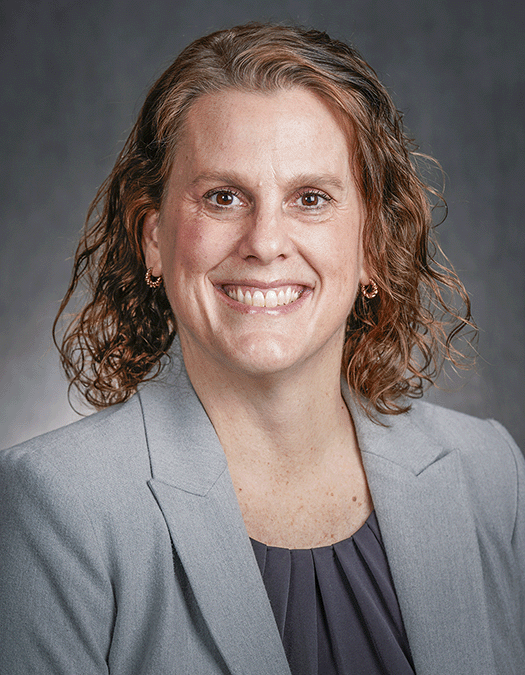
Rep. Kari Rehrauer
Sponsored bills
Maddy summaryHF 3555 establishes rules for small, portable solar panels (under 1,200 watts) that homeowners can install to offset personal electricity use. The bill exempts these plug-in solar devices from requiring utility connection agreements, net metering rules, and additional fees or approvals. It also clarifies that utilities cannot be held liable for damage caused by these devices. This directly affects residential users seeking simple, low-barrier solar energy solutions without utility bureaucracy. The bill creates specific definitions and exemptions within Minnesota's energy code for these devices.
Maddy summaryHF 3806 authorizes Minnesota to issue up to $200 million in housing infrastructure bonds for projects like affordable housing development and repairs. It requires annual transfers from the state general fund to a dedicated bond account, with specific yearly limits (ranging from $800,000 to $6.4 million) depending on the bond series. These transfers will occur each July 15 from 2028 through 2049 for the new bonds authorized under this bill. The funds will support housing infrastructure initiatives managed through the state’s housing finance program, directly affecting projects eligible for these bond-funded resources.
Maddy summarySF 2691 establishes clear standards for rent, utility charges, and fees in Minnesota manufactured home parks. It requires uniform rent rates (except for lot size/location or special services), prohibits fees based on household size, guests, home size, or occupancy, and mandates itemized billing for utilities. The bill also requires park owners to address safety hazards like dangerous trees within 14 days of resident notice and gives residents 60 days' written notice before rent increases. These changes directly affect manufactured home park residents and owners by increasing transparency and limiting arbitrary charges.
Maddy summaryHF 3328 requires Minnesota's Department of Education to increase awareness of library services for blind and print-disabled individuals. The bill mandates the department to develop an accessible online website with statewide resources and consult with agencies like Employment and Economic Development, Health, and Human Services to promote these services. It specifically directs the department to coordinate with the Minnesota Braille and Talking Book Library and its advisory committee to ensure resources reach blind and print-disabled Minnesotans. This bill directly affects blind and print-disabled residents by improving access to library services and related support programs.
Maddy summaryHF 2377 requires all Minnesota public, private, and charter school staff - including teachers, administrators, and support personnel - to have access to annual, evidence-based relationship-building and de-escalation training. The training focuses on fostering inclusive school cultures, preventing conflicts, and responding appropriately to escalated situations, with specific components covering positive student relationships, restorative discipline, and recognizing escalation stages. The bill appropriates $ for fiscal year 2026 to fund grants for school districts and charter schools implementing this training, prioritizing districts that meet state requirements. Schools adopting the training may receive priority for state professional development funding.
Maddy summaryThis bill requires Minnesota school districts and charter schools to adopt evidence-based safety plans that are developed with input from students, parents, teachers, and law enforcement. It establishes a new anonymous threat reporting system and creates a School Safety Center at the Department of Public Safety to provide model plans and consulting services to schools. The legislation also modifies rules regarding when firearms are allowed on school property and provides additional funding for student support personnel.
Maddy summaryHF 3776 prohibits publicly funded preschool and kindergarten programs in Minnesota from allowing children to use individual screens (like tablets or smartphones) during school hours. The bill specifically bans screen use without teacher engagement or peer interaction, applying to all children except those with an active individualized education plan (IEP), 504 plan, or individualized family service plan. It does not restrict screen use for educational purposes under teacher supervision. The law would take effect on July 1, 2026, for all covered programs.
Maddy summaryThis bill creates a state program to ensure all pedestrian crossings in Minnesota comply with the Americans with Disabilities Act by December 31, 2035. The Department of Transportation is required to inventory every crosswalk, categorize their compliance status, and maintain a public database tracking these updates. Local road authorities may receive grants to inspect and repair noncompliant crossings, with priority given to smaller communities and lower-income areas. The measure also appropriates funds and authorizes state bonds to finance these accessibility improvements.
Maddy summaryThis bill proposes a tax on plastic bottles containing less than three liters of beverage in Minnesota to raise funds for water infrastructure projects. The tax would be levied on distributors who sell these bottles to retailers, with the revenue collected in a dedicated state account managed by the Public Facilities Authority. Money in this account can only be used to finance specific water-related projects approved by the authority, and the tax is scheduled to begin on January 1, 2027, with provisions set to expire in 2031.