

Maddy summaryThis bill establishes a Minnesota rebate program to help businesses, nonprofits, government entities, and tribes cover costs for installing geothermal heating systems in commercial or multifamily buildings. Rebates cover up to 15% of system costs (capped at $100,000 per project) for applicants who have applied for or received federal rebates under the Inflation Reduction Act. Priority is given to low-income housing projects owned by nonprofits or government entities. The program is funded through state appropriations from the renewable development account (for utility service areas) and general fund (outside those areas), with funds expiring in 2033.
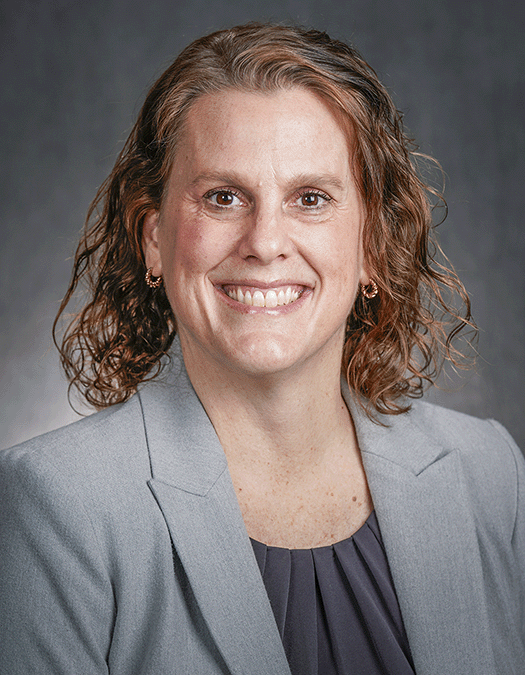
Rep. Kari Rehrauer
Sponsored bills
Maddy summaryHF 3349 requires Minnesota public and charter high schools to permit students in grades 9-12 to possess and administer opiate antagonists (like naloxone) to other students experiencing an opioid overdose. The bill directly affects high school students and school districts by mandating this policy change. Key provisions include requiring schools to allow student possession/administration of these life-saving drugs and extending legal protections under section 604A.04 to cover this activity. The law aims to make overdose reversal more accessible in school settings without adding new administrative burdens to schools.
Maddy summaryMinnesota bill HF 3514 designates February 13 each year as "Anti-Bullying, Anti-Harassment, and Defamation Awareness Day" to highlight these issues affecting students, employees, and community members. The bill encourages schools, employers, state agencies, and community organizations to hold educational activities on this day, such as training or campaigns addressing bullying, harassment, and reputational harm from false statements. It defines key terms (bullying, harassment, defamation) for clarity but explicitly states it does not create new legal claims, alter existing defamation laws, or affect free speech protections. This is a symbolic observance with no new funding or mandatory requirements.
Maddy summaryHF 3610 modifies Minnesota's law on concealing identity in public places. It makes it generally illegal to hide one's identity using a robe, mask, or disguise in public (except for religious reasons, entertainment, weather protection, smoke/gas protection, or medical treatment), with a misdemeanor penalty. The bill specifically adds two exceptions for law enforcement: undercover officers may conceal their identity when necessary for investigations or safety, and tactical team members may use face masks to prevent facial disfigurement during operations. This change affects the public generally and law enforcement officers performing specific duties under defined circumstances.
Maddy summaryHF 3668 establishes an Office of Gun Violence Prevention within Minnesota's Department of Health. The office will coordinate prevention efforts, collect and report statewide data on gun incidents/deaths, conduct research, create public health campaigns, and support victims - working with agencies like Public Safety. It requires an annual report to legislative committees by February 15 each year. The bill appropriates unspecified funding from the general fund for the office's operations in fiscal years 2026 and 2027.
Maddy summaryHF 3357 would prohibit the possession of dangerous weapons (including guns, ammunition, or explosives) in Minnesota's Capitol complex buildings, making it a felony punishable by up to five years in prison or a $10,000 fine. The bill specifically applies to state buildings within the Capitol Area described in chapter 15B, excluding the National Guard Armory. Key exemptions include licensed peace officers on duty, permit holders who notify law enforcement, individuals displaying weapons as evidence with sheriff approval, and retired officers working in security roles under specific federal rules. The law would take effect on August 1, 2026, and directly affects anyone entering Capitol complex buildings, with limited exceptions for authorized personnel and specific lawful activities.
Maddy summaryHF 3460 appropriates $4 million from state bonds to fund a regional facility in Washington County for processing wood waste and trees affected by disease into sustainable products. The bill authorizes the state to issue bonds to cover this cost and directs the funds toward acquiring land, designing, constructing, and equipping the facility. This directly affects Washington County residents and local businesses by creating a dedicated processing site for waste materials. The key mechanism is the bond-backed appropriation, with the facility intended to convert waste into reusable resources rather than sending it to landfills.
Maddy summaryHF 1296 requires Minnesota's Board of Animal Health to post specific information online about kennels, dealers, and commercial breeders, including current license statuses, annual inspection records, and reasons for license revocations. It also mandates that all advertising for animal sales must include the seller's current license number or a link to it. The bill clarifies that most breeder data (like addresses and premises locations) remains private, but the Board may disclose it for public health, safety, or law enforcement purposes. These changes directly affect licensed breeders, dealers, and the public seeking transparency about animal facilities.
Maddy summaryHF 2491 creates a School Health Advisory Committee to advise Minnesota's governor and legislature on school health policies. The committee reviews policies affecting student health, identifies essential health data to collect, and establishes models for supporting students with chronic conditions like asthma or diabetes. It must report annually by January 15 on health needs and recommend improvements to school health services and funding streams. This bill directly affects Minnesota public schools, students (especially those with health conditions), and school health staff through new advisory and reporting requirements.
Maddy summaryThis bill provides $4 million in state funding for Minnesota food shelf programs during fiscal years 2026 and 2027. It directs the state agency overseeing food shelves to use these funds to support community food banks that serve people facing food insecurity. The money comes from the state general fund and is added to existing base funding for these programs. This directly affects food shelves across Minnesota and the families and individuals they serve.