

Maddy summaryThis bill requires health insurance plans in Minnesota to cover home care nursing services without imposing quantity limits on the number of visits or hours provided. It directly affects individuals enrolled in health plans who also receive medical assistance, ensuring they receive ongoing skilled nursing care without arbitrary caps on coverage. The legislation defines home care nursing services as continuous, medically necessary care that cannot be safely delivered through intermittent visits, and mandates that plans refer to these services by this specific name in all coverage documents. While cost-sharing like copayments may still apply, the bill prohibits plans from restricting coverage based on the total amount of services needed, with most provisions taking effect in 2026.
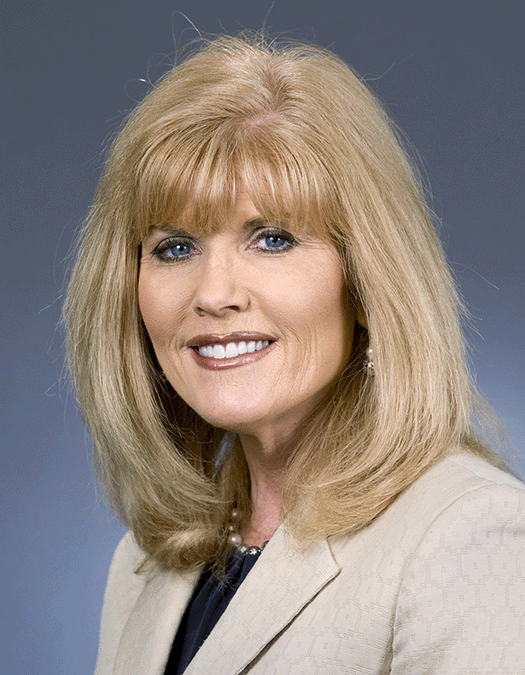
Rep. Peggy Scott
Sponsored bills
Maddy summaryThis bill requires nonemergency medical transportation providers in Minnesota to equip their vehicles with global positioning systems and rear-facing cameras, while also mandating that they compile trip information and keep recordings for two years. The law applies to private and public transportation companies that carry Minnesota health care program beneficiaries to medical appointments, but exempts public transit systems, volunteer drivers, and not-for-hire vehicles. Providers must also comply with existing wheelchair securement standards and background check requirements for their drivers, with the commissioner of transportation responsible for enforcing these safety and operational rules. The bill amends current statutes to establish these new technical and data retention standards for vehicles used in medical transportation services.
Maddy summaryHF 3395, the "Fraud Isn't Free Act," requires Minnesota state agencies administering public programs (like healthcare or education funding) to take specific actions when fraud occurs. If fraud is suspected, agencies must submit a corrective plan to lawmakers within 30 days, including steps to prevent future fraud, recover stolen funds, and fire employees directly responsible for the fraud. The bill also mandates suspending new enrollments in affected programs, reducing agency budgets, and reporting fraud totals to the budget office and legislative auditors. These provisions apply to all state programs using public funds, with definitions covering intentional deception like false claims or theft.
Maddy summaryHF 793 establishes a voluntary certification program for commercial salt applicators (businesses that apply deicers for hire on private property) in Minnesota. To become certified, applicators must complete approved training on water-friendly snow/ice removal practices, pass an exam, and renew every decade. Certified applicators gain limited liability protection if they follow approved best practices and avoid gross negligence, but must maintain detailed records of deicer use and submit annual reports to the Pollution Control Agency. The program aims to reduce environmental harm from excessive salt runoff while providing a clear standard for commercial snow removal services.
Maddy summaryThis bill removes the automatic revocation of a driver's license for failing to pay child support in Minnesota. It repeals specific state laws that previously mandated this penalty, allowing individuals to retain their driving privileges regardless of child support arrears. The legislation directly affects parents who owe child support and removes a mechanism that previously tied their ability to drive to their payment status. By eliminating these statutes, the bill changes how the Department of Public Safety handles license sanctions related to family law obligations.
Maddy summaryThis bill allocates $1,000,000 from the state's general fund to hire eight additional school safety specialists at the Minnesota School Safety Center for fiscal years 2026 and 2027. The funding is designated as a one-time appropriation that can be used until fully spent, with no restrictions on how the money is distributed among the new positions. This legislation directly affects the Minnesota School Safety Center and the public safety system by increasing the number of available safety personnel. The bill takes effect immediately upon final passage by the legislature.
Maddy summaryThis bill regulates the use of artificial intelligence in psychotherapy services in Minnesota, primarily affecting licensed mental health professionals and organizations that provide therapy. It defines specific categories of AI use, prohibiting AI systems from making independent therapeutic decisions or directly interacting with clients during therapeutic communication, while allowing AI for administrative tasks like scheduling, billing, and analyzing anonymized data. The legislation also establishes civil penalties for violations and clarifies that religious counseling and peer support services fall outside these restrictions.
Maddy summaryThis bill modifies how the state of Minnesota calculates registration taxes for passenger automobiles and hearses, directly affecting vehicle owners and dealers. It lowers the tax rate applied to the manufacturer's suggested retail price from 1.54% to 1.25% for cars registered before November 2020, and from 1.575% to 1.285% for newer vehicles, while also removing destination charges from the calculation for most cars. The legislation adjusts the percentage of the vehicle price used for tax purposes as the car ages, reducing the rate each year until it reaches a flat fee in the eleventh year. These tax changes are scheduled to take effect for registration periods beginning on or after January 1, 2027.
Maddy summaryThis bill clarifies what actions by public officers and employees in Minnesota count as misconduct, specifically including knowingly providing false information to the legislative auditor and failing to perform mandatory duties. It increases penalties for repeat offenders, raising the maximum prison sentence to three years or fines up to $5,000 for a second or subsequent violation. The legislation also extends the statute of limitations for prosecuting public misconduct and removes the offense from eligibility for automatic expungement, meaning convictions cannot be automatically sealed from public records. These changes take effect on August 1, 2026, and apply to crimes committed on or after that date.
Maddy summaryHF 12 restricts participation on female-designated sports teams in Minnesota K-12 schools to students identified as female at birth, based on specific medical criteria. It requires students in disputes about sex to provide a physician's statement confirming their sex using three factors: reproductive anatomy, natural testosterone levels, and chromosome analysis. The bill directly affects public and private schools offering girls' sports teams and students seeking to join them. It amends Minnesota education law to take effect July 1, 2025.