

Maddy summaryHF 1276 modifies Minnesota's Northstar Care for Children program to adjust benefit rates for two specific groups: children under age six entering kinship or adoption assistance, and children transferred into the program. It requires that most children under six receive 50% of the standard benefit rate upon entry, while children placed with relatives under certain placement preferences receive the full benefit amount. The bill amends statutes to clarify these rate changes and ensures state funding adjustments account for eliminating the reduced rate for relative placements. This directly affects young children in foster care or adoption assistance programs and their caregivers.
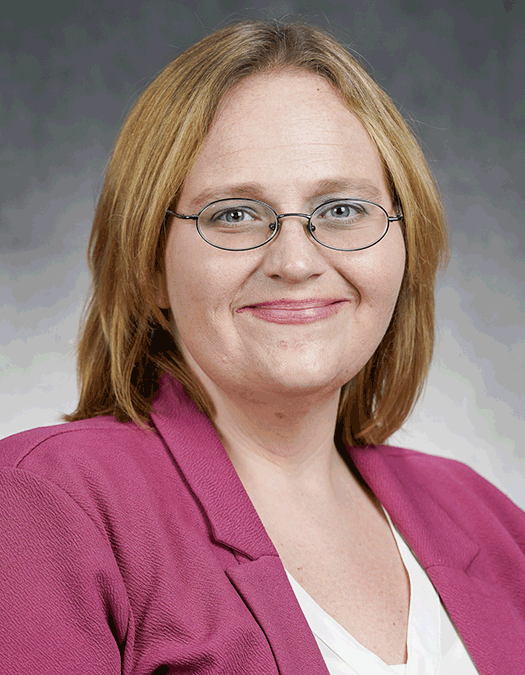
Rep. Kim Hicks
Sponsored bills
Maddy summaryHF 1543 appropriates $450,000 annually (2026-2027) to the Dyslexia Institute of Minnesota to provide free, evidence-based literacy interventions for students reading below grade level in public schools where most students qualify for free/reduced-price meals. The funds must cover tutor training, materials, program delivery, and administration. The Institute is required to submit annual reports to education committees by January 15 each year (until 2028), detailing how funds were used and progress in improving student literacy. This bill directly supports struggling readers in high-need school districts through targeted funding and accountability.
Maddy summaryHF 1600 appropriates $750,000 for fiscal year 2026 and $750,000 for fiscal year 2027 from the state general fund to provide a one-time grant to Comunidades Organizando el Poder y la Acción Latina (COPAL). The funding is designated for COPAL to support capacity building, worker center programming, youth workforce development, GED classes, career planning, educational resources, health services, training programs, and job navigation assistance. This bill directly affects COPAL as the recipient organization, enabling it to expand services for immigrant and Latinx communities in Minnesota. The appropriation is specific to these defined programs and does not create new state requirements or alter existing laws.
Maddy summaryHF 661 appropriates $750,000 for fiscal year 2026 and $750,000 for fiscal year 2027 from Minnesota's workforce development fund to provide grants to Bridges to Healthcare. The funding supports career training and job skills programs in high-demand healthcare fields for low-income parents, non-native English speakers, and other hard-to-train individuals. Grant funds cover program expenses like instructor salaries, facility rentals, and essential support services including childcare, transportation, and housing assistance to help participants complete training. This directly addresses workforce shortages in healthcare while helping participants build stable careers and improve economic security.
Maddy summaryHF 1424 modifies foster care rules for relatives in Minnesota. It expands the definition of "related" caregivers to include important friends with significant relationships to the child or family, requiring these relatives to obtain foster care licenses (unless they're parents or legal guardians). The bill also mandates that all foster care providers - both related and unrelated - complete annual training on preventing sudden infant death and abusive head trauma for children under five. Additionally, it updates background check procedures for domestic partners of relative caregivers and modifies the Minnesota Family Investment Program (MFIP) funding structure. These changes aim to strengthen safety standards while providing clearer pathways for relatives and trusted community members to care for children in foster care.
Maddy summaryHF 1427 requires ride-hailing companies operating in Minnesota to make at least 15% of their vehicles wheelchair accessible by 2026 and adopt clear nondiscrimination policies. Companies must pay a 15-cent surcharge per non-accessible ride (funded into a dedicated account), submit annual reports on accessibility metrics (like wheelchair vehicle availability and denial rates), and display fare information transparently before rides. This directly affects ride-hailing services and improves access for people with disabilities who rely on wheelchair-accessible transportation. Violations could result in civil penalties up to $15,000.
Maddy summaryHF 1414 appropriates $600,000 from the general fund for a one-time grant to Accessible Space, Inc. to make capital improvements to two low-income accessible housing properties in Rochester (1680 Eastwood Road SE and 3461 Kenosha Drive). The funding supports physical upgrades to existing housing units, not new construction or ongoing operations. This bill directly affects low-income residents living in these specific Rochester housing units by potentially improving their living conditions through the renovations. The appropriation is available until the project is completed or abandoned, per state statute.
Maddy summaryHF 1305 requires permit applicants for public events with over 1,000 attendees on Minnesota public property to include a written sensory-friendly accommodations plan. The plan must include at least one of four options: a designated sensory-friendly area, sensory-friendly design elements in the venue layout, mobile toolkits for sensory needs, or scheduled quiet times. Organizers must also describe how accommodations information will be communicated to attendees and how staff will handle requests. Noncompliance results in fines and ineligibility for future permits, effective July 1, 2025.
Maddy summaryHF 1326 appropriates $7,011,000 from the general fund for each of fiscal years 2026 and 2027 to provide grants to Centers for Independent Living (CILs) in Minnesota. These grants will support existing CILs operating under Minnesota Statutes section 268A.11, which provide community-based services and advocacy for people with disabilities. The funding directly affects CILs that help individuals with disabilities achieve greater independence in daily living, employment, and community integration. This is a funding measure with no new policy requirements, solely providing financial support for established services.
Maddy summaryThis bill modifies Minnesota's requirement for medical assistance applicants and recipients to identify third parties potentially responsible for their medical costs (like private insurance). It clarifies that cooperation includes providing information about third-party payers and group health plans, but explicitly states that coverage through the Minnesota Comprehensive Health Association (chapter 62E) cannot be considered group health plan coverage for this purpose. The change affects individuals receiving state medical assistance who must now help identify liable third parties, with the exclusion of the state health plan from being treated as a cost-effective group plan. The amendment updates Minnesota Statutes section 256B.056 to reflect these specific provisions.