

Maddy summaryHF 3436 requires drivers approaching a stopped school bus displaying flashing red lights to stop at least 20 feet away. The bill amends Minnesota Statutes section 169.444 to mandate this stop until the bus retracts its stop arm and turns off the red lights. It also adds a new provision requiring drivers to prepare to stop within 20 feet when a bus shows prewarning amber lights, signaling red lights are about to activate. This law directly affects all drivers operating vehicles near school buses in Minnesota, aiming to improve safety for children boarding or exiting buses. The bill takes effect the day after final enactment.
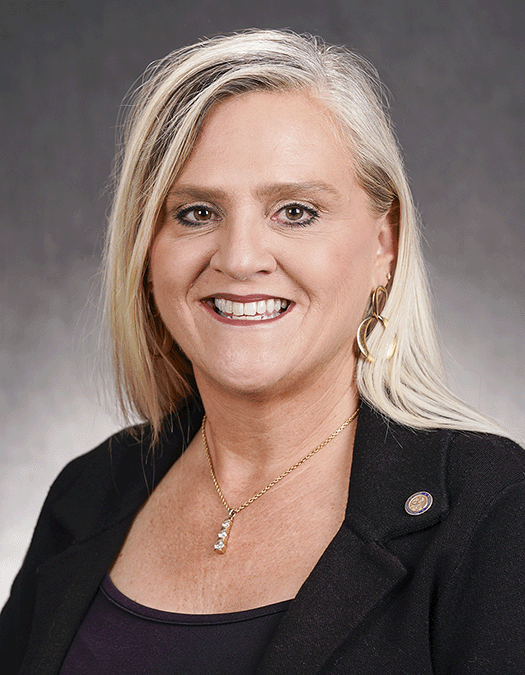
Rep. Pam Altendorf
Sponsored bills
Maddy summaryHF 3219, the "mRNA Bioweapons Prohibition Act," designates all mRNA-based medical products - including vaccines like those for COVID-19 - as "weapons of mass destruction" under Minnesota law. The bill prohibits possession, distribution, or manufacturing of these products, with criminal penalties for violations, and requires state/local officials to enforce the ban. It broadly defines "mRNA injections and products" to include any mRNA therapy, gene-altering agents, or nanoparticles, excluding only naturally occurring mRNA. The law takes effect August 1, 2025, and would directly affect individuals receiving mRNA-based medical treatments in Minnesota.
Maddy summaryHF 2081 removes income-based limits on deducting Social Security benefits from Minnesota state income tax. It eliminates the current phaseout thresholds and maximum deduction amounts (e.g., $5,840 for joint filers), allowing taxpayers to subtract the full amount of their Social Security benefits. This change applies to Minnesota residents receiving Social Security benefits who file state tax returns. The bill takes effect for taxable years beginning after December 31, 2024.
Maddy summaryThis bill requires vehicle manufacturers and dealers to notify the state commissioner within 10 days when a vehicle is returned to them within 30 days of being transferred to a buyer or lessee. The legislation mandates that the commissioner cancel the registration and issue a refund of any registration taxes paid by the original buyer or lessee for these returned vehicles. It applies specifically to vehicles that are permanently transferred back to the same manufacturer or dealer without the transferee retaining any right to use or possess the vehicle. This change affects vehicle dealers and manufacturers in Minnesota who handle returned vehicles, as well as consumers who paid registration fees on vehicles that were subsequently returned.
Maddy summaryThis bill requires Minnesota state legislators and legislative employees to contribute 50 percent of the premium cost for the state's Paid Leave Law through wage deductions. The provision adds a new requirement to existing statutes that currently allows employers to pay at least half of the annual premiums while employees cover the remainder. By mandating that legislators and their staff split the premium cost equally with the state, the bill ensures they participate in the same paid leave funding structure as other employers and employees. This change directly affects the financial obligations of lawmakers and legislative workers, aligning their contributions with the broader paid leave system.
Maddy summaryThis bill prohibits individuals receiving Minnesota public assistance programs from using licensed money transmitters to send money to foreign countries. It directly affects recipients of programs such as SNAP, medical assistance, child care assistance, and housing support. The law requires money transmitters to report every six months to state agencies any individuals who send money abroad, and state officials must then check if those individuals are enrolled in public assistance programs. If a recipient is found to have sent money to a foreign country while receiving aid, they will lose eligibility for all public assistance programs they were participating in.
Maddy summaryThis bill requires Minnesota's social studies standards to include information about the dangers and perils of communism and socialism, specifically during the 2030-2031 review and revision of state academic standards. The legislation mandates that the state commissioner incorporate details about estimated lives lost and negative outcomes associated with these ideologies into the updated curriculum. It directly affects Minnesota public school systems by setting a specific requirement for future social studies education content. The bill takes effect on July 1, 2026, and does not change current curriculum requirements but establishes a mandate for future revisions.
Maddy summaryHF 16 prohibits Minnesota cities, counties, or local governments from passing laws that block law enforcement from sharing immigration status information with federal authorities. It requires county attorneys to notify federal immigration agencies when someone without legal status is arrested for a violent crime. The bill overrides any local "noncooperation" policies that would restrict this information sharing or federal immigration enforcement. It applies to all local law enforcement and government entities in Minnesota, ensuring consistent cooperation with federal immigration enforcement on specific matters.
Maddy summaryHF 13 would amend Minnesota Statutes section 609.06 to eliminate the requirement that individuals must attempt to retreat before using reasonable force in self-defense or defense of others. The bill specifically removes the "duty to retreat" provision, allowing people to use force without first trying to avoid confrontation if they reasonably believe it is necessary. This change would directly affect Minnesotans using force to defend themselves or others in situations where they perceive an immediate threat. The bill was introduced but not passed, as it was laid on the table during the 2025 legislative session.
Maddy summaryThis bill proposes amending the Minnesota Constitution to limit the governor and lieutenant governor to two consecutive terms, preventing them from seeking a third term. The amendment would also maintain existing requirements that candidates be at least 25 years old, U.S. citizens, and residents of Minnesota for one year before election. If passed by the legislature, the amendment would be submitted to voters for approval at the 2026 general election. The change directly affects current and future candidates for these executive offices by restricting their ability to run for re-election beyond two terms.