

Maddy summaryHF 1417 provides $15 million annually in state funding for infrastructure improvements in manufactured home parks across Minnesota, starting in fiscal year 2026. The bill directs the Minnesota Housing Finance Agency to offer grants and loans to park owners (including private, cooperative, and municipal operators) for essential infrastructure like water, sewer, and roads. Park owners must apply for these funds under existing law (Minnesota Statutes § 462A.2035), with the agency required to report annually by January 15 on fund usage, including breakdowns by ownership type, average grant/loan amounts, and loan terms. This funding aims to address aging infrastructure in manufactured home communities without altering eligibility or creating new requirements for park residents.
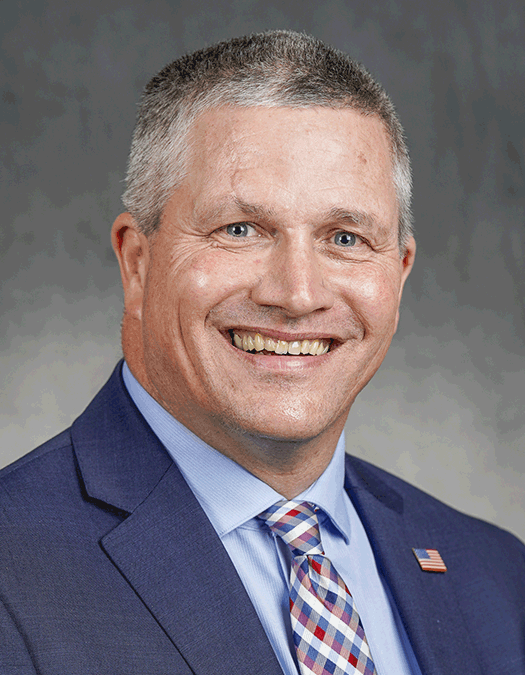
Rep. Jeff Dotseth
Sponsored bills
Maddy summaryHF 2062 modifies Minnesota's sales tax payment rules for retailers. It requires large retailers (with $250,000+ annual tax liability) to pay 84.5% of estimated June tax by June 30 and the remainder by August 20, while smaller retailers pay monthly. The bill also creates a "vendor allowance," allowing retailers to retain a portion of collected sales tax (at least $10 or 1% of eligible taxes) to offset collection costs, provided taxes are reported and paid on time. This directly affects most Minnesota retailers, particularly construction material sellers (defined in the bill), and takes effect for sales after June 30, 2025.
Maddy summaryThis bill creates a sales tax exemption for preowned motor vehicles in Minnesota, meaning buyers would not pay the standard sales tax when purchasing a used car. The legislation defines a preowned vehicle as any motor vehicle that has been previously sold, titled, registered, or transferred to someone else and operated before the current sale. The exemption applies to sales and purchases made after June 30, 2026, and would directly affect private individuals and businesses buying used vehicles in the state. The bill amends existing tax statutes to add this new exemption category alongside other existing tax exemptions for specific groups and vehicle types.
Maddy summaryHF 1795 appropriates state funds for Minnesota's farm-to-school and early childhood care programs, directly supporting schools and child care providers serving children. The bill allocates specific funding for fiscal years 2026 and 2027 to purchase Minnesota-grown fruits, vegetables, meat, poultry, grain, and dairy for these settings, including reimbursements for equipment and food purchases. It also sets aside $150,000 annually for a statewide coordinator to assist farmers and institutions, and allows limited state funding (up to 7.5% of federal funds) to support federal program administration. Eligible entities must participate in federal nutrition programs like the National School Lunch Program.
Maddy summaryThis bill removes lawn care services from Minnesota's state sales tax, meaning residents and businesses paying for mowing, fertilizing, spraying, and related yard maintenance will no longer pay sales tax on these services. The change directly affects homeowners, property managers, and landscaping companies who currently purchase taxable lawn care services. By deleting specific language from existing tax statutes, the legislation exempts these services from the sales tax base while leaving other taxable services like laundry, pet grooming, and vehicle washing unchanged. This adjustment reduces the amount of sales tax collected on landscaping transactions without altering tax rates or other provisions in the state's tax code.
Maddy summaryThis bill increases funding for the Minnesota Department of Agriculture by approximately $350,000 over two years, primarily to support various agricultural programs and services. The legislation appropriates money for soil health assistance grants, compensation for livestock and crop damage caused by wolves and elk, laboratory equipment replacement, meat inspection services, and grants to counties for agricultural inspectors. Key provisions include setting spending limits on individual grant recipients, allowing administrative cost allocations, and establishing eligibility requirements for county funding. The bill modifies existing appropriations in the 2025 budget and allocates funds for fiscal years 2026 and 2027.
Maddy summaryThis bill modifies Minnesota's renewable energy requirements for state-funded construction projects by removing the mandate that renewable energy sources must be located on the building site. It directs the Department of Administration and Department of Commerce to develop sustainable building guidelines for new state buildings and major renovations, requiring these structures to exceed the state energy code by at least 30 percent. The changes apply to any new building project where predesign work is completed after the bill's enactment.
Maddy summaryThis bill expands the authority of Minnesota hospital districts to provide financial and in-kind support to a wider range of licensed health care providers and facilities beyond hospitals and nursing homes. It allows hospital districts to enter into agreements with organizations such as primary care clinics, behavioral health providers, dental clinics, home health agencies, urgent care centers, and community-based health service organizations to support their operations. The bill requires that any funding agreements specify how the money will be used for identified programs benefiting district residents, mandate regular financial reporting from recipients, and prohibit the use of funds for executive compensation, shareholder dividends, or profit distribution. Hospital districts must also establish internal policies to ensure compliance with these requirements, while the legislation clarifies that this expansion does not grant additional taxing authority to the districts.
Maddy summaryThis bill prohibits Minnesota state funds from being used to pay for, reimburse, or facilitate any protests or demonstrations related to political causes or issues. It directly affects state agencies and departments by restricting their ability to allocate money for protest-related expenses, including logistical support or financial assistance to protesters. The legislation would require state officials to ensure no public money supports activities aimed at advocating for or against specific political positions. This change would apply to all state-funded programs and grants, preventing the use of taxpayer money for protest facilitation regardless of the protest's topic or perspective.
Maddy summaryHF 16 prohibits Minnesota cities, counties, or local governments from passing laws that block law enforcement from sharing immigration status information with federal authorities. It requires county attorneys to notify federal immigration agencies when someone without legal status is arrested for a violent crime. The bill overrides any local "noncooperation" policies that would restrict this information sharing or federal immigration enforcement. It applies to all local law enforcement and government entities in Minnesota, ensuring consistent cooperation with federal immigration enforcement on specific matters.