

Maddy summaryHF 831 appropriates $2.5 million from state bond proceeds to fund a campground and recreational area in Brookston, Minnesota. The funds will cover predesign, construction, roads, utilities, green space, a boat launch, and a community center for the city. The money comes from state bonds authorized under Minnesota law, exempting it from certain standard appropriation requirements. This project directly benefits Brookston residents and visitors by creating new public outdoor recreational facilities.
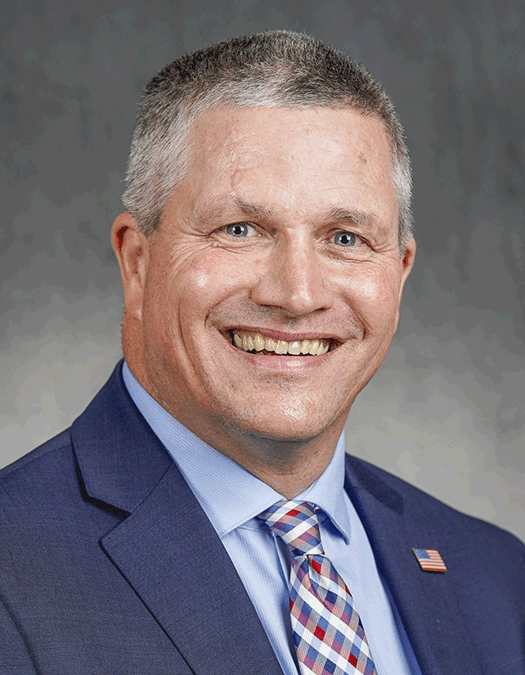
Rep. Jeff Dotseth
Sponsored bills
Maddy summaryHF 827 increases state funding for school districts that have recently consolidated. It raises the consolidation transition aid from $200 to $424 per resident pupil unit in the consolidation year, and from $100 to $212 per unit in the following year. This applies to districts consolidating on or after July 1, 1995, with the total aid capped at 1,500 pupil units. The bill ensures districts in their first post-consolidation year receive full funding before distributing remaining funds to districts in their consolidation year.
Maddy summaryHF 828 would eliminate income limits and maximum caps on deducting Social Security benefits from Minnesota taxable income. Currently, taxpayers lose part of this deduction as their income rises (phaseout) and cannot deduct more than set maximum amounts (e.g., $5,840 for joint filers). The bill changes the law to allow a full subtraction equal to all taxable Social Security benefits received, without phaseout or maximum limits. This directly affects Minnesota taxpayers who receive Social Security benefits and currently face these restrictions. The change takes effect for tax years beginning after December 31, 2024.
Maddy summaryHF 832 appropriates $1.65 million from state bonds to fund infrastructure upgrades in Wrenshall, Minnesota. The bill provides money for the city to replace aging water distribution systems, storm sewers, and reconstruct streets through phased improvements. The funds will be administered by the Public Facilities Authority to cover design, engineering, construction, and equipment costs. This is a direct funding mechanism for specific physical infrastructure repairs in one city, not a broader policy change.
Maddy summaryHF 829 modifies rules for cottage food sellers in Minnesota, affecting small-scale producers who make homemade foods like baked goods or jams. The bill changes delivery requirements, now allowing cottage food products to be delivered via mail or commercial carriers instead of requiring the producer to deliver personally. It also adds a new requirement that websites selling these foods must display the statement: "These products are homemade and not subject to state inspection." These changes apply to products sold under Minnesota's cottage food exemption rules.
Maddy summaryHF 883 establishes a property tax credit for Minnesota seniors aged 65 or older (or 62+ for a spouse) who own and occupy their home as a primary residence with household income under $75,000. The credit amount equals the property tax owed after other credits minus 3% of the homeowner's previous year's income, reducing the tax bill annually. Counties process applications by March 1 each year, and the credit continues until the home is sold, moved from, or no longer qualifies. The state will reimburse local governments for the credit costs using general fund money, starting with the 2026 tax year.
Maddy summaryHF 835 appropriates $3.5 million from state bond proceeds to fund a new combined city hall and fire station in Sturgeon Lake. The bill authorizes the state to issue bonds up to this amount to cover the project costs, including land purchase, design, construction, and equipment. The city of Sturgeon Lake receives the full funding with no requirement for local matching funds. This directly affects Sturgeon Lake's municipal operations by providing resources for essential public infrastructure.
Maddy summaryHF 966 allows Minnesota school districts to donate surplus schoolbooks - including textbooks, classroom library books, and library materials - to registered 501(c)(3) charitable organizations for educational use. The bill amends Minnesota Statutes to override previous rules requiring competitive bidding for book disposal, enabling districts to directly donate unused materials to eligible charities registered with the attorney general. This change specifically affects school districts managing surplus educational materials and 501(c)(3) organizations focused on education. It creates a clear, streamlined process for donating books without requiring competitive bidding, addressing a prior administrative barrier. The policy directly changes how districts may dispose of unused educational resources.
Maddy summaryThis bill defines "animal feedlot" in Minnesota law. It specifies that an animal feedlot is a confined area (either designed for manure accumulation or with animal density preventing vegetation) used for raising or holding animals. The definition explicitly excludes pastures and small poultry operations (12 or fewer chickens). This is a procedural definition change with no new regulations or requirements.
Maddy summaryHF 825 exempts credit card transaction fees from sales tax for specific breweries in Minnesota counties with populations between 36,000 and 37,000 (based on 2020 census data), provided they hold both a brewing license and a retail on-sale license. The bill allows affected businesses to apply for refunds of sales tax paid on these fees for transactions between July 2020 and December 2023. The state will fund these refunds using money appropriated from the general fund. This policy change directly benefits qualifying breweries in designated counties by reducing their tax burden on credit card processing fees.