

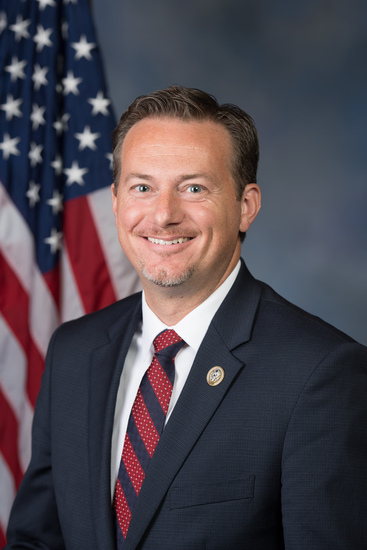
Photo of Michael Cloud
R United States House · District 27 · Texas On the 2026 ballot

Rep. Michael Cloud

Compare
Total votes
2,818
all sessions
Attendance
98%
57 missed
Near the chamber average
With party
85%
of cast votes
Lower than 96% of chamber peers
Bipartisan score
7%
crosses aisle rarely
Higher than 95% of chamber peers
Sponsored
709
bills & resolutions
Near the chamber average
Committees
7
assignments
709 bills and resolutions

Sponsored bills

Total
709
Primary
68
Co-sponsor
641
This page
709
matching current filters
Co-sponsor HRES 1310
In committee · Michigan House · Co-sponsor
Expressing support for continued efforts to safeguard Medicare, Medicaid, and other Federal health care programs from fraud, waste, abuse, and improper payments through strengthened program integrity measures, enhanced oversight, and coordinated enforcement actions, and recognizing the work of the Trump administration and congressional Republicans to investigate and prosecute fraud and protect taxpayer dollars and preserve the long-term sustainability of the Nation's health care safety net.

Maddy summaryThis resolution expresses support for the Trump administration's efforts to combat fraud, waste, and abuse in Medicare, Medicaid, and other federal health care programs. It highlights specific actions taken, such as using advanced technology to detect fraud, suspending billions of dollars in suspected fraudulent payments, and coordinating with law enforcement to prosecute offenders. The document also acknowledges the creation of a new task force designed to lead a governmentwide strategy against fraud in federal benefit programs. Ultimately, the bill serves as a formal recognition of these initiatives rather than introducing new laws or policy changes.

In committee May 21, 2026 1 co-sponsor
Co-sponsor HR 8921
In committee · Michigan House · Co-sponsor
Freedom from Taxes Act of 2026

Maddy summaryThe Freedom from Taxes Act of 2026 eliminates federal transfer and making taxes on firearms, which directly affects individuals buying or manufacturing guns. By setting these specific taxes to zero, the bill removes the $200 fee previously required when transferring or making certain firearms. The law also adds a time limit to a special tax, ensuring it no longer applies to years beginning after the bill takes effect. These changes would become active on the first day of the first calendar quarter starting more than 90 days after the legislation is signed into law.

In committee May 20, 2026 1 co-sponsor
Co-sponsor HR 8787
In committee · Michigan House · Co-sponsor
Servicemember Payment Data Privacy and Security Act

Maddy summaryThis bill requires the Department of Defense to review and eventually ban contracts with retailers that use payment processing systems from specific countries deemed a national security risk, such as China, Russia, Iran, and North Korea. Effective January 1, 2027, the Defense Department will be prohibited from entering into agreements for payment equipment or services if those tools rely on technology developed, owned, or controlled by entities in these nations. The law defines covered systems broadly to include hardware, software, and firmware linked to these countries, aiming to prevent potential foreign access to sensitive military financial data. Retailers wishing to continue working with the Department of Defense must replace their payment processing infrastructure with systems that do not involve these restricted technologies.

In committee May 13, 2026 1 co-sponsor
Co-sponsor HR 2071
Passed · Michigan House · Co-sponsor
Save Our Shrimpers Act

Save Our Shrimpers Act This bill prohibits federal funds from being made available to international financial institutions (e.g., the International Monetary Fund) for financing activities related to foreign shrimp farms. The bill also requires an annual report on compliance by U.S. leadership of international financial institutions with policies to oppose financing for certain commodities or minerals. Specifically, the bill requires the Department of the Treasury to condition any provision of federal funds to an international financial institution on the requirement that the funds not be used to finance any activity related to shrimp farming, shrimp processing, or the export of shrimp in any foreign country. Under current law, Treasury must instruct U.S. leadership of international financial institutions to oppose providing financial assistance for the production or extraction of any commodity or mineral for export if (1) the commodity or mineral is in surplus on world markets, and (2) the export of such commodity or mineral will cause substantial injury to U.S. producers of a competing commodity or mineral (or of the same or a similar commodity or mineral). This bill requires the Government Accountability Office to investigate and annually report to Congress on the extent to which U.S. leadership at these institutions have carried out Treasury's instructions.

Passed May 13, 2026 1 co-sponsor
Primary HR 8652
In committee · Michigan House · Lead sponsor
YODA

Maddy summaryThe You Own the Data Act (YODA) establishes new federal rules requiring major online platforms and data brokers to give users greater control over their personal information. Covered entities, defined as large websites with over 100 million users or data brokers generating significant revenue from user data, must obtain written consent before sharing contact lists and allow users to access, correct, delete, or export their data within 90 days. The bill also mandates that these companies stop tracking cookies without permission, limit data retention to 60 days for browsing and biometric data, and provide clear privacy notices in under 1,000 words. Enforcement is handled by the Federal Trade Commission and state attorneys general, while individuals can sue companies for violations and receive damages of up to $750 per incident.

In committee May 4, 2026 0 co-sponsors
Co-sponsor HR 8324
In committee · Michigan House · Co-sponsor
Great American Healthcare Plan

Maddy summaryThe Great American Healthcare Plan is a comprehensive bill that modifies tax rules for Health Savings Accounts, expands access to health insurance through new marketplace pools, and strengthens price transparency for hospitals and medical providers. It allows individuals to use HSAs for wellness expenses like healthy food and gym memberships, lets parents and children access each other's HSA funds, and requires hospitals to publicly list their standard charges and negotiated rates. The legislation also mandates that administrative service providers share detailed pricing data with health plans and creates a mechanism for pharmacists and nurses to dispense certain low-risk prescription drugs under expanded access.

In committee Apr 16, 2026 1 co-sponsor
Co-sponsor HRES 1164
In committee · Michigan House · Co-sponsor
Directing Members required to reimburse the Treasury for payments related to certain claims to appear before the Clerk for public disclosure of the reasons for the reimbursement.

Maddy summaryThis resolution requires Members of Congress who must reimburse the Treasury for payments related to sexual harassment or discrimination claims to publicly disclose the details of those reimbursements in the House chamber. It mandates that the Office of Congressional Workplace Rights report these cases to the Clerk, who will then read the Member's name, the reimbursement amount, and related information aloud during a House session. Members who fail to comply within 30 days face restrictions on committee assignments and leadership duties, while former Members are barred from entering the House building until they complete reimbursement and undergo the public disclosure process. The measure also establishes that failures to comply with these requirements can be investigated separately by the House Ethics Committee.

In committee Apr 13, 2026 1 co-sponsor
Co-sponsor HR 5750
In committee · Michigan House · Co-sponsor
EQUALS Act of 2025

Maddy summaryThe EQUALS Act of 2025 extends the probation period for most federal employees in the competitive service from one year to two years, while setting a one-year probation for preference-eligible employees (such as veterans). It also establishes a two-year "trial period" for employees in the excepted service (e.g., certain security roles), with a one-year period for preference eligibles. The bill requires federal agencies to formally evaluate employees during this period and certify in writing whether continued employment serves the public interest before the probation ends, with specific notice deadlines for employees and supervisors. Exceptions include supervisors, the U.S. Postal Service, and Congress.

In committee Apr 9, 2026 1 co-sponsor
Co-sponsor HR 8077
In committee · Michigan House · Co-sponsor
287(g) Cooperation Act of 2026

Maddy summaryThis bill, the 287(g) Cooperation Act of 2026, requires state and local law enforcement agencies to sign a formal agreement with the Department of Homeland Security to remain eligible for federal Community Oriented Policing Services grants. The law mandates that agencies must have this written memorandum of agreement in place within 180 days of the bill's enactment, or they will be ineligible to receive funding for the program. The Attorney General and Secretary of Homeland Security must establish procedures to verify that agencies have completed this agreement before approving any grant awards. The changes apply to grant applications starting with fiscal year 2027 and all subsequent years.

In committee Mar 25, 2026 1 co-sponsor
Co-sponsor HR 7983
In committee · Michigan House · Co-sponsor
Clean Water for All Life Act

Maddy summaryThis bill, titled the Clean Water for All Life Act, would amend federal criminal law to prohibit chemical abortions unless a healthcare provider is physically present during the procedure. It directly affects individuals who prescribe, administer, or assist with chemical abortion drugs like mifepristone and misoprostol by making it a federal crime to provide these services without a physical exam and the provider's presence. The law requires that patients receive a catch kit and red bag medical waste container with disposal instructions, and it defines an unborn child as beginning at fertilization. Violations could result in up to five years in prison and a $50,000 fine for each occurrence. The bill does not address other forms of abortion or change existing state laws.

In committee Mar 18, 2026 1 co-sponsor
Showing 41 to 50 of 709 bills
Previous 1 4 5 6 71 Next