

Maddy summarySB 250 creates a new program to provide financial assistance for water bills to low-income households. It adds specific provisions to the state’s human services law (MCL 400.1-400.119b) to establish eligibility criteria and program administration. The policy directly affects residents struggling to afford basic water services, aiming to reduce financial strain through state-funded support. This change modifies existing law to integrate water affordability into human services programs.
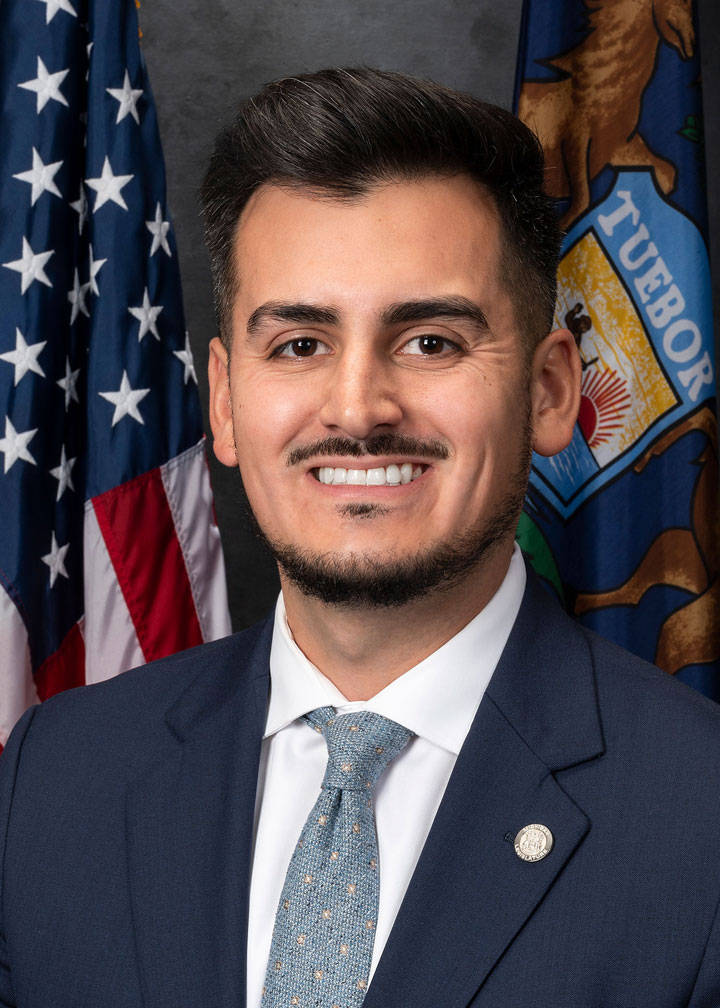
Sen. Darrin Camilleri
Sponsored bills
Maddy summarySB 255 would decriminalize restoring water service to a lawfully occupied home after a shutoff due to non-payment, provided no metering or backflow devices are damaged. It changes penalties from potential felony charges to civil violations, with first offenses requiring up to 25 hours of community service, and repeat offenses limited to fines under $500 or up to 100 hours of service. The bill applies specifically to residents who restore service themselves, not utility workers or others. It also mandates referrals to water assistance programs for those cited under this provision.
Maddy summarySB 254 requires utility providers (like water or sewage services) to approve tenant requests to transfer utility accounts when moving into a rental property. It amends Michigan law to mandate that providers must accept requests from tenants under Section 1f(1) of 1972 PA 348 (which defines "lessee" as a tenant). This directly affects renters who want to continue utility service under their name when leasing a new property, rather than the previous owner or landlord. The bill does not change utility rates or create new fees, only streamlining the transfer process for tenants.
Maddy summarySB 253 requires landlords to provide tenants in single-metered rental units (not part of multifamily properties) with the option to have water and sewer bills sent directly to both the tenant and landlord. It prohibits landlords from retaliating against tenants who make this request, including eviction, rent increases, or denying lease renewals. The law applies only to new or renewed leases after its effective date and does not override federal housing laws. Tenants in these units gain direct access to their utility billing information, while landlords must comply with the new notification requirement.
Maddy summarySB 256 amends Michigan's criminal sentencing guidelines to reduce penalties for tampering with utility services (like electricity or water) that could shut off a residence. It specifically changes sections 777.16o and 777.16s of the Michigan Penal Code to reflect that certain utility tampering acts are now decriminalized, shifting them from criminal offenses to civil or administrative matters. The bill directly affects individuals who might interfere with utility services to a home, such as low-income residents attempting to avoid shutoffs. This change removes potential criminal charges for these specific acts while maintaining safety and service protections.
Maddy summarySB 252, the "Water Shutoff Protection Act," prevents residential water shutoffs for vulnerable households without prior notice and multiple contact attempts. It protects critical care customers (requiring water for medical equipment) and eligible low-income customers (earning ≤200% of federal poverty guidelines or receiving specific assistance programs like SNAP or energy aid). The bill requires water providers to contact customers at least three times via multiple methods (notices, calls, texts, mail) before shutoff, detailing payment plans and affordability programs. Notices must include specific details like shutoff dates, available options, and contact information for program administrators.
Maddy summarySB 248 creates a water rate affordability fund to provide financial assistance for human services, directly supporting low-income households struggling with water utility costs. The bill amends Michigan's human services code to establish this fund, which would help cover water bills for eligible residents. Currently in committee review (reported favorably with a substitute on November 5, 2025), the bill has not yet been voted on by the full chamber. It focuses on a concrete policy mechanism - funding for water bill assistance - without specifying eligibility details or funding sources in the provided context.
Maddy summarySB 630 requires broadband developers to pay prevailing wages and fringe benefits to workers on certain broadband service projects in Michigan. It directly affects broadband developers working on new construction, improvement, or expansion projects that are *not* funded by federal programs like the Infrastructure Investment and Jobs Act or the Coronavirus Capital Projects Fund. The bill applies existing prevailing wage requirements - meaning workers must receive the local standard wage for similar work, including benefits - to these specific broadband projects. This policy change ensures fair compensation for labor on state-supported broadband infrastructure, aligning with broader wage standards for public projects.
Maddy summarySCR 6 is a memorial resolution passed by the Michigan Legislature to honor Virgil Clark Smith, a former member of the Michigan Senate (1988-2000) and House of Representatives (1977-1988). The resolution commemorates his 40+ years of public service, including his historic role as the first African American Senate Democratic Floor Leader. It expresses the Legislature's tribute to his dedication, leadership, and legacy as a trailblazing legislator and later Wayne County Circuit Court judge. The resolution was adopted unanimously by both chambers in October 2025 and will be transmitted to Smith's family.
Maddy summarySB 166 allocates funding for K-12 public schools in the state for the 2025-2026 fiscal year. It directly affects all public K-12 school districts by providing their state education budget. The bill establishes the specific financial amounts schools will receive during this fiscal period. It became law on October 7, 2025, with immediate effect (PA 0015'25).