

Maddy summaryThis Senate resolution designates March 2026 as Agriculture Appreciation Month to recognize Michigan's significant agricultural contributions to the state's economy and workforce. The bill does not create new laws or regulations but serves as a symbolic gesture to highlight the industry's importance, noting that agriculture supports over 800,000 jobs and contributes more than $125 billion annually to Michigan. The resolution encourages citizens to celebrate the sector during March 2026, acknowledging the state's leadership in various agricultural products like tart cherries, blueberries, and hops.
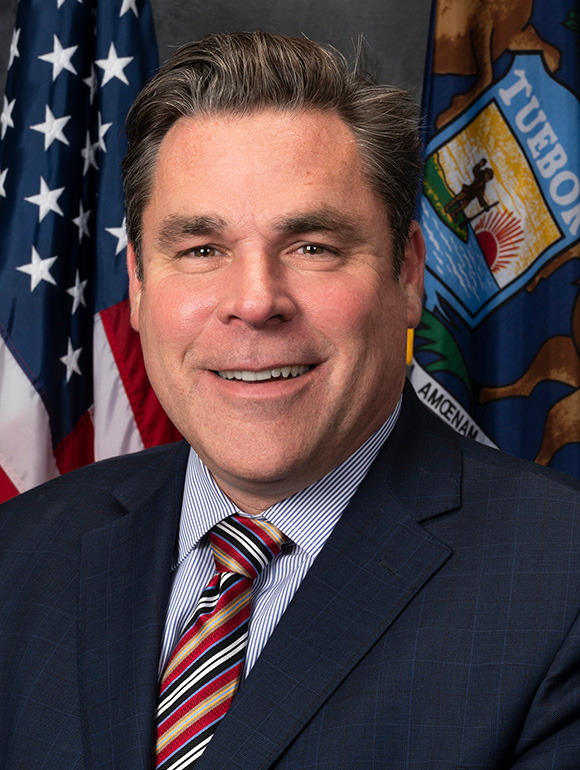
Sen. John Damoose
Sponsored bills
Maddy summaryThis bill amends Michigan's Deferred Presentment Service Transactions Act to update internal references related to money transmission services, specifically clarifying which financial institutions are excluded from certain transaction definitions. It directly affects payday lenders and financial institutions by revising the legal definitions of terms like "deferred presentment service transaction" and "money transmission services" within the existing regulatory framework. The key provision adds a temporary exemption through June 30, 2026, for certain licensed lenders from being classified under the money transmission services act, while also updating related terminology throughout the statute. The bill takes effect on January 1, 2026, but only becomes active if a companion bill, SB 0835, is also enacted into law.
Maddy summaryThis bill amends the Michigan Consumer Financial Services Act to update internal references related to money transmission services within the state's financial licensing framework. It directly affects financial institutions, money transmission companies, and other entities seeking licenses under the act by modifying definitions and requirements in the statute. The key changes include clarifying terminology for money transmission activities and ensuring consistency with the Money Transmission Modernization Act, which is listed as a referenced financial licensing act through June 30, 2026. The bill does not alter existing licensing fees, net worth requirements, or surety bond amounts but rather aligns the Consumer Financial Services Act's language with current money transmission regulations.
Maddy summaryThis bill proposes to update sentencing guidelines for violations related to money transmission activities in Michigan. It directly affects individuals charged with crimes involving the transfer of funds, such as money laundering or unauthorized money transmission. The legislation amends an existing section of the state's criminal procedure code to revise how courts determine appropriate sentences for these specific offenses. By modifying the statutory framework, the bill aims to provide clearer sentencing standards for financial crimes involving money movement. This change would apply to prosecutors and judges handling cases under the revised guidelines.
Maddy summaryThis bill modifies Michigan's Highway Advertising Act to clarify rules about billboard owners crossing limited-access highways to install or maintain signs. It requires permits for anyone crossing these roadways to erect or maintain signs, but allows exceptions when the property is only accessible by crossing the highway. The legislation also establishes penalties, including fines and sign removal, for violating these permit requirements. Directly affected parties include sign owners, their agents, and property owners who maintain signs on their land. The bill aims to streamline enforcement while ensuring exceptions exist for properties with no alternative access routes.
Maddy summaryThis bill, known as the Money Transmission Modernization Act, updates Michigan's laws governing money transmitters by replacing the 2006 Money Transmission Services Act. It establishes a new regulatory framework that requires businesses sending money or payment instruments on behalf of others to obtain state licenses, while defining specific exemptions for certain activities. The legislation creates clearer standards for what constitutes money transmission, including payroll processing, and sets requirements for customer fund protection, financial reporting, and regulatory coordination with other states. By modernizing these rules, the bill aims to reduce unnecessary regulatory burdens on businesses while maintaining safeguards against financial crime and ensuring consumer funds remain secure.
Maddy summaryThis bill is a concurrent resolution that formally honors Bruce Patterson, a former Michigan state legislator who served in both the House of Representatives and Senate. It recognizes his public service career, which included leadership roles in committees on energy policy, environmental protection, and consumer rights, as well as his advocacy for nursing home care and water pollution control. The resolution expresses the Legislature's tribute to his memory and directs that copies be sent to his family.
Maddy summarySB 806 creates a dedicated "hyperbaric oxygen therapy inspection fund" in the state treasury, funded by licensing fees paid by freestanding hyperbaric oxygen therapy facilities. The fund is managed by the state treasurer and administered by the state health department, with all money used solely for inspecting these facilities. This bill directly affects hyperbaric oxygen therapy providers and the state's inspection process for their facilities. The fund ensures consistent, dedicated funding for inspections, replacing general appropriations for this specific purpose.
Maddy summarySB 803 creates a new licensure requirement for freestanding facilities that provide hyperbaric oxygen therapy (HBOT), a medical treatment using pressurized oxygen. It directly affects businesses operating standalone HBOT centers and patients receiving this therapy by establishing specific safety and operational standards. The bill amends Michigan's Public Health Code to add licensing rules for these facilities, ensuring they meet state health and safety criteria. This change applies to facilities not located within hospitals, requiring them to obtain state licensure before operation.
Maddy summarySB 804 adds new licensing requirements for freestanding hyperbaric oxygen therapy facilities in Michigan, directly affecting these specialized treatment centers. The bill requires facilities to appoint a medical director and safety coordinator, comply with national fire safety standards (NFPA 99), and ensure staff meet specific licensing qualifications. It defines key terms like "accreditation organization" and "qualified health professional" to establish clear operational standards. The legislation is contingent on three related bills (SB 803, 805, 806) also being enacted.