

Maddy summaryThis bill updates Michigan's environmental regulations by establishing clearer guidelines for where landfills can be located and how they must be permitted. It directly affects waste management companies, local health departments, and county officials by requiring specific application fees and engineering plans before new disposal areas can be built. Key provisions include setting different fee amounts for various types of landfills and expansions, allowing permit applications to be resubmitted without additional fees if they are initially incomplete, and prohibiting new landfills from being built within one mile of an existing home. The bill also requires county approval for new type II landfills or municipal solid waste incinerators, ensuring that communities demonstrate other waste disposal options have been exhausted before approving new facilities.
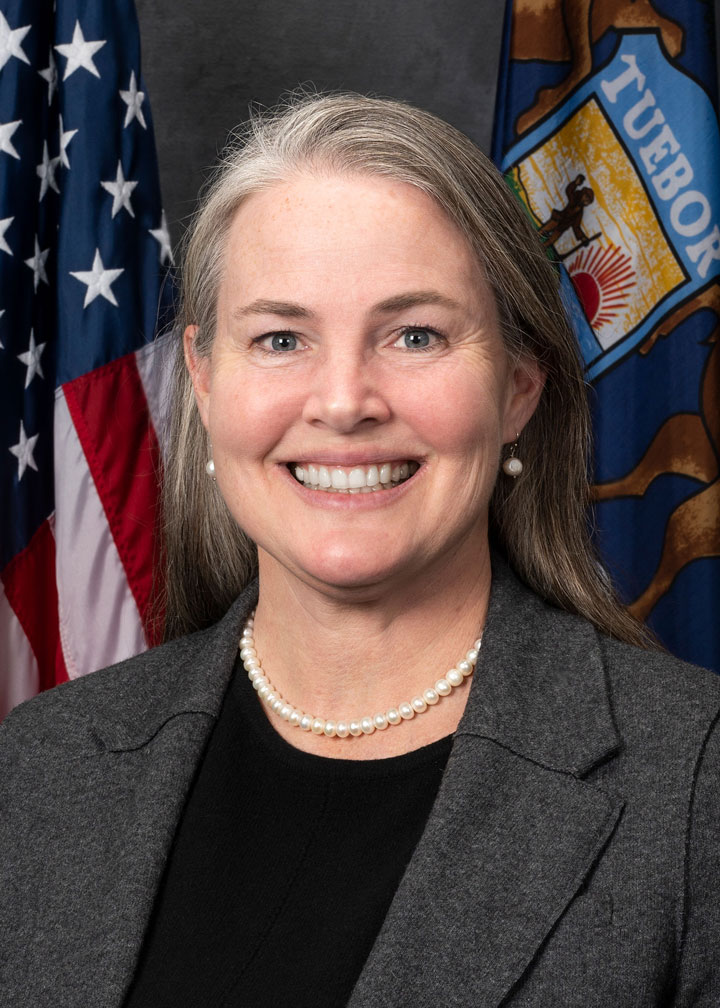
Sen. Sue Shink
Sponsored bills
Maddy summaryThis bill, known as the PFAS Protection Act, requires manufacturers in Michigan to report products containing intentionally added PFAS chemicals and mandates labeling on specific consumer goods. It directly affects manufacturers, importers, and distributors of items such as apparel, cookware, children's products, and cleaning supplies that include these chemicals. The legislation establishes definitions for various product categories, creates reporting requirements for state officials, and authorizes the creation of rules to enforce compliance with the new standards.
Maddy summaryThis bill updates Michigan's environmental regulations by clarifying rules for wastewater discharge and adding specific permit requirements for oceangoing vessels. It requires that any waste discharge into state waters must occur at least one mile upstream from the nearest dwelling and mandates that vessels operating in Michigan ports obtain permits demonstrating compliance with federal aquatic nuisance species rules. The legislation also sets strict timelines for the state department to review permit applications and outlines procedures for permit modification, suspension, or revocation if pollution violations occur. Additionally, it establishes fee structures for vessel permits and allows the department to adopt more protective standards than federal rules for preventing aquatic nuisance species in the Great Lakes.
Maddy summaryThis bill clarifies Michigan property tax rules by explicitly stating that the "pop-up" tax assessment does not apply when spouses transfer ownership interests in legal entities to one another. It amends the General Property Tax Act to ensure that such transfers between spouses do not trigger a full reassessment of property value, allowing the property to retain its previously established taxable value. The legislation also defines specific conditions under which transfers to trusts and distributions from trusts are exempt from immediate tax value increases, particularly for residential property transferred among close family members. Additionally, the bill clarifies procedures for correcting taxable value adjustments when ownership transfers are mistakenly not recorded, allowing local tax authorities to make corrections for the current year and up to three prior years.
Maddy summarySB 509 prohibits Michigan government entities (like police departments, courts, or DMVs) from sharing personal information - including addresses, IDs, or criminal history - with federal immigration authorities unless a court-issued warrant is presented. It requires agencies to verify if requests are for immigration enforcement and deny such requests without a warrant. Agencies must also report annual data on these requests to state officials by March 31 each year. The law aims to prevent local government data from being used in federal immigration actions without judicial oversight.
Maddy summarySB 504 requires Michigan to test public water supplies for tiny plastic particles (microplastics) starting in 2027, with quarterly sampling through 2030. It focuses testing on water sources near Great Lakes shorelines, agricultural areas, landfills, and groundwater systems, using methods aligned with federal or state standards. By July 2031, the state must report findings - including microplastic levels, sources, and potential health impacts - and recommend next steps for monitoring or regulation. This directly affects all public water systems in Michigan, including those serving communities near environmental justice concerns.
Maddy summarySB 505 requires Michigan's Department of Environment, Great Lakes, and Energy (DEGLE) to create a statewide research and monitoring plan focused on microplastics in the Great Lakes by July 2026. The plan must assess microplastic impacts on drinking water, human/animal health, and the Great Lakes ecosystem, establish baseline data, identify sources, and propose reduction strategies using federal standards (like EPA and NOAA guidelines). It mandates annual updates, public reporting, and requires DEGLE to collaborate with universities and leverage existing federal efforts. The bill directly affects state agencies, researchers, and Great Lakes water quality management, with implementation deadlines set for 2026 and 2028.
Maddy summarySB 503 prohibits the manufacture, sale, or distribution of plastic microbeads (intentionally added solid plastic particles ≤5mm) in personal care products (like face scrubs and toothpaste) and cleaning products (including floor cleaners) in Michigan. Starting January 1, 2027, these products cannot contain microbeads unless the concentration is below 1 part per million by weight. The law applies to manufacturers, sellers, and distributors within the state, with enforcement by the Department of Environment, Great Lakes, and Energy. Violations carry civil fines up to $2,000 per day, and the department must report on enforcement annually. The bill does not affect air care products or materials used in non-personal care applications.
Maddy summaryThis bill amends Michigan's Code of Criminal Procedure to establish sentencing guidelines specifically for violations related to carbon sequestration. It directly affects individuals or entities charged with breaking laws concerning carbon capture and storage activities. The legislation modifies an existing section of state law to provide clearer guidance on how courts should handle penalties in these environmental cases. By updating the statutory framework, the bill aims to standardize sentencing practices for carbon sequestration infractions.
Maddy summaryThis bill modifies Michigan's Uniform Unclaimed Property Act to change how long pore space compensation payments must remain unclaimed before being considered abandoned. Specifically, it extends the presumed abandonment period for geologic pore space compensation from the standard three years to ten years. The change directly affects owners of mineral rights and the state agencies responsible for administering pore space compensation payments. This provision ensures that compensation payments for underground mineral extraction rights remain available to rightful owners for a longer timeframe before being transferred to the state treasury.