

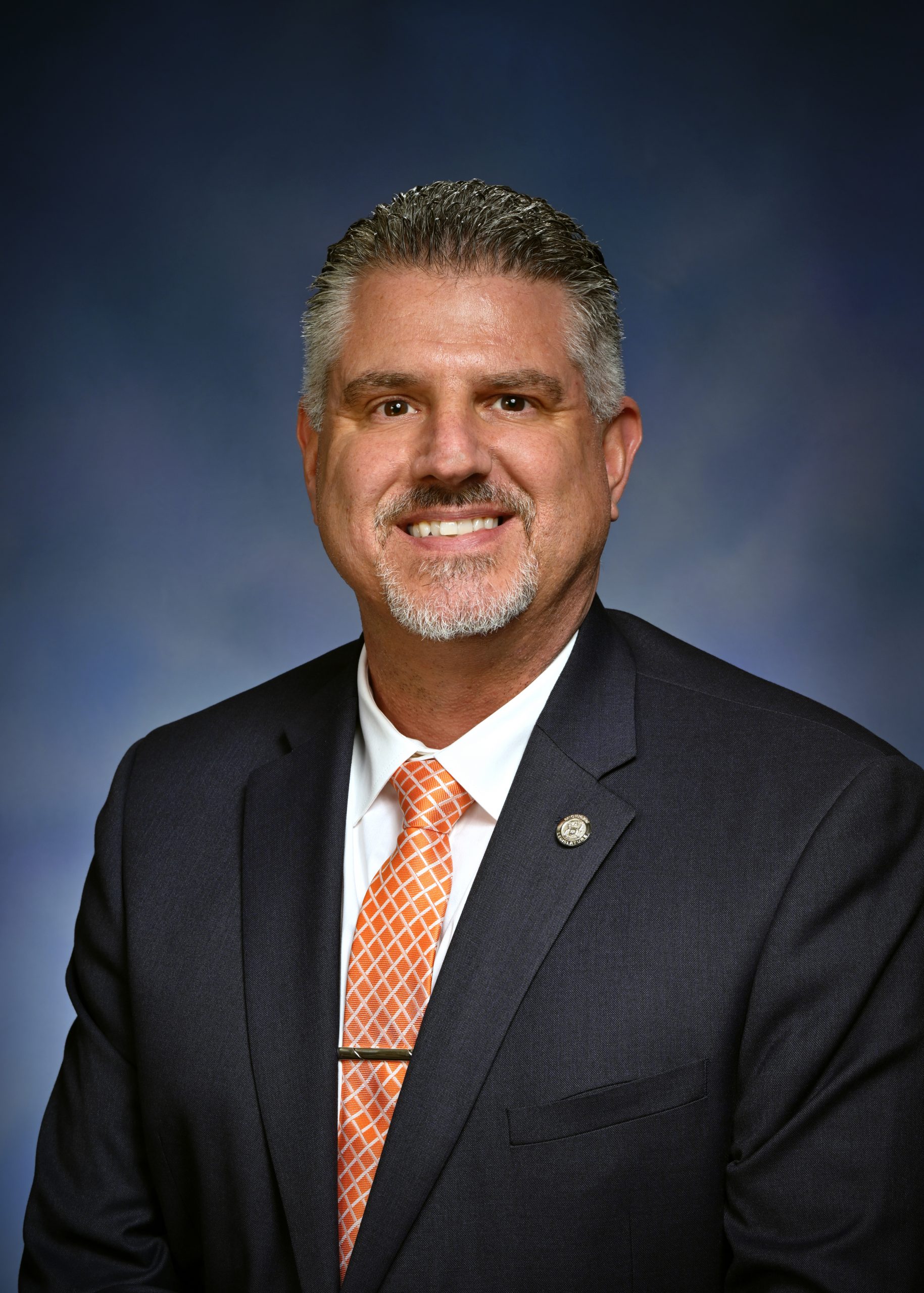
Photo of Mike Hoadley
R Michigan House · District 99 On the 2026 ballot

Rep. Mike Hoadley

Compare
Total votes
1,746
all sessions
Attendance
98%
28 missed
Near the chamber average
With party
92%
of cast votes
Near the chamber average
Bipartisan score
4%
crosses aisle rarely
Near the chamber average
Sponsored
431
bills & resolutions
Near the chamber average
Committees
4
assignments
431 bills and resolutions

Sponsored bills

Total
431
Primary
45
Co-sponsor
386
This page
431
matching current filters
Co-sponsor HB 4824
Signed into law · Michigan House · Co-sponsor
Liquor: other; definition of brand; modify. Amends secs. 105 & 1115 of 1998 PA 58 (MCL 436.1105 436.2115) & adds sec. 604. TIE BAR WITH: HB 4823'25

Maddy summaryHB 4824 updates Michigan's legal definition of "brand" within liquor regulations. This change directly affects liquor producers and sellers who market products under specific brand names, clarifying how brands are recognized under state law. The bill modifies Section 105 of the 1998 Liquor Code (MCL 436.1105) and adds a new Section 604 to establish clearer rules for brand identification. These changes aim to streamline compliance for businesses without altering existing licensing or sales requirements.

Signed into law Jul 29, 2026 1 co-sponsor
Co-sponsor HB 4187
Signed into law · Michigan House · Co-sponsor
Individual income tax: revenue distributions; distribution and use of renew Michigan fund and lapse of interest and earnings from the revitalization and placemaking fund to general fund; modify and provide for. Amends secs. 51, 51g & 696 of 1967 PA 281 (MCL 206.51 et seq.). TIE BAR WITH: HB 4180'25, HB 4181'25, HB 4182'25, HB 4183'25, HB 4184'25, HB 4185'25, HB 4186'25

Maddy summaryHB 4187 modifies Michigan's corporate income tax law by adjusting how the tax base is calculated and clarifying revenue distribution. It requires corporations to add back certain taxes and expenses previously deducted for federal purposes (like state taxes or related-party royalties) and eliminates deductions for oil/gas and mineral-related income and expenses. For the 2021-2022 fiscal year, the bill directs $800 million of corporate tax revenue to the Michigan taxpayer rebate fund, while other years’ revenue flows to the general fund. This directly affects corporations operating in Michigan and the state’s budget allocation process.

Signed into law Jul 29, 2026 1 co-sponsor
Co-sponsor HB 5232
Signed into law · Michigan House · Co-sponsor
Labor: leave; local unit of government's option to provide paid leave for military active service; modify to reflect mandatory paid leave for certain members of law enforcement agencies and fire departments. Amends sec. 3a of 1955 PA 133 (MCL 32.273a). TIE BAR WITH: HB 5233'25

Maddy summaryHB 5232 changes Michigan's military leave law to require local governments (cities, towns, counties) to provide paid leave for certain law enforcement and fire department employees who serve in active military duty. It mandates that local units of government must cover the pay difference between an employee's civilian salary and military pay during their leave, ensuring they don't lose income. The bill specifically adds mandatory paid leave for these public safety workers, while still allowing local governments flexibility to create similar programs for other employees. This amendment updates existing law (MCL 32.273a) to reflect new requirements for first responders.

Signed into law Jul 29, 2026 1 co-sponsor
Co-sponsor HB 5233
Signed into law · Michigan House · Co-sponsor
Labor: leave; paid military leave for certain members of a fire department or law enforcement agency; provide. Creates new act.

Maddy summaryHB 5233, the "Military Leave for First Responders Act," requires fire departments and law enforcement agencies in Michigan to provide at least 26 days of paid leave annually for employees serving in military reserve components. It directly affects fire department and law enforcement agency members who are enlisted in reserve units, covering both active duty deployment and training. The law mandates employers pay these members their regular wage during leave and maintain all contractually required benefits. It also specifies advance notice requirements for leave requests (14 days for 10-20 days off, as soon as possible for longer periods) and includes a provision for paid leave to attend pre-induction military exams.

Signed into law Jul 29, 2026 1 co-sponsor
Primary HB 6163
In committee · Michigan House · Lead sponsor
Medical marihuana: other; marihuana plant waste; allow for the transportation and disposal of. Amends secs. 102, 201, 206, 501, 502, 503, 504 & 505 of 2016 PA 281 (MCL 333.27102 et seq.) & adds sec. 202. TIE BAR WITH: HB 6162'26

Maddy summaryHB 6163 amends the Michigan Medical Marihuana Facilities Licensing Act to formally define "marihuana plant waste" and authorize licensed facilities to transport and dispose of it. The bill primarily affects growers, processors, and other licensed entities by clarifying that discarded plant material can be legally moved and discarded rather than being treated as contraband. By updating specific sections of the existing law, the legislation provides a clear regulatory framework for the proper handling of cultivation byproducts within the state's medical marijuana program.

In committee Jul 14, 2026 0 co-sponsors
Co-sponsor HB 6162
In committee · Michigan House · Co-sponsor
Marihuana: other; marihuana plant waste; allow for the transportation and disposal of. Amends secs. 3, 8, 10 & 14 of 2018 IL 1 (MCL 333.27953 et seq.).

Maddy summaryThis bill amends Michigan's marijuana regulations to explicitly allow for the transportation and disposal of marijuana plant waste. It defines plant waste as roots, stalks, leaves, and stems intended for destruction through incineration, landfilling, composting, or anaerobic digestion, while clarifying that such waste is not considered hazardous waste. The legislation establishes specific roles for "marijuana disposers," who must be licensed operators or permitted incinerators authorized to receive and destroy this material. By adding these definitions and permissions, the bill provides a legal framework for licensed marijuana businesses to manage and dispose of plant remnants without violating environmental or waste disposal laws.

In committee Jul 14, 2026 1 co-sponsor
Primary HB 5727
Passed · Michigan House · Lead sponsor
Labor: youth employment; youth employment standards act; restore former provisions, and eliminate requirement for a work permit. Amends title & secs. 2, 5, 7, 10, 15 & 20 of 1978 PA 90 (MCL 409.102 et seq.); adds sec. 19a & repeals secs. 4a, 4b, 4c, 4d, 6, 8 & 9 of 1978 PA 90 (MCL 409.104a et seq.).

Maddy summaryThis bill modifies Michigan's Youth Employment Standards Act to update how work permits are issued and managed for minors under 18. It clarifies the documentation required to prove a minor's age, expands acceptable proof options to include school records and other documents, and establishes clearer procedures for when permits can be suspended or revoked due to poor school attendance or legal violations. The legislation also sets specific limits on how many hours minors can work during school weeks and non-school weeks, while removing certain older requirements that are no longer in effect. These changes aim to balance the need for youth employment with protections for minors' education and well-being.

Passed Jul 2, 2026 0 co-sponsors
Co-sponsor HB 6009
Passed · Michigan House · Co-sponsor
Public employees and officers: compensation and benefits; severance pay for executive and legislative branch employees and officers; limit, and require reporting if greater than a certain amount. Creates new act.

Maddy summaryThis bill establishes the State Employment Contract Regulation Act to limit severance pay for employees and officers in Michigan's executive and legislative branches. It generally prohibits contracts that offer more than 12 weeks of wages in severance, ban non-disclosure agreements that prevent reporting illegal activities, and require contracts to be fully disclosed to the public. Exceptions allowing higher severance or restricted contracts are permitted only if legal counsel determines they are necessary to protect public funds from litigation risks, provided such agreements include legal releases of claims. Additionally, the law mandates that any contract offering six weeks or more of severance be posted online within 28 days, while contracts for elected officials must be shared with legislative leaders within three days.

Passed Jul 1, 2026 1 co-sponsor
Co-sponsor HCR 8
Passed · Michigan House · Co-sponsor
A concurrent resolution to approve an extension of the state of energy emergency declared on April 2, 2026.

Maddy summaryThis bill extends the state of energy emergency in Michigan by an additional 77 days, effective July 1, 2026. The measure allows the sale of E15 fuel in several counties where current regulations previously restricted it to lower vapor pressure gasoline. By suspending these fuel requirements, the extension aims to increase fuel supply options and help manage rising gas prices for consumers and businesses. The resolution requires approval from both the House and Senate before being sent to the Governor.

Passed Jun 25, 2026 1 co-sponsor
Co-sponsor HB 5145
Passed · Michigan House · Co-sponsor
Human services: food assistance; documentation requirements for certain assistance programs; provide for. Amends 1939 PA 280 (MCL 400.1 - 400.119b) by adding sec. 10h.

Maddy summaryHB 5145 changes documentation requirements for Michigan's public assistance programs, including food assistance. It replaces self-attestation with verifiable documents for applicants to prove identity (e.g., driver's license, birth certificate), income (e.g., pay stub, tax return), and Michigan residency (e.g., utility bill, lease). The bill requires applicants to upload these documents via the MI Bridges online portal before eligibility is determined. It also mandates that the department use alternative verification methods if documents are missing, rather than automatically denying benefits. This bill directly affects individuals applying for or renewing public assistance benefits in Michigan.

Passed Jun 25, 2026 1 co-sponsor
Showing 11 to 20 of 431 bills