

Maddy summaryThis bill proposes changes to Michigan's Public Health Code to establish specific licensure requirements for freestanding abortion clinics. It directly affects healthcare facilities that operate outside of hospitals by mandating they meet new regulatory standards set forth in the added sections. The legislation would require these clinics to obtain a license and comply with updated health and safety provisions outlined in the amended statutes.
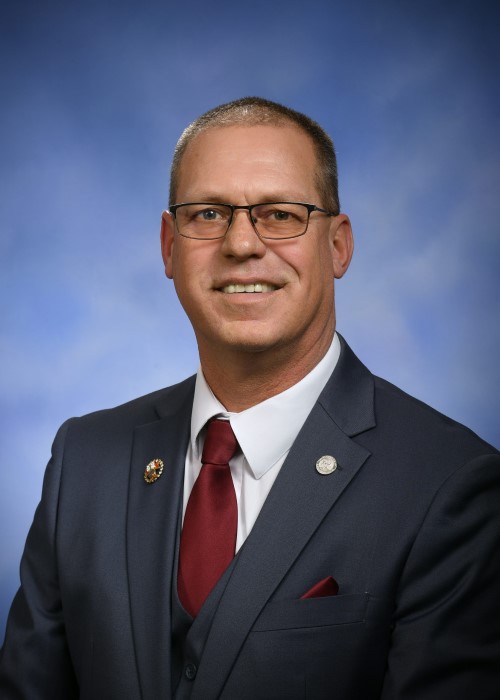
Rep. Greg Alexander
Sponsored bills
Maddy summaryThis bill requires Michigan businesses selling car parts and accessories to separately report and pay sales tax on those specific items starting October 1, 2027. To prepare for this change, the state Department of Treasury must define which products count as car parts by March 31, 2027, and create a new form for businesses to use. Companies will need to set up systems to identify these items at the point of sale and submit distinct payments for them alongside their regular monthly tax returns. The bill amends existing state tax laws to establish these new reporting and payment procedures without changing how the tax revenue is currently distributed.
Maddy summaryHB 5214 creates a new tax credit for Michigan family caregivers, allowing eligible taxpayers to claim up to $2,000 (30% of qualified expenses, whichever is less) against their state income tax for care provided to qualifying family members. It directly affects Michigan residents who provide unpaid care for family members living at home (not in facilities) with specific health needs, such as inability to perform two or more daily activities or requiring supervision due to cognitive impairment. Qualified expenses include respite care, assistive devices, home modifications, and transportation, but exclude general household maintenance. To claim the credit, caregivers must document expenses, provide family member details, and meet income limits ($50,000 single / $100,000 joint). The credit applies to tax years beginning January 1, 2026.
Maddy summaryThis bill modifies Michigan's property tax laws to ensure that farms offering agritourism activities or direct marketing retain their lower agricultural tax classification. It defines agritourism as public events like tours, festivals, and weddings held on the farm, while direct marketing includes selling products directly to consumers at roadside stands or farm stores. The legislation clarifies that engaging in these activities will not cause a property to lose its special tax status, shifting the burden of proof to the state department if a challenge is raised. Additionally, the bill specifies that certain buildings used for these activities, such as on-farm stores or event spaces, count as agricultural outbuildings for tax purposes.
Maddy summaryThis resolution designates June 11, 2026, as Sleep Deprivation Awareness Day throughout Michigan to highlight the importance of adequate rest. The bill does not alter laws or funding but serves as a symbolic gesture to encourage residents to reflect on their sleep habits and recognize the associated health and safety risks. By formally acknowledging the issue, the measure aims to raise public awareness about the dangers of insufficient sleep, particularly among adolescents and drivers.
Maddy summaryHB 5387 amends Michigan's "Mozelle senior or vulnerable adult medical alert act" to specifically include "missing veterans at risk" in the definition of persons eligible for emergency alerts. The bill defines a "missing veteran at risk" as an active-duty service member or veteran reported missing with a documented physical or mental health condition. This change directly affects veterans who go missing and have health conditions, ensuring they are covered under the same alert protocols as seniors and vulnerable adults. The law does not create new procedures but clarifies who qualifies for existing emergency reporting mechanisms.
Maddy summaryThis bill updates Michigan's guardianship and conservatorship laws to strengthen protections for vulnerable individuals under court supervision. It primarily affects professional guardians and conservators, requiring them to file financial bonds or restricted accounts, disclose any outside compensation received, and maintain regular visitation schedules with the individuals they serve. The legislation also mandates that guardians consult with legally incapacitated individuals before making major decisions and clarifies the specific powers guardians have regarding medical consent, property management, and care arrangements. Additionally, it authorizes certain nonbanking corporations to serve as professional fiduciaries while limiting their authority to the specific cases in which they are appointed.
Maddy summaryThis bill modifies Michigan laws governing the powers and duties of conservators, who manage the financial affairs of individuals unable to do so themselves. It primarily affects courts, conservators, and the families of protected individuals by clarifying when conservators must post a financial bond and expanding their authority to manage estate assets. Under the new provisions, courts must require a bond unless specific exceptions apply, such as when the estate lacks cash or the conservator has already been granted trust powers. The bill also updates the list of actions conservators can take without court approval, including managing businesses, investing assets, entering leases, and employing professional advisors, while maintaining oversight requirements to protect the interests of the protected individual.
Maddy summaryHB 5501 allows developers to relocate wetlands within the same development project instead of creating new wetlands or restoring existing ones, directly affecting construction and land development permit applicants. The bill establishes a 1:1 wetland replacement ratio for in-parcel relocations when ecological functions are maintained or improved, while reducing the preference for on-site mitigation. It also introduces flexibility in mitigation ratios when using wetland bank credits and requires the Department of Natural Resources to develop guidelines for on-site mitigation planning. These changes aim to streamline permitting while maintaining wetland resource protection under Michigan's Natural Resources and Environmental Protection Act.
Maddy summaryHB 5520 requires Michigan's Department of Education to approve 3+ reading assessments for schools that minimize instructional time loss and provide timely results. It mandates school districts to implement literacy coaches by 2027 who support teachers in evidence-based reading instruction, data analysis, and intervention for struggling readers in grades K-3. The bill also directs the department to develop dyslexia expertise, provide professional learning on structured literacy, and update the Michigan Dyslexia Handbook every 5 years. These provisions directly affect school districts, K-3 teachers, students needing reading support, and parents through improved reading instruction and assessment practices. The bill focuses on systemic changes to address reading deficiencies using research-backed methods.