

Maddy summaryHB 4309 establishes a licensure compact for physician's assistants, allowing them licensed in one participating state to practice in other participating states without needing separate licenses. This directly affects physician's assistants seeking to work across state lines and patients in states participating in the compact. The bill creates legal mechanisms by amending existing law to enable reciprocal licensing agreements between states, removing barriers for PAs to provide care in multiple jurisdictions. It provides the framework for states to join the compact through mutual recognition of licenses, streamlining practice for qualified professionals.
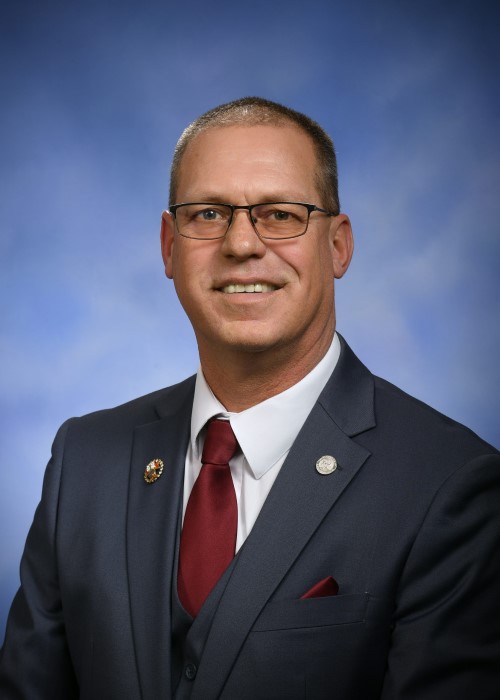
Rep. Greg Alexander
Sponsored bills
Maddy summaryHB 6190 amends the Michigan Credit Reform Act to update and clarify the legal definitions used throughout the state's financial regulations. The bill specifically revises the definitions for key terms such as "borrower," "regulated lender," and "extension of credit" to ensure they align with current laws and cover various types of lending activities. It also ties the effectiveness of this bill to another piece of legislation, HB 6177, meaning it will only take effect if that companion bill is passed. By standardizing these definitions, the bill aims to provide a clearer framework for how financial institutions and mortgage brokers operate under Michigan law.
Maddy summaryHB 6183 amends Michigan's Tobacco Products Tax Act to strengthen regulations on the sale, distribution, and taxation of tobacco products. The bill requires that all tobacco products sold within the state must be purchased from licensed wholesalers or unclassified acquirers, and it mandates that retailers verify the age and identity of customers for online, telephone, or mail-order transactions. Additionally, the legislation updates record-keeping requirements for license verification and imposes new labeling rules, such as stamping packages with "TOBACCO PRODUCTS" and including specific tax information on invoices. These changes directly affect tobacco retailers, wholesalers, and remote sellers by enforcing stricter compliance measures to prevent underage access and ensure proper tax collection.
Maddy summaryThis bill amends the Home Rule City Act to allow Michigan cities with specific population thresholds to establish administrative hearings bureaus for adjudicating blight violations. These bureaus would handle cases related to zoning, property maintenance, sanitation, and other local ordinances, with hearing officers required to be licensed attorneys who have completed formal training. The legislation sets limits on the bureaus' authority, such as capping civil fines at $10,000 and prohibiting incarceration, while also outlining procedures for issuing violation notices and accepting admissions of responsibility. Additionally, the bill includes protections for landlords participating in city rental inspection programs, ensuring they receive correction notices and a chance to fix issues before facing penalties unless an emergency exists.
Maddy summaryHB 6194 amends Michigan's Deferred Presentment Service Transactions Act to update and clarify the definitions of key terms used in the law, such as "applicant," "customer," and "deferred presentment service transaction." The bill also specifies which types of loans are excluded from these regulations, particularly those involving mortgage brokers and lenders licensed under other state acts. This legislative change does not create new rules for businesses but rather refines the existing legal framework to ensure consistency and clarity. The bill is tied to another piece of legislation, HB 6177, and will only take effect if that related bill is also passed.
Maddy summaryHB 6192 amends Michigan's Debt Management Act to strengthen the state director's authority to investigate and punish mortgage brokers and lenders who engage in fraud. The bill allows the director to issue immediate suspensions or permanent prohibitions against individuals found guilty of fraud, dishonesty, or felony convictions involving financial misconduct. It establishes a formal process where accused individuals receive written notice, have the right to a hearing within 60 days, and can apply to have an order lifted after five years. Additionally, the law clarifies that violating a final prohibition order is a misdemeanor punishable by up to one year in jail or a fine of $5,000. This legislation is tied to another bill, HB 6177, and will only become effective if that companion bill is also passed.
Maddy summaryHB 6193 amends Michigan's Consumer Financial Services Act to consolidate licensing rules for mortgage brokers, lenders, and other financial service providers into a single regulatory framework. The bill establishes two main license types, with a Class II license excluding specific loan servicing activities that are currently regulated under separate acts. It also updates the requirements for surety bonds, setting a minimum amount of $500,000 for most applicants while allowing higher amounts for money transmission services. These changes aim to simplify the licensing process and ensure consistent oversight across various financial activities.
Maddy summaryThis bill amends Michigan zoning laws to allow cities to deny zoning permits to individuals who owe fines or court costs from administrative hearings. However, it creates an exemption for specific entities, including government housing agencies, financial institutions, and licensed mortgage servicers, preventing these groups from being blocked due to such delinquencies. The legislation also ensures that a permit cannot be denied if the applicant is trying to fix the specific blight issue that originally caused the unpaid fine. This change aims to prevent financial penalties from hindering the ability of regulated lenders and housing authorities to process necessary zoning requests.
Maddy summaryHB 6191 amends Michigan's Uniform Securities Act to clarify and update exemptions from broker-dealer registration requirements. The bill specifically addresses the relationship between the state's securities laws and the Residential Mortgage Licensing and Supervision Act, ensuring that mortgage brokers, lenders, and servicers licensed under the latter are properly recognized as exempt from the former. It also refines rules regarding foreign broker-dealers conducting business with individuals in Michigan and outlines conditions under which agents may operate without separate registration. These changes aim to align the state's securities regulations with current federal standards and existing mortgage licensing frameworks.
Maddy summaryHB 6182 amends Michigan law to clarify how the state defines "credit cards" and "credit card arrangements" for local governments. The bill updates these definitions to include licenses issued by the new residential mortgage licensing and supervision act, ensuring that mortgage lenders are properly categorized alongside traditional credit card issuers. This change directly affects local units of government, such as cities, counties, and school districts, which must adopt credit card policies for their operations. The legislation is contingent upon the passage of a companion bill, HB 6177, before it can take effect.