

Maddy summaryHB 5415 prevents Michigan's Strategic Fund from providing financial support (like loans or grants) for projects that would violate the "corporate welfare prohibition compact act" starting October 1, 2027. This bill directly affects the Strategic Fund's ability to fund economic development projects, requiring it to comply with an existing agreement between states that restricts certain business subsidies. The bill adds Section 15 to the Michigan Strategic Fund Act and depends on another bill (HB 5413) being enacted first. It does not change existing state funding rules but adds a new compliance requirement tied to an interstate agreement.
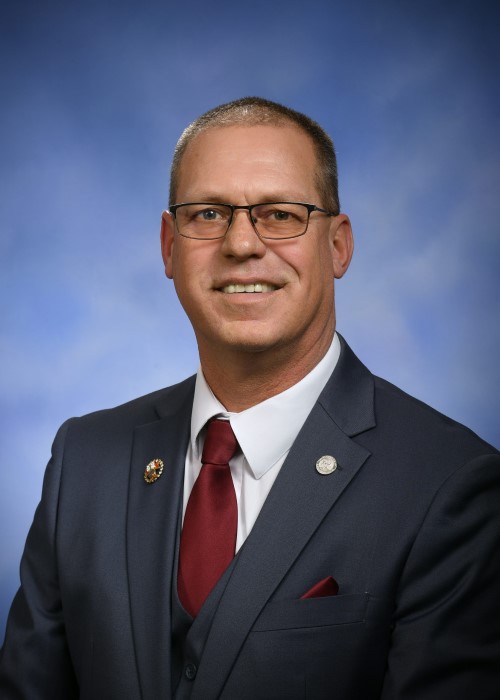
Rep. Greg Alexander
Sponsored bills
Maddy summaryHB 5416 amends the Michigan Strategic Fund Act to restructure the fund's governing board. It adds two new private-sector board members appointed by the governor (with input from minority leaders) who must have expertise in venture capital, commercial lending, or technology commercialization. The bill also updates membership requirements to ensure diversity representation (including minority, female, and small business perspectives) and specifies detailed qualifications for private-sector appointees. This change affects how the Michigan Strategic Fund, which administers economic development grants and incentives, is governed and managed.
Maddy summaryHB 5418 requires the Michigan Strategic Fund to post on its website details about businesses that received state economic assistance (grants, loans, or other aid) and later ceased operations in Michigan. Specifically, the notice must include the business name, assistance type and amount, and whether repayment is likely if the business breached its agreement. This amendment to Section 88b(10) of the Michigan Strategic Fund Act focuses on transparency, not changing how funds are distributed. It directly affects businesses receiving state economic assistance that shut down, requiring the fund to publicly report their status.
Maddy summaryHB 5391 changes Michigan's unemployment benefits recovery rules by limiting the time the state can seek repayment of improperly paid benefits. It prohibits the unemployment agency from recovering benefits more than one year after the claimant receives the payment, affecting most unemployed Michiganders who received benefits by mistake. Exceptions include cases involving suspected identity fraud (where recovery may still be pursued) or intentional fraud (where no time limit applies). The bill also maintains existing hardship waiver options for repayment if recovery would be unfair due to financial hardship or administrative errors.
Maddy summaryHB 5375 prohibits charging interest on unpaid restitution of overpaid unemployment benefits when the overpayment resulted from specific errors, such as agency mistakes, employer errors, or system issues - not the claimant's fault. It requires the unemployment agency to waive existing interest charges and refund payments made for those errors, with refunds due within 180 days of the law's effective date. The bill also stops interest from accruing during pending appeals and applies retroactively to overpayments from February 2020 through December 2026. This directly affects claimants who received overpayments due to errors beyond their control.
Maddy summaryHB 5363 requires Michigan public schools to notify parents in advance if their child’s class covers topics like gender identity, sexual orientation, or relationships, and allows parents to opt their child out without penalty. It mandates that schools form parent-led advisory boards (with at least half non-school-employed parents) to review curriculum and report on program goals. The bill also requires public hearings before changing sex education materials and emphasizes abstinence as a primary method for preventing pregnancy and STDs. This directly affects public school students, parents/guardians, and school districts in Michigan.
Maddy summaryHouse Bill 4425 creates the Sustainable Aviation Fuel Incentive Program in Michigan. This program aims to encourage companies to produce or blend sustainable aviation fuel (SAF) within the state by offering corporate income tax credits. The Department of Environment, Great Lakes, and Energy (EGLE) will administer the program, certifying SAF that meets specific criteria, including source materials, technical standards, and a minimum 50% reduction in life-cycle greenhouse gas emissions compared to traditional jet fuel. The bill sets an annual cap on the total amount of tax credits approved, starting at $4.5 million for the 2025-2026 fiscal year and increasing to $9 million annually thereafter.
Maddy summaryHouse Bill 4424 proposes a new corporate income tax credit for businesses that produce or blend sustainable aviation fuel (SAF) within Michigan. Qualified taxpayers can claim a credit of $1.50 per gallon for SAF produced or blended in the state and sold for use in aircraft departing from Michigan airports. This credit can increase up to $2.00 per gallon based on the SAF's life-cycle greenhouse gas emission reductions. If the credit amount exceeds a company's tax liability, the difference will be refunded.
Maddy summaryHB 4314 amends Michigan's environmental law to allow property owners and communities to remove free-floating debris and uprooted vegetation from shorelines without a permit. Specifically, it permits mechanical or manual removal between the ordinary high-water mark and the water's edge, as long as the activity doesn't impact the lakebed. This change directly affects residents, shoreline property managers, and local groups maintaining areas along Great Lakes and Lake St. Clair shorelines. The exemption does not apply to the St. Clair River delta area in Clay Township, St. Clair County, as defined in 1899 PA 175.
Maddy summaryHB 4917 removes a requirement that only state-approved graders may grade butter under Michigan's Manufacturing Milk Law. This change directly affects butter graders who previously needed state licensing to perform grading services. The bill deletes Section 157(1) of the law, which mandated department approval for graders, while keeping existing grading standards (based on federal regulations) intact. Dairy businesses and graders will no longer need to comply with the state licensing rule for butter grading.