

Maddy summaryHB 5466 amends Michigan's Public Health Code to limit emergency orders restricting patient visitation in healthcare facilities to a maximum of 30 days after an epidemic declaration. It specifically requires that after this 30-day period, healthcare facilities must allow "LINDA" (loved individuals need dedicated attention) visitation for patients with cognitive impairments, including family members, patient advocates, or designated attorneys-in-fact. The bill establishes safety measures like prescreening or visit duration limits for these visitors while ensuring facilities maintain safe operations. This directly affects hospitals, assisted living facilities, and physician offices during public health emergencies.
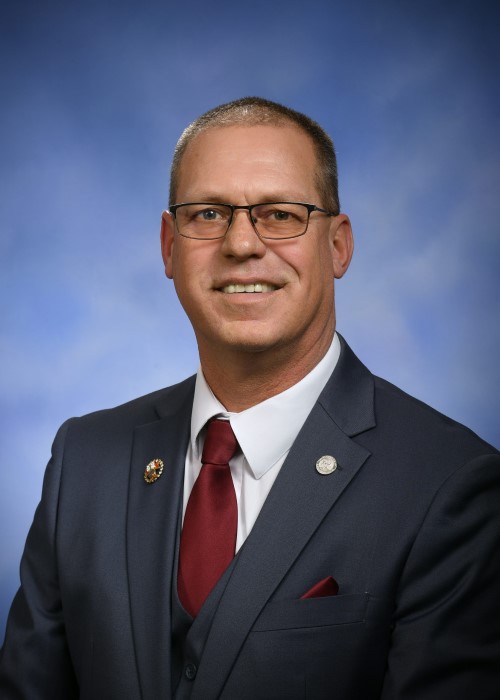
Rep. Greg Alexander
Sponsored bills
Maddy summaryThis bill amends Michigan's 2001 Manufacturing Milk Law to explicitly permit the sale of raw milk and raw milk products under the existing regulatory framework. It directly affects dairy producers and sellers who currently cannot legally sell these items under the law's current restrictions. The key change adds new Section 70a and revises Sections 111 and 136 to allow such sales while maintaining the law's overall structure. The bill updates the legal language to align with current market practices without creating new safety standards or requirements.
Maddy summaryHB 4911 amends Michigan's Occupational Code to clarify definitions and licensing requirements specifically for mobile barbershops. It defines "mobile barbershop" as either a self-contained vehicle or temporary setups at locations like client homes, and requires the state board to create operational rules for these businesses within one year (per Section 1112). The bill directly affects mobile barber service operators by establishing new regulatory standards for sanitation, safety, and record-keeping at temporary locations. It does not change existing rules for stationary barbershops but ensures mobile operations meet specific safety and transparency requirements before the new rules are finalized.
Maddy summaryHB 4910 allows dentists in Michigan to earn continuing education credit toward license renewal by actively participating in professional associations, rather than solely completing traditional courses. Dentists who are dues-paying, in good standing members of approved associations and participate in activities like meetings or committees can receive department-approved credit for these hours. The bill requires associations to be approved by the department (ensuring they weren't formed solely for education) and mandates dentists provide association verification of their participation. This directly affects licensed dentists needing to fulfill the existing 35-hour continuing education requirement every two years.
Maddy summaryHB 4925 would change Michigan's medical licensing rules to allow international medical graduates to obtain licenses under specific conditions. It amends existing statutes (MCL 333.17012 & 333.17031) by adding a new provision (section 17012a) that establishes eligibility pathways for these doctors. The bill directly affects international medical school graduates seeking to practice medicine in Michigan. This policy change creates a formal process for qualifying graduates to meet state licensing requirements.
Maddy summaryHB 4896 amends Michigan's medical licensing law to ensure international medical graduates face the same requirements as U.S. or Canadian graduates when applying for a medical license. Specifically, it prohibits the Michigan Board of Medicine from imposing stricter conditions on foreign-trained doctors than those applied to domestic graduates. The bill directly affects physicians trained outside the U.S. or Canada seeking to practice medicine in Michigan. This change removes potential barriers for international medical school graduates by mandating equal licensing standards under Section 17011(3). The bill is currently in committee review after its first reading in September 2025.
Maddy summaryHB 4277 amends Michigan's health licensing law to remove all questions about applicants' mental health from license applications, except for two specific questions already required: whether an applicant poses a risk to patient safety and whether they can perform essential job functions. This change affects health professionals seeking initial licensure or renewal, including doctors, dentists, and nurses. The bill prohibits the department from including any additional mental health inquiries on application forms. It directly simplifies the licensing process by limiting mental health disclosures to the two existing questions.
Maddy summaryHB 4919 modifies Michigan's Skilled Trades Regulation Act to help certain licensed professionals clear disciplinary records related to continuing education violations. It requires the licensing department to automatically remove citations for failing continuing education from a person's record 4 years after issuance (starting January 1, 2026), or if the person provides proof they completed the required education. Licensees who have such citations removed may state that no citation exists for that matter. This affects licensed individuals (like contractors or healthcare professionals) who received disciplinary notices for incomplete continuing education. The bill creates a clear, time-bound process for record removal without requiring additional disciplinary action.
Maddy summaryHB 4933 would reduce licensing requirements for personnel agencies in Michigan by amending sections of the Occupational Code (MCL 339.303a and 339.411) and repealing specific existing rules. The bill directly affects employment and staffing agencies by removing current licensing mandates under Article 10 of the 1980 Occupational Code and part of a 1979 law (MCL 338.2227). Key provisions include eliminating the need for these agencies to obtain state licenses, streamlining their operations, and updating regulatory language to reflect current practices. This is a policy change focused on regulatory simplification for a specific sector of the workforce industry.
Maddy summaryHB 4914 modifies Michigan's requirements for firms practicing architecture, engineering, or surveying. It changes the rule so that firms with nonlicensed owners (e.g., business partners who aren't licensed professionals) must first get approval from the state licensing department, instead of requiring two-thirds of all firm owners to be licensed. The bill also adds new reporting obligations for firms to provide the department with details about their owners, key staff, and other relevant information. Additionally, it requires firms to have a qualified "person in responsible charge" at every office location where services are provided, except for limited field offices that only review construction. These changes directly affect licensed professional firms operating in Michigan.