

Maddy summaryHB 4582, the "Commercial Premises Liability Act," establishes new rules for property owners regarding injuries to customers (invitees) on their premises. It creates a defense for property owners against liability claims when a hazard is "open and obvious" (e.g., a clearly visible spill), meaning they generally don’t need to warn customers about such conditions. However, owners must take reasonable precautions if an obvious hazard has "special features" making it unavoidable or posing severe risk (like a steep, unmarked step). The bill clarifies it doesn’t override existing laws or change comparative fault rules, focusing solely on defining when property owners must act to prevent injuries.
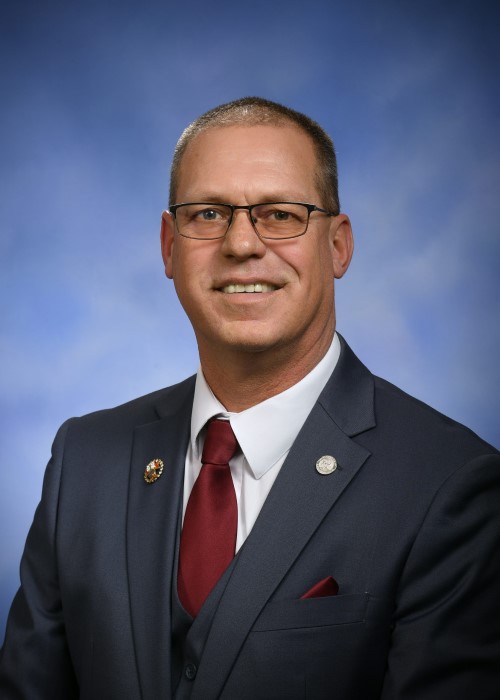
Rep. Greg Alexander
Sponsored bills
Maddy summaryHB 4908 allows cosmetology apprentices to perform shampoo services (preparing for shampoo, shampooing, or blow-drying) in licensed establishments without a full cosmetology license. To qualify, apprentices must complete 350 hours of training in a cosmetology curriculum and be enrolled in an apprenticeship program run by a licensed establishment owner. The bill requires establishments to verify apprentices' eligibility with a school letter on file, maintain records for 3 years, and have a licensed cosmetologist present during services. It does not permit apprentices to perform other cosmetology services beyond shampooing.
Maddy summaryHB 4949 modifies Michigan law to protect sport shooting ranges from liability related to noise. It exempts ranges that follow "generally accepted operation practices" from civil lawsuits or nuisance claims about noise pollution, even if the range later adds safety upgrades, expands, or updates. The bill also prevents local noise ordinances from applying to these ranges, ensuring they can operate under their original compliance standards. This directly affects range owners and operators by shielding them from noise-related legal challenges and allowing existing ranges to continue operating under pre-existing rules, even if new local ordinances conflict.
Maddy summaryThis bill amends Michigan's vehicle code to require drivers to pass county road worker vehicles with the same caution and speed restrictions as they must when passing stationary emergency vehicles. It defines road work vehicles as those used for construction, maintenance, or utility work displaying flashing red or amber lights, and updates the legal definitions of authorized emergency vehicles to include these road service vehicles. Drivers must reduce their speed by at least 10 miles per hour and move at least one lane or two vehicle widths away from the stationary vehicle when possible, with penalties including civil fines for violations. The changes apply to all public roadways and align the treatment of road workers with that of police, firefighters, and other emergency responders.
Maddy summaryThis bill expands the legal definition of a work zone to include areas marked by temporary traffic control devices like cones, flares, or vehicles with rotating beacons, ensuring clearer boundaries for construction and road work areas. It strengthens penalties for moving violations in work zones by doubling fines for standard violations and introducing misdemeanor or felony charges when such violations cause injury or death to workers or other individuals. The bill applies these stricter penalties only when the violation involves three or more points and excludes cases where the injured or deceased person was negligent. Like related bills HB 5703 and HB 5704, this legislation requires all three to be enacted together to take effect.
Maddy summaryThis bill proposes changes to Michigan's sentencing guidelines for crimes that result in injury or death within work zones. It directly affects prosecutors, judges, and defendants involved in such cases by modifying how sentences are calculated under existing criminal procedure law. The amendment to section 12e of the Code of Criminal Procedure would update the statutory framework governing these specific offenses. The bill is tied with related legislation HB 5702 and HB 5704, indicating coordinated legislative action on sentencing policy.
Maddy summaryThis bill designates March 8-14, 2026, as Multiple Sclerosis Awareness Week in Michigan to raise public awareness about the disease. It directly affects Michigan residents and supporters of the National Multiple Sclerosis Society by encouraging citizens to learn more about MS and support those living with the condition. The resolution includes a formal declaration of the awareness week and a commendation for the Michigan Chapter of the National Multiple Sclerosis Society for its ongoing efforts. This is a symbolic measure that does not create new laws or funding but serves to highlight the importance of MS research and patient support.
Maddy summaryThis bill would allow Michigan farms to discharge certain types of wastewater, such as cooling or wash water from processing farm products, without needing a permit under specific conditions. The key requirements include limiting annual discharge to 100,000 gallons, prohibiting hazardous waste and surface water discharge, and ensuring the water is stored properly and applied to vegetated land at least 100 feet from property boundaries and 75 feet from water wells. Farms must also rotate discharge locations based on soil conditions and maintain records of each discharge, while the bill explicitly excludes discharges containing sanitary sewage unless applied through a permitted subsurface system.
Maddy summaryThis bill amends Michigan's environmental protection laws to establish a permitting structure for the discharge of wash water from oceangoing vessels in state waters. It requires vessel operators to obtain permits from the Department of Environmental Quality and mandates that vessels comply with federal aquatic nuisance rules regarding ballast water management to prevent the spread of invasive species. The legislation sets specific timelines for permit applications, outlines conditions for permit revocation or modification, and clarifies fee structures for vessel permits. The bill also includes provisions for administrative hearings if permit holders contest departmental orders and establishes that state standards may be more protective than federal rules if adopted through a Great Lakes compact.
Maddy summaryThis resolution recognizes the 150th anniversary of the first telephone call made by Alexander Graham Bell on March 10, 1876, and honors the legacy of innovation it sparked. It acknowledges key milestones in telecommunications history, including the establishment of the Bell Telephone Company, the first telephone switchboard in Michigan, and major long-distance calls that expanded global connectivity. The measure directs the House of Representatives to honor the generations of innovators, engineers, and workers who advanced communications technology and expanded opportunities worldwide.