

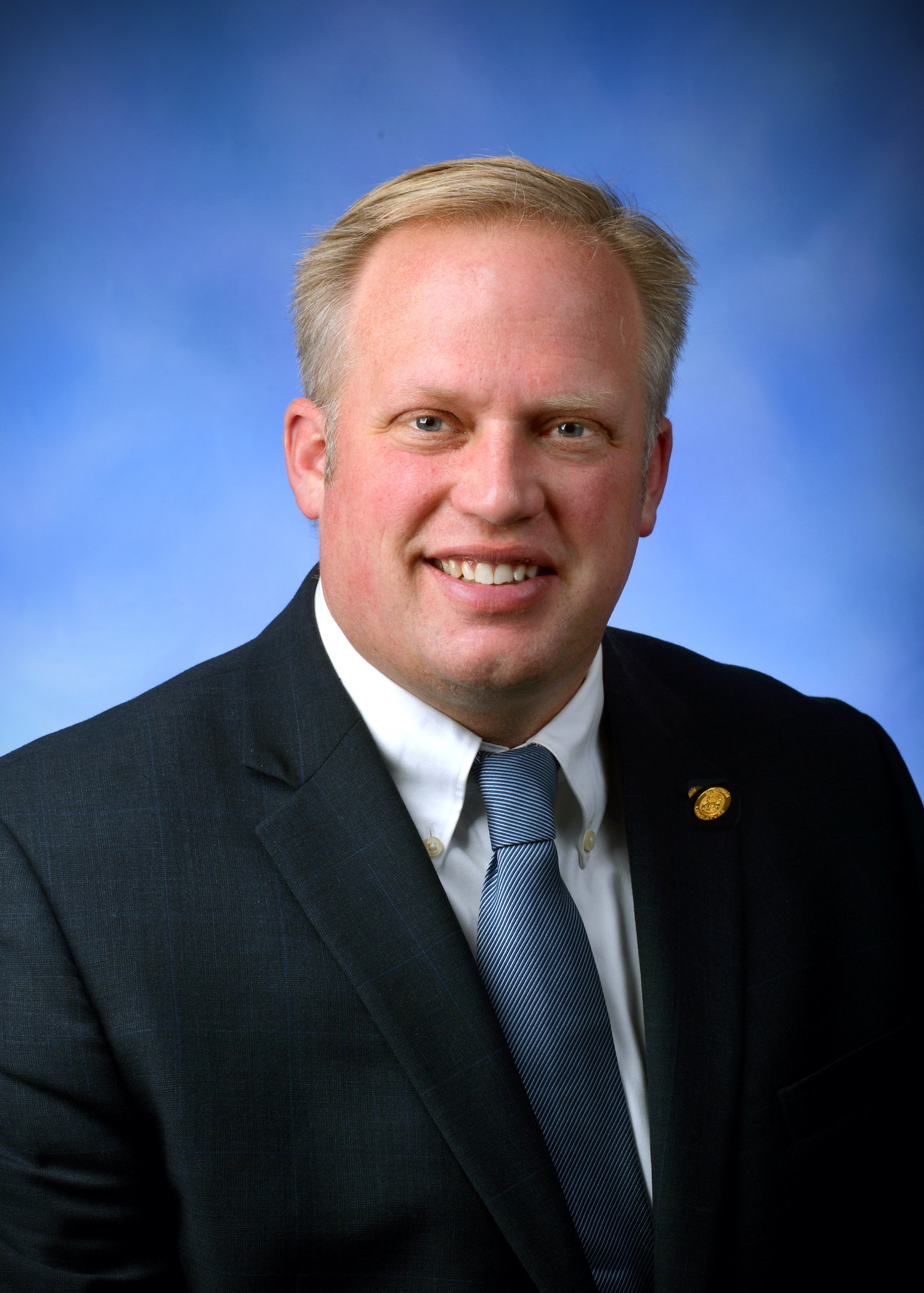
Photo of Luke Meerman
R Michigan House · District 89

Rep. Luke Meerman

Compare
Total votes
2,874
all sessions
Attendance
99%
18 missed
Near the chamber average
With party
91%
of cast votes
Near the chamber average
Bipartisan score
4%
crosses aisle rarely
Near the chamber average
Sponsored
975
bills & resolutions
Near the chamber average
Committees
4
assignments
975 bills and resolutions

Sponsored bills

Total
975
Primary
93
Co-sponsor
882
This page
975
matching current filters
Co-sponsor HB 5313
Passed · Michigan House · Co-sponsor
Health: licensing; setting aside certain disciplinary records; provide for, and modify certain continuing education requirements and sanctions. Amends secs. 16211, 16216, 16221, 16226, 16231, 16238, 17033 & 17533 of 1978 PA 368 (MCL 333.16211 et seq.) & adds secs. 16211a & 16231b.

Maddy summaryHB 5313 modifies Michigan's licensing rules for health professionals by removing certain disciplinary records from public view and adjusting continuing education requirements. It directly affects licensed healthcare workers (like nurses, doctors, and therapists) by changing how past disciplinary actions are handled and what training they must complete. Key provisions include adding new sections (16211a and 16231b) to limit public access to some disciplinary records, updating continuing education standards, and modifying sanctions for violations. The bill focuses on administrative changes to licensing processes without altering core professional standards or creating new funding.

Passed Feb 18, 2026 1 co-sponsor
Co-sponsor HB 5516
In committee · Michigan House · Co-sponsor
Courts: other; application of foreign and religious laws; prohibit. Creates new act.

Maddy summaryHB 5516, the "Foreign Law Limitation Act," prohibits Michigan courts, arbitrators, and administrative bodies from applying or enforcing foreign or religious laws in contracts or legal agreements if doing so would violate a resident's constitutional rights under U.S. or Michigan law. It requires these entities to block, modify, or void offending provisions when they conflict with constitutional rights, and to consider whether parties knowingly agreed to foreign law without duress. The law specifically excludes enforcement of federal or U.S. state laws and does not affect agreements made before the law's effective date. It directly affects courts handling disputes involving foreign legal provisions and protects Michigan residents from potential rights violations under external legal systems.

In committee Feb 10, 2026 1 co-sponsor
Co-sponsor HB 5489
In committee · Michigan House · Co-sponsor
Health occupations: emergency medical services personnel; licensure of medical first responders and emergency medical technicians; allow at 17 years of age. Amends 1978 PA 368 (MCL 333.1101 - 333.25211) by adding sec. 20950a. TIE BAR WITH: HB 5488'26

Maddy summaryHB 5489 would allow 17-year-olds to apply for medical first responder and emergency medical technician (EMT) licenses in Michigan, provided their application includes parental or guardian consent. It maintains an 18-year-old minimum for higher-level roles like paramedics, emergency medical services instructors, or EMT specialists. The bill amends Michigan's Public Health Code to establish these age requirements for EMS licensure, directly affecting young individuals seeking entry into emergency medical careers. This change requires the concurrent passage of HB 5488 to take effect.

In committee Feb 3, 2026 1 co-sponsor
Co-sponsor HB 5491
In committee · Michigan House · Co-sponsor
Corrections: other; strip searches according to biological sex by MDOC facilities; require. Amends sec. 69a of 1953 PA 232 (MCL 791.269a).

Maddy summaryHB 5491 requires that pat-down searches of visitors and strip searches of prisoners in Michigan state correctional facilities be conducted by staff of the same biological sex as the person being searched. This directly affects visitors to prisons and incarcerated individuals. The bill defines "biological sex" as sex characteristics present at birth (including chromosomes, hormones, and genitalia), excluding gender identity or self-identification. Visitors may opt out of the same-sex requirement by signing a waiver, but strip searches of prisoners must always follow the same-sex rule.

In committee Feb 3, 2026 1 co-sponsor
Co-sponsor HB 5488
In committee · Michigan House · Co-sponsor
Health occupations: emergency medical services personnel; licensure of medical first responders and emergency medical technicians; allow at 17 years of age. Amends sec. 20950 of 1978 PA 368 (MCL 333.20950). TIE BAR WITH: HB 5489'26

Maddy summaryHB 5488 lowers the minimum age requirement for licensure as a medical first responder or emergency medical technician (EMT) in Michigan from 18 to 17 years old. It amends Section 20950 of the Public Health Code (MCL 333.20950), specifically changing the age requirement in subsection (2)(a) from "18 years of age or older" to allow 17-year-olds to apply. The bill does not alter other licensing requirements, such as education programs, passing exams administered by the National Registry of Emergency Medical Technicians, or military service pathways. This change directly affects 17-year-olds seeking these emergency medical services roles who previously could not obtain licensure until age 18.

In committee Feb 3, 2026 1 co-sponsor
Co-sponsor HB 5315
Passed · Michigan House · Co-sponsor
Public employees and officers: state; discretion of the attorney general to intervene in certain matters; modify. Amends sec. 28 of 1846 RS 12 (MCL 14.28).

Maddy summaryHB 5315 amends Michigan law to clarify when the Attorney General must intervene in court cases involving the state. It changes Section 28 of the Revised Statutes to require the Attorney General to intervene in state court cases when specifically requested by the Governor or either legislative chamber, rather than having discretion. This directly affects the Attorney General's office and state entities involved in civil or criminal cases where the state has an interest. The bill modifies existing procedure by making intervention mandatory upon request, streamlining the process for state representation in court. (Procedural bill; summary concise per guidelines.)

Passed Jan 29, 2026 1 co-sponsor
Co-sponsor HB 4418
Passed · Michigan House · Co-sponsor
Probate: other; designation of a patient surrogate for health care decisions; allow. Amends 1998 PA 386 (MCL 700.1101 - 700.8206) by adding pt. 6 to art. V & repeals sec. 66h of 1939 PA 280 (MCL 400.66h). TIE BAR WITH: HB 4419'25

Maddy summaryHB 4418 updates Michigan's probate law to clarify how patients can designate a healthcare surrogate when they cannot make decisions themselves. It adds a new process for formally naming a surrogate (replacing the previous method) and removes an outdated section from older law. This directly affects patients without existing advance directives and their families by providing a clearer, more modern way to appoint someone to make medical decisions for them.

Passed Jan 29, 2026 1 co-sponsor
Co-sponsor HB 4419
Passed · Michigan House · Co-sponsor
Probate: other; designation of a patient surrogate for health care decisions; allow. Amends 1998 PA 386 (MCL 700.1101 - 700.8206) by adding secs. 5605 & 5606. TIE BAR WITH: HB 4418'25

Maddy summaryHB 4419 adds legal protections to Michigan's health care decision-making framework. It shields health care providers and facilities from liability when following decisions made by a legally designated patient surrogate or advocate, as long as they act in good faith. The bill also protects surrogates and advocates from liability for good-faith health care decisions they make. Providers who intentionally violate these rules face minimum damages of $1,000, while those who falsify or tamper with a patient's health care directive designation face minimum damages of $2,500. This directly affects patients with advance directives, their designated surrogates, and medical providers.

Passed Jan 29, 2026 1 co-sponsor
Co-sponsor HB 5477
In committee · Michigan House · Co-sponsor
Traffic control: driver license; program to provide driver license and state identification cards to parolees; provide for. Amends sec. 307 of 1949 PA 300 (MCL 257.307). TIE BAR WITH: HB 5475'26, HB 5474'26

Maddy summaryHB 5477 allows parolees in Michigan to use an identification card issued by the Department of Corrections as valid proof of identity when applying for a driver's license or state ID card. The bill amends Michigan's vehicle code to require the Secretary of State to accept these correctional facility ID cards, which include the parolee's legal name, photograph, and identifying information. This change directly affects individuals recently released from prison who need to establish legal identification for driving and other purposes. The key mechanism is adding this specific ID card as an accepted document under existing identity verification rules for license applicants. This eliminates a barrier to obtaining essential identification for parolees reentering communities.

In committee Jan 28, 2026 1 co-sponsor
Co-sponsor HB 5475
In committee · Michigan House · Co-sponsor
State: identification cards; program to provide state identification cards to parolees; provide for. Amends sec. 1 of 1972 PA 222 (MCL 28.291). TIE BAR WITH: HB 5477'26, HB 5474'26

Maddy summaryHB 5475 requires Michigan's Secretary of State to issue official state identification cards to individuals who are about to be released on parole or discharged from prison. Beginning January 1, 2026, the Secretary must issue these cards to eligible parolees using information provided by the Department of Corrections about their release date. The bill mandates that cards be delivered to the correctional facility before the parolee's release date or mailed to the facility if the person is already released. This directly affects parolees in Michigan who need state ID cards for accessing services, housing, or employment upon reentry.

In committee Jan 28, 2026 1 co-sponsor
Showing 141 to 150 of 975 bills
Previous 1 … 14 15 16 … 98 Next