

Maddy summaryThis House Resolution (HR 51) is a symbolic request urging the U.S. Department of Homeland Security to release $56 million in FEMA disaster relief funds already allocated to Michigan. It directly affects Michigan's emergency management agencies, local governments, and nonprofits that rely on these funds for disaster response, recovery, and public safety programs. The resolution states delays in releasing these funds strain state resources and risk disrupting critical emergency services following natural disasters. As a non-binding resolution, it does not change funding policy but formally requests federal action.
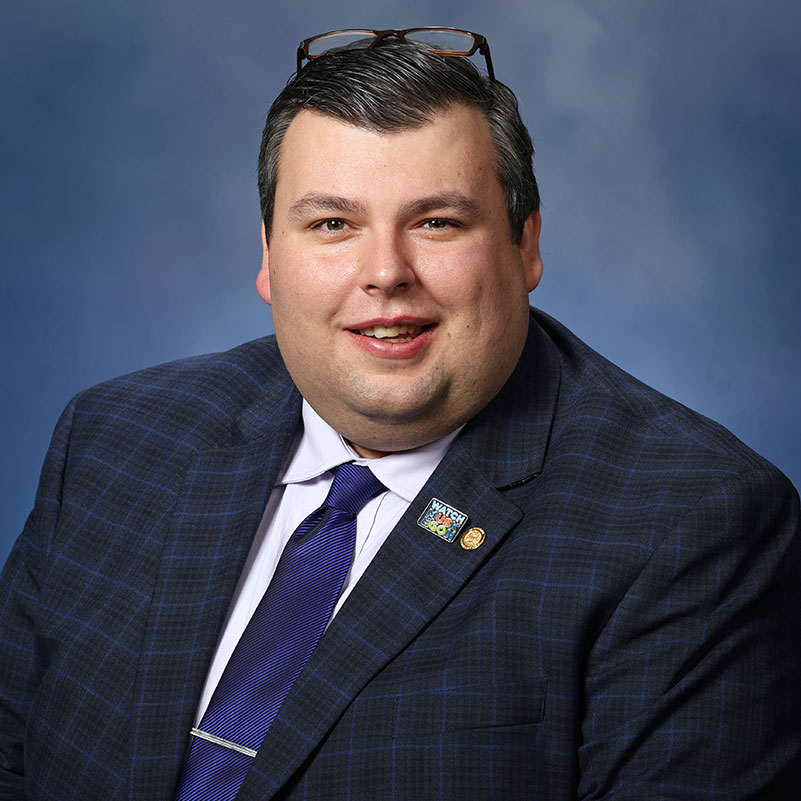
Rep. Will Snyder
Sponsored bills
Maddy summaryThis resolution designates March 21, 2025, as "Abolitionist Day" in Michigan to honor the state's history in the anti-slavery movement. It specifically recognizes Laura Smith Haviland, an Adrian, Michigan abolitionist who aided freedom seekers via the Underground Railroad and was inducted into the National Abolition Hall of Fame. The resolution has no policy or funding impact - it is purely commemorative. It directly affects Michigan residents by establishing an official state observance day. The resolution was introduced and adopted by the Michigan House on March 20, 2025.
Maddy summaryHB 4247 creates a 50% state income tax credit for Michigan taxpayers who donate cash or food to qualifying charities providing overnight shelter, food, or meals to indigent individuals (defined as households earning under 140% of the federal poverty level). The credit is capped at $100 for single filers ($200 for joint returns) or 10% of tax liability (max $5,000) for estates/trusts. To claim the credit, donors must receive a written acknowledgment from the charity verifying its mission, tax-deductibility under federal law, and compliance with civil rights laws. The bill requires the state tax department to report annual credit claims to legislative committees.
Maddy summaryHB 4248 creates a 50% tax credit for Michigan taxpayers who donate to community foundation endowment funds, effective for tax years beginning January 1, 2025. Individual taxpayers can claim up to $100 (or $200 for joint returns), while estates/trusts get a credit capped at 10% of their tax liability (max $5,000). To qualify, donations must be to certified community foundations (requiring at least $1 million in assets) with a gift acknowledgment, and contributions cannot be deducted for federal tax purposes. The Michigan Department of Treasury must annually report total credits claimed to tax committees.
Maddy summaryThis resolution directs the Clerk of the House to present nine specific bills - passed by both legislative chambers in December 2024 and "enrolled" (formally prepared for the Governor) - to the Governor. It follows a court ruling (February 2025) that confirmed Michigan’s Constitution requires all passed bills to be presented to the Governor within 14 days, rejecting the House’s prior refusal to act. The resolution overrides a previous House attempt (Resolution 41) to delay this process and mandates immediate compliance with the court’s order. It affects the House Clerk, Governor, and the nine bills’ legislative timeline, ensuring they can proceed toward becoming law.
Maddy summaryThis resolution declares March 2025 as Disability Awareness Month in Michigan. It symbolically recognizes the contributions of people with disabilities and encourages Michigan residents, businesses, and institutions to improve accessibility and support disability rights. The resolution does not create new laws or funding but serves as a formal acknowledgment of ongoing efforts to promote inclusion, aligning with the state's commitment to the Americans with Disabilities Act.
Maddy summaryThis is a symbolic House resolution (not a law) introduced in Michigan. It formally supports the U.S. Supreme Court's *Obergefell v. Hodges* ruling, which established same-sex marriage as a constitutional right. The resolution reaffirms that marriage should be defined by constitutional principles like equality and due process, not by historical or religious definitions. It specifically references Michigan's state constitution (Article I, Section 25) as conflicting with the *Obergefell* decision. The resolution has no legal effect and does not change any existing laws or policies.
Maddy summaryHB 4018 clarifies when juveniles aged 16-17 can be transported with adults during custody. The bill specifies that juveniles may only be transported with an adult who is 25 or younger if both were taken into custody simultaneously for the same offense or occupied the same vehicle during the offense. It requires juveniles to be separated from adults "at the earliest available time" after arrival. This directly affects law enforcement and juvenile justice systems handling cases involving older juveniles (16-17) and young adults (under 25) who commit offenses together. The amendment updates Michigan's Probate Code to provide clear, specific conditions for this exception to standard juvenile detention rules.
Maddy summaryHB 4193 modifies Michigan's groundwater discharge permit fee structure under the Natural Resources and Environmental Protection Act. It sets annual fees based on facility type: $7,500 for large facilities (group 1), $1,800 for small campgrounds (under 1,000 sites) or municipalities with ≤1,000 residents, $300 for group 2a facilities, and $240 for group 3 facilities. The bill also requires the department to process permit applications within 180 days, imposing a 15% fee discount if they fail to meet this deadline. This bill directly affects businesses, campgrounds, and small municipalities discharging wastewater to groundwater, with fees applicable until October 1, 2027. The bill was introduced on March 11, 2025, and is pending in committee.
Maddy summaryHB 4173 is a supplemental funding bill that allocates state money specifically for testing commercial poultry facilities and backyard flocks in Michigan for H5N1 bird flu. It directly affects poultry farmers, commercial hatcheries, and state agricultural testing labs by providing resources to conduct these tests. The key mechanism is creating a new appropriation (funding line) within the state budget for this purpose, separate from regular funding. This bill focuses solely on enabling testing capacity, not on disease prevention or other policy changes.