

Maddy summaryThis resolution formally honors the 50th anniversary of Ronald McDonald House Charities (RMHC), a global nonprofit providing family support during children's healthcare. It recognizes RMHC's network of 385 houses, 270 family rooms, and 40 care mobiles that offer lodging, meals, and medical services to families, including five locations in Michigan. The resolution has no binding effect or new policy changes - it is purely ceremonial, expressing legislative appreciation for RMHC's work. It was introduced and adopted by the House on March 19, 2025.
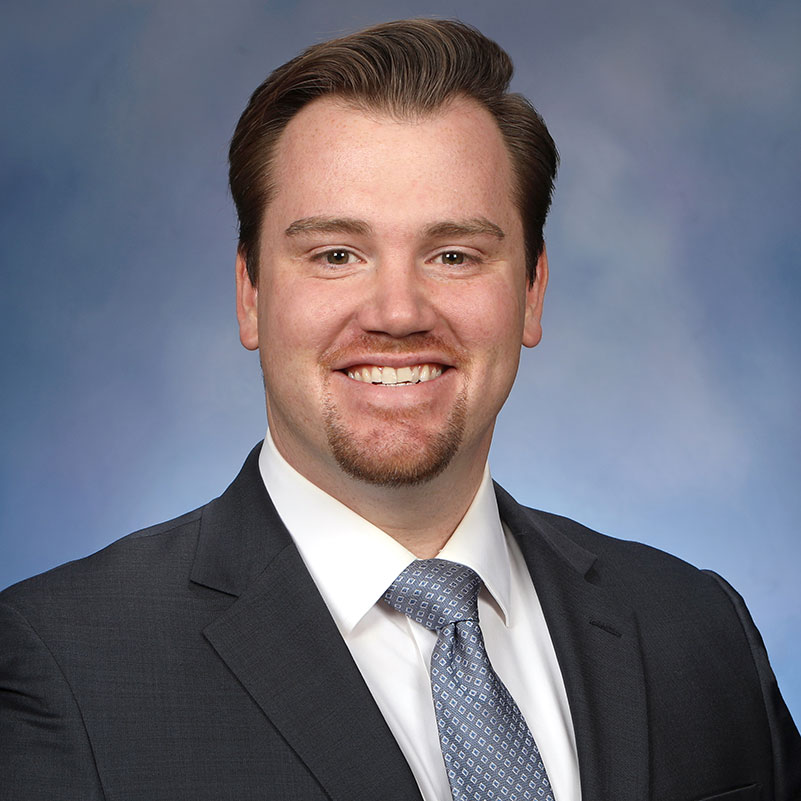
Rep. John Fitzgerald
Sponsored bills
Maddy summaryThis resolution directs the Clerk of the House to present nine specific bills - passed by both legislative chambers in December 2024 and "enrolled" (formally prepared for the Governor) - to the Governor. It follows a court ruling (February 2025) that confirmed Michigan’s Constitution requires all passed bills to be presented to the Governor within 14 days, rejecting the House’s prior refusal to act. The resolution overrides a previous House attempt (Resolution 41) to delay this process and mandates immediate compliance with the court’s order. It affects the House Clerk, Governor, and the nine bills’ legislative timeline, ensuring they can proceed toward becoming law.
Maddy summaryHB 4194 removes the requirement for non-U.S. citizens to prove legal presence in Michigan to obtain a state identification card. This change directly affects non-citizen residents who currently need to submit immigration documents to apply for a state ID. The bill amends Michigan law to eliminate this verification step, allowing eligible non-citizens to access state IDs without proving immigration status. The policy change applies only to state ID cards, not driver's licenses or other documents.
Maddy summaryHB 4196 amends Michigan's Enhanced Driver License and ID Card Act (MCL 28.305) to update how personal information is handled for applicants. It specifies that facial images and signatures collected for these IDs may only be shared with law enforcement agencies, other states (as required by federal law), or with an individual's written consent, while prohibiting disclosure of Social Security numbers on the card itself. The bill also clarifies retention rules for facial images (1 year unless fraud is suspected) and strengthens privacy protections by restricting disclosure of sensitive documents. This directly affects Michigan residents applying for enhanced driver licenses or official state ID cards, ensuring their biometric data and personal information are used only under defined, limited circumstances.
Maddy summaryThis resolution (HR 38) designates March 11, 2025, as "Community Volunteer Day" in Michigan to recognize local volunteers who support community well-being. It specifically acknowledges volunteers assisting families with children who have lost parents, providing guidance, stability, and financial aid. The resolution does not create new policies or funding but formally honors these volunteer efforts through a designated day of appreciation. It was introduced and adopted by the Michigan House on March 11, 2025.
Maddy summaryThis resolution symbolically designates March 9-15, 2025, as Multiple Sclerosis Awareness Week in Michigan. It recognizes the impact of multiple sclerosis on Michiganders (affecting nearly 1 million people nationwide) and encourages public awareness and support for those living with the disease. The resolution does not create new policies or allocate funds - it is a formal declaration by the Michigan House to highlight the work of the National MS Society and its local support groups.
Maddy summaryHB 4175 modifies Michigan's high school diploma requirements by adding specific course credits students must complete. It requires all students graduating after 2023 to complete a half-credit personal finance course (fulfilling part of math, arts, or language requirements), while maintaining existing requirements for 4 math credits (including algebra I, geometry, and algebra II), 3 social science credits (including U.S. history and geography), 1 health/PE credit, and 1 arts credit. The bill also mandates two credits in a language other than English (including American Sign Language) for all students by graduation, with schools encouraged to offer language courses in early grades. These changes directly affect Michigan high school students and school districts responsible for implementing diploma standards.
Maddy summaryThis proposed constitutional amendment (HJR F) would remove gender-specific language from two Michigan constitutional provisions. It would repeal Article I, Section 25 - which defined marriage as "the union of one man and one woman" - and amend Article X, Section 1 to make property rights language gender-neutral. If approved, it would eliminate the constitutional ban on same-sex marriage and update outdated references to gender in property law. The amendment would require voter approval at the next general election. (Note: The bill is currently in committee referral, with no further action taken as of March 2025.)
Maddy summaryHB 4167 amends Michigan's sentencing guidelines to specifically address the illicit use of xylazine, a veterinary drug increasingly misused in illicit drug mixtures. The bill adds xylazine to the list of substances covered under sentencing guidelines (MCL 777.13m), meaning courts must now apply standardized sentencing ranges for convictions involving its unauthorized possession or use. This directly affects individuals convicted of xylazine-related offenses, including those using it alone or combined with other drugs. The change creates a clear, defined sentencing path for this specific offense, moving beyond general drug sentencing rules to address xylazine's growing public health impact. The bill was introduced on March 5, 2025, and referred to the Judiciary Committee.
Maddy summaryHB 4165 amends Michigan's licensing requirements for psychologists by updating the supervised postgraduate experience rules. The bill modifies Section 18223 of the Public Health Code to clarify that individuals seeking a full psychology license must complete at least one year of supervised postdoctoral experience in a healthcare setting, as defined by the licensing board. It also specifies that limited licenses for master's degree holders require similar supervised experience and mandate that these licenses include two key restrictions: mandatory supervision by a fully licensed psychologist and prohibitions on advertising as a fully licensed practitioner. The changes primarily affect psychology applicants and current license holders seeking to transition to full licensure.