

Maddy summaryMichigan House Bill 6264, titled the "data center energy standards act," requires owners and operators of data centers in the state to source 100% of their annual energy use from clean or renewable sources by January 1, 2040. The bill allows facilities to meet this requirement through on-site generation, power purchase agreements, or other energy instruments approved by the Michigan Public Service Commission. Violations of these standards are subject to civil fines of up to $10,000 per day, which must be deposited into the state's general fund. This legislation only takes effect if seven companion bills from the 103rd Legislature are also enacted into law.
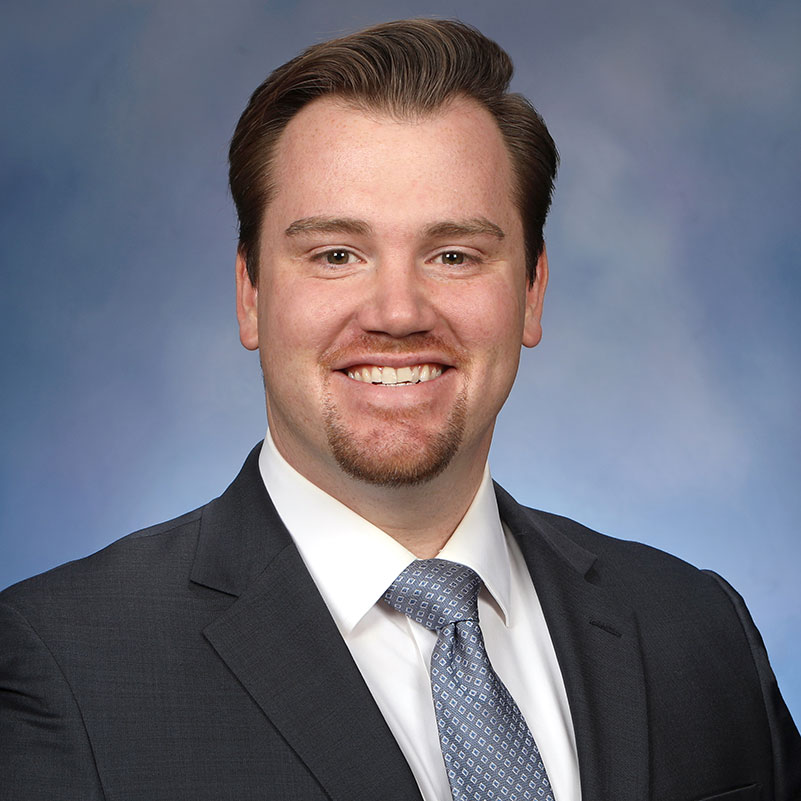
Rep. John Fitzgerald
Sponsored bills
Maddy summaryThis resolution declares August 2026 as National Filicide Awareness Month in Michigan to increase public understanding of cases where a parent or caregiver causes the death of a child. It aims to encourage collaboration among medical professionals, educators, law enforcement, and community organizations to better recognize risk factors and support child safety. The measure also seeks to honor the memory of children lost to filicide and promote education on prevention efforts across the state.
Maddy summaryThis resolution declares August 2026 as Girls and Women in Sports Month in Michigan to recognize the participation and achievements of female athletes at all levels. It highlights that the state ranks eighth nationally for high school girls' sports participation, with approximately 125,000 students involved. The text also notes recent professional league expansions in Detroit, including teams from the Professional Women's Hockey League and the Women's National Basketball Association.
Maddy summaryThis resolution declares September 11-17, 2026, as Patriot Week in Michigan. It encourages citizens, schools, and government agencies to participate by honoring the nation's founding principles, historical figures, and symbols. The text also acknowledges the victims of the September 11, 2001, attacks.
Maddy summaryHB 4103 adds a new section to Michigan's health occupations law to implement an occupational therapy licensure compact. This bill allows occupational therapists licensed in Michigan to practice in other participating states without obtaining separate licenses, and vice versa for therapists from other compact states. It directly affects occupational therapists seeking to work across state lines, reducing barriers to practice. The compact mechanism establishes standardized licensing requirements among participating states, streamlining the process for therapists to provide services in multiple jurisdictions.
Maddy summaryHB 4104 updates Michigan's occupational therapy licensing rules to join a multi-state licensure compact. This would allow occupational therapists licensed in Michigan to practice in other participating states without obtaining separate licenses. The bill modifies existing law to align with the compact's standards and adds new sections for implementation. It directly affects occupational therapists seeking to work across state lines within the compact.
Maddy summaryHB 4724 transfers a specific 0.586-acre parcel of state-owned property (located at 345 Northland Drive, NE, Rockford, Kent County) currently managed by the Michigan State Police. The bill authorizes the state administrative board to convey this property via sale, transfer, or trade to local governments or other state agencies, requiring fair market value appraisal and including a 30-year public use restriction if sold to local entities. Revenue from sales must be deposited into the state general fund, and the property transfer includes provisions for mineral rights revenue sharing (50% to the state) and preservation of aboriginal antiquities. This bill directly affects the State Police (as current custodian), Kent County local government (as potential buyer), and future public users of the property.
Maddy summaryHB 4101 establishes Michigan's participation in the Physical Therapy Licensure Compact, enabling physical therapists licensed in Michigan to practice in other participating states without obtaining separate licenses. This directly affects physical therapists seeking to work across state lines, particularly those in states already part of the compact. The key mechanism is adopting a standardized licensing framework that allows reciprocal practice privileges among participating states. The bill amends Michigan's public health code to align with the compact's requirements, creating a streamlined process for interstate practice. It does not change existing licensure standards within Michigan but facilitates mobility for licensed physical therapists.
Maddy summaryHB 4805 increases the percentage of Michigan's Children's Trust Fund available for disbursement to child welfare programs. It changes the disbursement rate from 4.25% (2015-2017) to up to 5% starting in 2018 (if the fund's 12-quarter average reaches $23.5 million), and then to up to 8% beginning in fiscal year 2025. The bill uses a rolling average of the fund's value (including investment gains or losses) to determine annual disbursement amounts. This directly affects state funding for child abuse prevention and related services under the Child Abuse and Neglect Prevention Act.
Maddy summaryHB 4808 amends Michigan's Open Meetings Act to allow specific public bodies to hold remote meetings via video or phone under new conditions, expanding beyond emergency situations. It directly affects agricultural commodity groups (like beef or potato commissions), municipal retirement boards, energy joint agencies, and the Children's Trust Michigan state board. Key provisions require two-way communication during remote meetings, 18-hour advance notice with clear participation details, and agenda posting 2 hours before meetings. The bill maintains transparency requirements while permitting remote participation for these designated groups without restricting physical meeting options.