

Maddy summaryHB 4715 protects individuals and entities that report suspected or confirmed insurance fraud from civil lawsuits, provided they act without malice and do not knowingly provide false information. It extends this immunity to insurers, their employees, private citizens cooperating with fraud investigations, and authorized agencies like the National Insurance Crime Bureau. The bill ensures those filing reports, sharing information, or testifying in fraud cases cannot be sued for libel, slander, or other civil claims related to their good-faith actions. This directly affects anyone involved in reporting or investigating insurance fraud within Michigan’s legal framework.
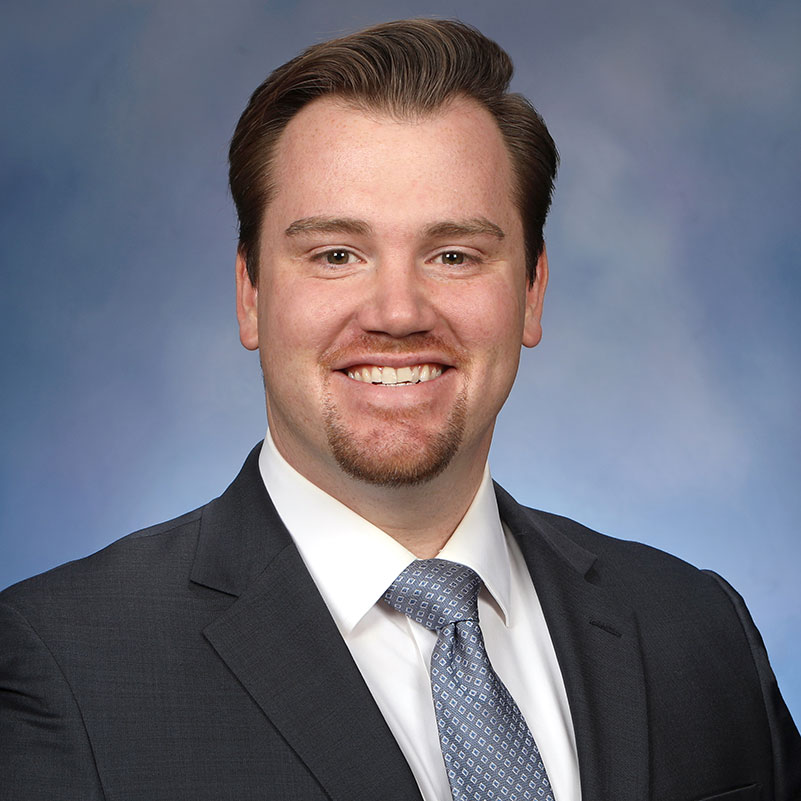
Rep. John Fitzgerald
Sponsored bills
Maddy summaryHB 4719 amends Michigan's Insurance Code to adjust civil penalties for insurance violations. It increases the maximum fine for knowing violations from $1,000 to $5,000 per violation (capped at $50,000 total) and clarifies that violations include non-compliant filings under specific insurance chapters. The bill directly affects insurance professionals who breach the code, allowing the director to order fines, license suspensions, or cease-and-desist actions. It also specifies that fines under this section can be imposed alongside other penalties like restitution for certain violations.
Maddy summaryThis resolution declares September 19, 2025, as POW/MIA Recognition Day in Michigan. It commemorates Michigan's service members missing in action or held as prisoners of war since World War II, honoring their sacrifice and the state's commitment to finding and repatriating them. The resolution does not create new laws or obligations but serves as a ceremonial observance.
Maddy summaryHR 173 is a resolution passed by the Michigan House of Representatives to condemn all forms of political violence and reaffirm the body's commitment to civility, safety, and peaceful democratic engagement. It does not create new laws or policies but serves as a formal statement expressing the House's stance against violence targeting public officials and citizens. The resolution cites recent incidents of political violence across the U.S., including attacks on elected leaders and events like the 2025 assassination of activist Charlie Kirk. It will be transmitted to the President, Michigan Governor, and congressional leaders as a non-binding expression of the House's values.
Maddy summaryHB 4874 requires the Michigan legislature to appropriate at least $12.3 million annually starting fiscal year 2026 for supplemental payments to rural school districts meeting specific criteria defined in existing law (MCL 388.1622d). This bill directly affects eligible rural and isolated school districts by guaranteeing additional state funding beyond their regular school aid. The key provision mandates a fixed annual appropriation for these districts, ensuring consistent supplemental support beginning in 2026. The bill does not change how districts operate or define "rural districts," but rather establishes a dedicated funding stream for them. It is currently in the introduction phase, referred to the Appropriations Committee.
Maddy summaryHB 4875 mandates annual state funding of at least $125 million starting in fiscal year 2026 to cover school transportation costs for students. It directly affects Michigan public school districts by requiring dedicated state appropriations for pupil transportation, as defined under existing state school aid law. The bill creates a permanent funding mechanism ensuring consistent support for school bus services and related operational costs. This provision applies specifically to transportation services for students, not general school funding. The bill is currently under review in the Appropriations Committee after its introduction on September 11, 2025.
Maddy summaryHB 4870 creates a state program to provide free breakfast and lunch to all public school students in grades pre-K through 12, as well as students up to age 26 in special education programs. Participating schools must already be in the federal National School Lunch Program and offer meals at no cost to every student, while maximizing federal funding through the Community Eligibility Provision (CEP). The bill requires schools to accommodate documented medical dietary needs on a case-by-case basis and encourages offering religiously appropriate meals that meet federal nutrition standards. It also mandates schools to simplify income forms for families to help determine eligibility for other federal benefits.
Maddy summaryHB 4872 requires Michigan public schools to receive at least $210 per student annually starting in fiscal year 2026 for mental health and safety programs. It directly affects all public schools in the state by mandating this minimum per-pupil funding level, defined using the standard "membership" calculation from Michigan's school aid law. The bill creates a new funding mechanism within the School Code to address school safety and student mental health needs. This is a concrete policy change that would allocate state funds specifically for these purposes, not a procedural or commemorative measure.
Maddy summaryHB 4876 requires Michigan's legislature to appropriate annual funding starting in fiscal year 2026 to support career and technical education (CTE) and vocational-technical programs in public schools. It mandates that this funding must equal or exceed the total amount allocated for these programs in fiscal year 2025 under existing law (sections 61a, 61b, 61d, and 62 of the State School Aid Act of 1979). The bill directly affects school districts offering CTE programs by guaranteeing stable, inflation-matched funding levels. This provision aims to maintain current program resources without specifying new educational requirements or eligibility changes.
Maddy summaryHB 4869 mandates that Michigan's legislature appropriate at least $2.6 billion annually starting in the 2025-2026 fiscal year to fund special education services for public school students. This funding directly supports school districts providing services under specific sections of Michigan's State School Aid Act (MCL 388.1651a, 388.1651c, 388.1651d, 388.1651e, 388.1653a, 388.1654, and 388.1656). The bill requires the state to set aside this specific amount each year for special education programs, rather than relying on existing funding formulas. It applies to all public school districts serving students with disabilities under the referenced statutes. The bill was introduced on September 11, 2025, and referred to the Appropriations Committee.