

Maddy summaryHB 4590 adds Part 9 to Michigan's Clean and Renewable Energy Act, requiring the Michigan Public Service Commission (MPSC) to create rules for "Locally Distributed Shared Solar Facilities" (LDSS). This bill directly affects community solar projects and subscribers, mandating that LDSS facilities must use solar panels not made in China, North Korea, or Iran, have at least three subscribers, limit any single subscriber to 40% of output, and meet specific size caps (5 MW or 20 MW). Key provisions include requiring facilities to provide bill credits proportional to each subscriber's contribution and ensuring 60% of capacity is subscribed by small users (40 kW or less). The MPSC must establish these rules to govern community solar programs under this new framework.
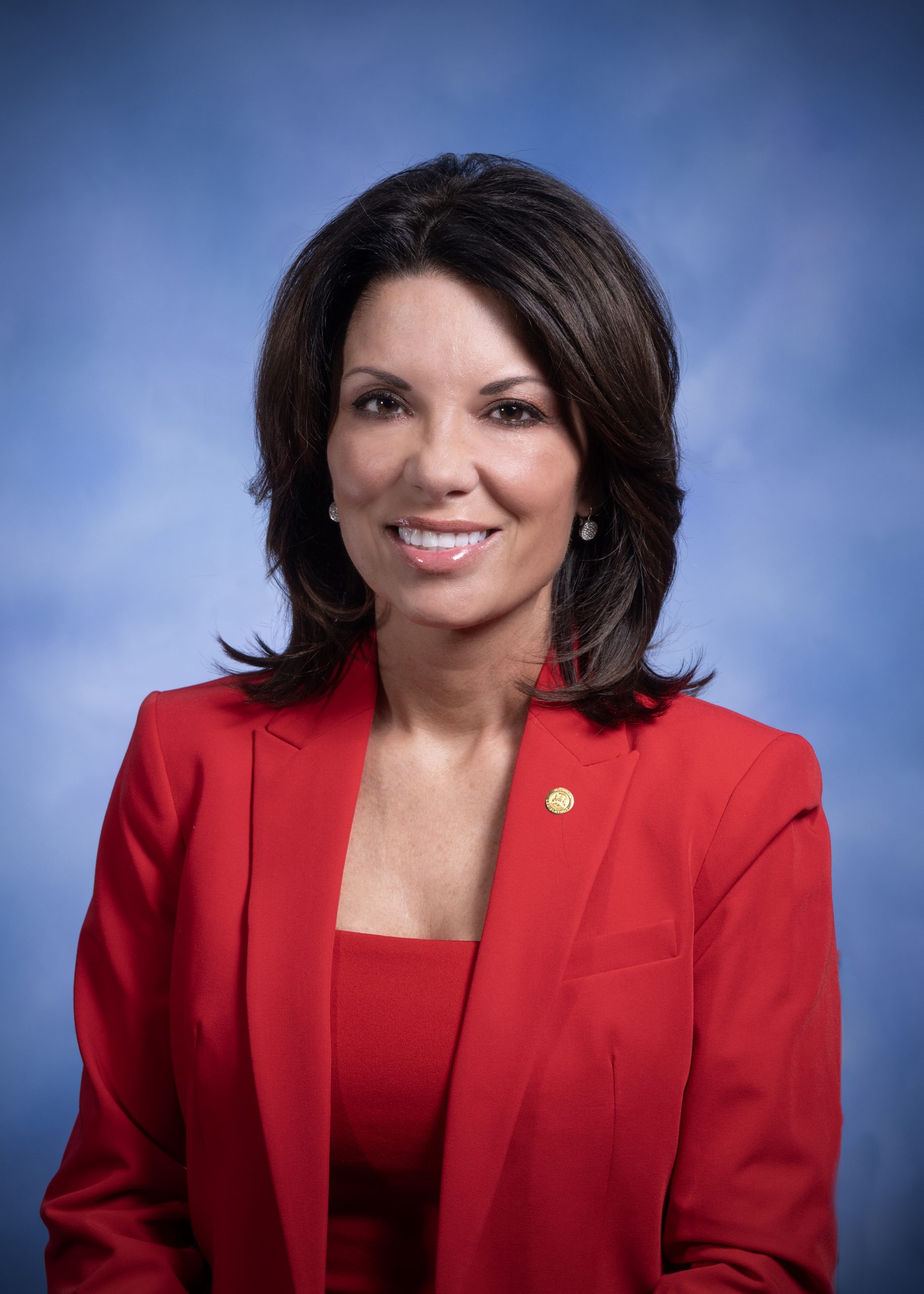
Rep. Angela Rigas
Sponsored bills
Maddy summaryHB 4392 creates a funding mechanism to allocate money from the Natural Resources Trust Fund to the Department of Natural Resources (DNR). It specifies how these trust fund resources will be used for DNR operations, directly affecting the department's budget management. This procedural bill does not establish new programs but formalizes existing funding transfers. The bill was enacted as PA 21'25 with immediate effect after approval by the Governor.
Maddy summaryThis bill (HB 4182) amends Michigan's use tax law to add a new exemption for motor fuel sales. It specifically creates a new section (4gg) in the law to exempt certain motor fuel transactions from use tax. The bill directly affects businesses selling motor fuel, potentially reducing their tax burden on qualifying sales. However, the provided context does not specify the exact scope of the exemption or who qualifies for it, so the summary cannot detail the precise mechanisms or affected parties beyond the general tax exemption for motor fuel.
Maddy summaryHB 4180 removes the sales tax requirement for motor fuel sales in Michigan by amending the state tax code. It directly affects gas stations and fuel retailers by exempting motor fuel transactions from the standard sales tax. The bill creates a new tax exemption provision (Section 4gg) in the tax code, specifically excluding motor fuel sales from taxable transactions. This change became effective immediately upon the Governor's approval on October 7, 2025.
Maddy summaryHB 4181 removes a sales tax exemption for certain motor fuel purchases by amending Michigan's 2004 tax code (MCL 205.173 & 205.175). The bill directly affects businesses and consumers purchasing motor fuel by eliminating an existing tax exemption, meaning these purchases will now be subject to sales tax. It streamlines the tax code by clarifying that motor fuel is no longer exempt from sales tax under the specified sections. The bill was enacted on October 7, 2025, and is now law as Public Act 18 of 2025.
Maddy summaryHB 4183 increases the motor fuel tax rate and expands the types of fuels subject to the tax under Michigan law. It directly affects motor fuel sellers (like gas stations) and consumers through higher costs for gasoline and other taxed fuels. The bill amends Section 8 of the 2000 Motor Fuel Tax Act (MCL 207.1008) to implement these changes, which became law immediately upon approval by the Governor on October 7, 2025.
Maddy summaryHB 4107 requires Michigan schools to include specific health education content for students in grades 7-12. It mandates instruction in cardiopulmonary resuscitation (CPR), automated external defibrillator (AED) use, and first aid response kits (including tourniquets and bleeding control supplies) as part of the health curriculum. Schools may use trained personnel like Red Cross instructors, EMTs, or properly trained teachers to deliver this instruction, with hands-on practice encouraged but not required for all students. The bill exempts 100% online schools from requiring hands-on CPR practice.
Maddy summaryHB 4160 prevents Michigan state agencies from creating rules stricter than federal standards, unless they prove a "clear and convincing need" for stricter rules. It directly affects all state agencies that create regulations, requiring them to justify any rule exceeding federal benchmarks. The bill mandates that agencies must either cite specific state law authorizing stricter rules or provide detailed justification for exceptional circumstances. This applies whether federal rules exist or not, though it excludes special education rules from this restriction. The law aims to align state regulations with federal standards unless compelling state-specific reasons exist.
Maddy summaryHB 5048 creates special vehicle registration plates in Michigan for specific military service groups. It allows eligible veterans, survivors, and family members to apply for plates featuring unique identifiers: "EX-POW" for prisoners of war or spouses, "WWI" for World War I/Cold War veterans (defined as 1945-1991), "Pearl Harbor survivor," "Purple Heart" with medal vignette, "Gold Star Family" (for families of fallen service members), and "Blue Star Family" (for families of currently serving members). Applicants must provide proof of eligibility to the Secretary of State, with no application or renewal fees required. These plates are displayed on vehicles and expire annually, with standard registration taxes applying except for the "EX-POW" plate for one vehicle per household.
Maddy summaryThis resolution symbolically declares September 22-26, 2025, as Farm Safety and Health Week in Michigan. It recognizes the state's agricultural workforce (including approximately 44,000 farms) and aligns with the national observance focused on safety practices like equipment handling, rural roadway safety, and youth protection on farms. As a ceremonial resolution, it does not create new laws or directly affect any individuals or entities. The declaration serves to honor agricultural workers and promote safety awareness during peak farming season.