

Maddy summaryThis is a symbolic House resolution (not a law) introduced in Michigan. It formally supports the U.S. Supreme Court's *Obergefell v. Hodges* ruling, which established same-sex marriage as a constitutional right. The resolution reaffirms that marriage should be defined by constitutional principles like equality and due process, not by historical or religious definitions. It specifically references Michigan's state constitution (Article I, Section 25) as conflicting with the *Obergefell* decision. The resolution has no legal effect and does not change any existing laws or policies.
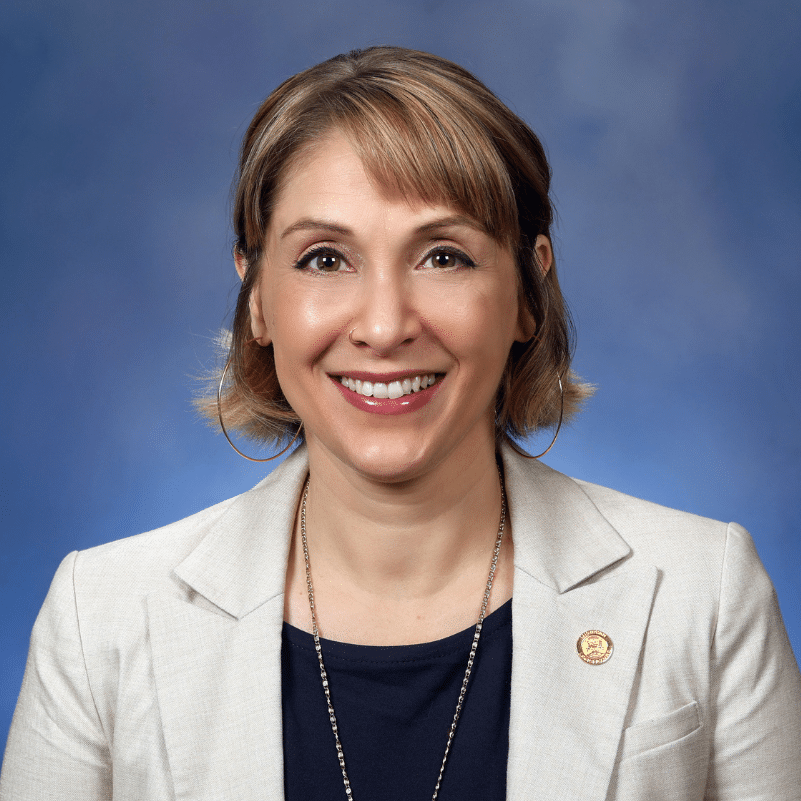
Rep. Emily Dievendorf
Sponsored bills
Maddy summaryHB 4197 establishes Michigan's "Bill of Rights for the Homeless," creating new legal protections for individuals experiencing homelessness. It guarantees rights including free movement in public spaces, equal access to services and employment (without discrimination over lack of permanent address), emergency medical care, voting access, and privacy protections for records shared with shelters. The bill also allows local governments to create designated "safe outdoor spaces" for encampments and provides legal remedies for violations, such as court orders or damages. It directly affects homeless residents across Michigan, particularly youth aged 13-23, by prohibiting discrimination in public services, housing, and schools. The law takes effect 90 days after enactment.
Maddy summaryThis resolution symbolically designates March 9-15, 2025, as Multiple Sclerosis Awareness Week in Michigan. It recognizes the impact of multiple sclerosis on Michiganders (affecting nearly 1 million people nationwide) and encourages public awareness and support for those living with the disease. The resolution does not create new policies or allocate funds - it is a formal declaration by the Michigan House to highlight the work of the National MS Society and its local support groups.
Maddy summaryHB 4174 modifies Michigan's juvenile justice code to establish a presumption that self-incriminating statements made by juveniles during police interrogations are admissible in court if obtained through deceptive practices (e.g., false promises of leniency or misleading statements about evidence). The bill directly affects juveniles under 18 facing delinquency proceedings and law enforcement officers who may use deceptive tactics during interrogations. Keyly, it amends the Probate Code to add Section 17e, shifting the standard so such statements are presumed admissible unless the court finds the deception was "unreasonably coercive." This changes current practice by making it harder to exclude statements obtained through deception, impacting how juvenile confessions are handled in court.
Maddy summaryThis proposed constitutional amendment (HJR F) would remove gender-specific language from two Michigan constitutional provisions. It would repeal Article I, Section 25 - which defined marriage as "the union of one man and one woman" - and amend Article X, Section 1 to make property rights language gender-neutral. If approved, it would eliminate the constitutional ban on same-sex marriage and update outdated references to gender in property law. The amendment would require voter approval at the next general election. (Note: The bill is currently in committee referral, with no further action taken as of March 2025.)
Maddy summaryHB 4169 creates a Rare Disease Advisory Council within Michigan's Department of Health to advise on research, diagnosis, and treatment of rare diseases. The council, composed of 12-18 members including physicians, patients, caregivers, insurers, researchers, and industry representatives, must identify policy priorities to improve access to care and reduce discrimination for individuals with rare diseases (defined as affecting fewer than 200,000 people in the U.S.). Key duties include researching cost-effective treatments, sharing best practices from other states, and developing a public webpage with rare disease resources by March 2026. The bill establishes a formal advisory body but does not change existing laws or funding.
Maddy summaryHB 4166 prohibits the non-medical use of xylazine (a sedative sometimes mixed with drugs like fentanyl) in Michigan. It defines "illicit use" as any xylazine use not covered under "licit use," which includes legal veterinary applications, pharmaceutical manufacturing, or approved medical treatments. The bill amends Michigan's Public Health Code to make possessing or using xylazine for non-licensed purposes a felony, with penalties ranging from up to 20 years in prison or fines up to $1 million depending on the amount. This directly affects individuals using xylazine outside approved medical or veterinary contexts, aligning penalties with those for other controlled substances like opioids.
Maddy summaryThis resolution (HR 33) calls on the U.S. Congress to restore funding from the United States Agency for International Development (USAID) to research universities. It directly affects research institutions that rely on USAID for critical projects in agriculture, food security, public health, and global development. The resolution states that a recent funding freeze has disrupted programs like the Feed the Future Lab, threatening research progress and international partnerships. As a non-binding resolution, it urges Congress to act but does not change funding policies itself.
Maddy summaryThis House Resolution (HR 34) urges the federal government to consider the economic impacts of tariffs on trade with Canada and Mexico. It directly affects Michigan businesses, particularly in agriculture (where Canada is the top export market), manufacturing, and auto production, which rely on stable North American supply chains. The resolution reaffirms support for the U.S.-Mexico-Canada Agreement (USMCA) and highlights Michigan’s $3 billion annual agricultural exports and $55 billion in annual trade with Ontario. As a non-binding resolution, it does not create new laws but formally advocates for fair trade negotiations to protect Michigan’s economy.
Maddy summaryHB 4134 amends Michigan's sentencing guidelines to establish specific penalties for crimes that prevent access to healthcare facilities, such as blocking entrances to clinics. It directly affects individuals convicted of obstructing access to medical care, including abortion providers or other healthcare services. The bill modifies existing sentencing guidelines (MCL 777.13n) to create new, higher sentencing ranges for these offenses. This change would apply to cases where someone intentionally interferes with lawful access to a healthcare facility. The bill is currently in committee review after its February 2025 introduction.