

Maddy summaryHB 5072 allocates supplemental state funds specifically for testing sexual assault kits in Michigan for the fiscal year ending September 30, 2026. It directly affects state law enforcement agencies and crime laboratories responsible for processing these kits by providing dedicated budget resources. The bill creates a new appropriation within the state budget to cover testing costs, ensuring these kits can be processed without relying on existing funding streams. This is a funding measure, not a policy change to how kits are collected or handled.
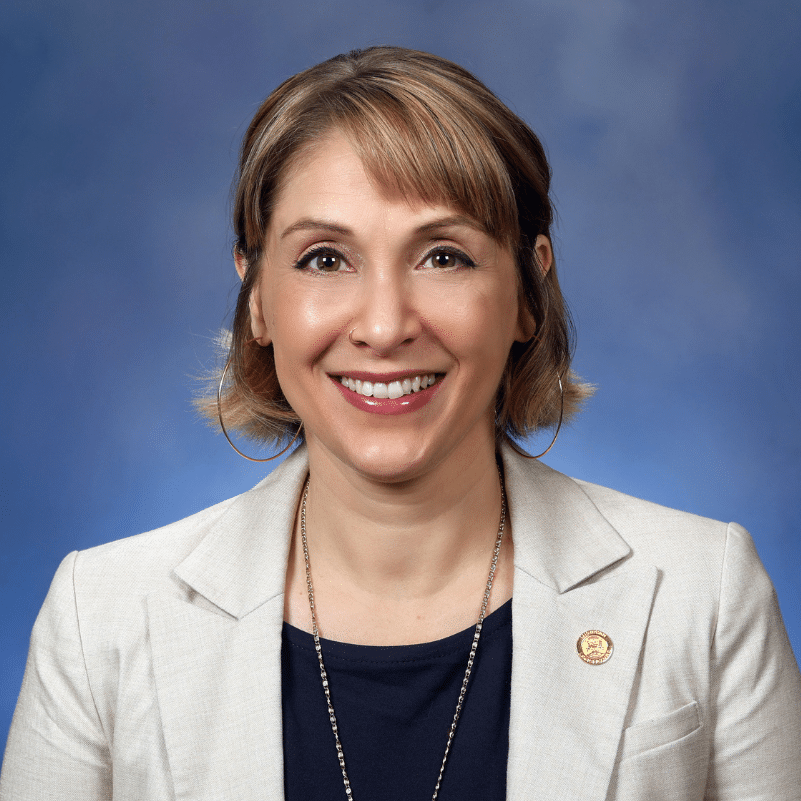
Rep. Emily Dievendorf
Sponsored bills
Maddy summaryHB 5070 is a supplemental appropriations bill that allocates additional state funds for Michigan's prenatal and infant support program. It directly affects the program by providing dedicated funding for services supporting pregnant individuals and infants. The bill creates a formal funding mechanism (an appropriation act) to ensure these funds are available for the 2026 fiscal year. As a procedural budget measure, it does not change program eligibility or service rules but secures financial resources for existing support services.
Maddy summaryHB 4107 requires Michigan schools to include specific health education content for students in grades 7-12. It mandates instruction in cardiopulmonary resuscitation (CPR), automated external defibrillator (AED) use, and first aid response kits (including tourniquets and bleeding control supplies) as part of the health curriculum. Schools may use trained personnel like Red Cross instructors, EMTs, or properly trained teachers to deliver this instruction, with hands-on practice encouraged but not required for all students. The bill exempts 100% online schools from requiring hands-on CPR practice.
Maddy summaryThis resolution declares September 15-October 15, 2025, as Hispanic Heritage Month in Michigan. It is a symbolic state recognition, not a policy change, affirming the observance of Hispanic and Latino American contributions to Michigan and the nation. The resolution does not create new laws, allocate funding, or affect specific groups; it simply aligns Michigan with the existing national observance established by federal law in 1988. The declaration enables state agencies and communities to organize events celebrating Hispanic heritage during that period.
Maddy summaryHB 4973 requires electric utilities in Michigan to automatically provide bill credits to customers experiencing power outages during a billing cycle. Residential customers receive credits ranging from $5 per hour for short outages up to $25 per hour for outages lasting 72+ hours, while nonresidential credits use a formula based on the customer's average hourly energy use. Credits apply to the next bill and carry forward if they exceed the current bill amount. The credits adjust every five years using the Consumer Price Index to account for inflation, as specified in the bill's Section 9g.
Maddy summaryHB 4978 amends Michigan's Public Utilities Act to change the process for utilities seeking rate increases. It requires electric utilities serving over 1 million customers to coordinate with the Public Service Commission (PSC) before filing rate cases to avoid overlapping filings, and the PSC may order a 21-day spacing between such filings. Gas utilities serving fewer than 1 million customers can now request partial, immediate rate relief, with the PSC required to decide within 180 days. If the PSC doesn't issue a final order within 180 days for a rate case, the utility may implement the proposed rate increase but must refund overpayments if the final order is lower.
Maddy summaryHB 4977 requires Michigan electric utilities to include standardized outage information on customer bills, directly affecting residential and business electricity users. The bill mandates disclosure of three specific metrics per billing cycle: the number of service interruptions lasting over 5 minutes, total interruption duration, and the number of momentary interruptions (under 5 minutes). Utilities must also annually report outage causes affecting over 1,000 customers, tree trimming efforts, grid reliability projects, and worst-performing circuits to the public service commission. Violations can result in fines up to $1,000 per incident, with customer reports or meter data used as evidence.
Maddy summaryHB 4976 prohibits electric utilities in Michigan from seeking to recover revenue they were required to pay as service outage credits to customers. This directly affects electric utilities serving Michigan residents and businesses, as it prevents them from later reclaiming refunds paid for power outages. The key provision states that once an electric utility issues outage credits (refunds for service interruptions), it cannot attempt to get that money back through future rate adjustments. This ensures customers who received outage credits retain the full benefit without utilities offsetting those payments against future bills.
Maddy summaryHB 4975 requires Michigan electric utilities to automatically provide residential customers with $100 credits on their bills if they experienced 4 or more power outages lasting over an hour in the past year, or $200 credits for more than 4 outages. The bill mandates these credits be applied without customer action, directly benefiting households with frequent service disruptions. Credits will adjust every five years based on inflation using the Detroit-area Consumer Price Index, with changes announced by June 1 each adjustment year. This policy change aims to compensate for unreliable service through automatic billing adjustments under Michigan's utility regulations.
Maddy summaryHR 173 is a resolution passed by the Michigan House of Representatives to condemn all forms of political violence and reaffirm the body's commitment to civility, safety, and peaceful democratic engagement. It does not create new laws or policies but serves as a formal statement expressing the House's stance against violence targeting public officials and citizens. The resolution cites recent incidents of political violence across the U.S., including attacks on elected leaders and events like the 2025 assassination of activist Charlie Kirk. It will be transmitted to the President, Michigan Governor, and congressional leaders as a non-binding expression of the House's values.