

Maddy summaryThis bill proposes amendments to Michigan's sentencing guidelines specifically for violations of the Hazardous Products Act. By updating the relevant section of the Code of Criminal Procedure, it would establish or modify the standard sentencing framework for individuals charged with these specific offenses. The legislation directly affects prosecutors, judges, and defendants involved in cases concerning the improper handling or distribution of hazardous materials. As a procedural update to existing law, it aims to clarify how penalties are determined for these particular crimes without introducing new offenses.
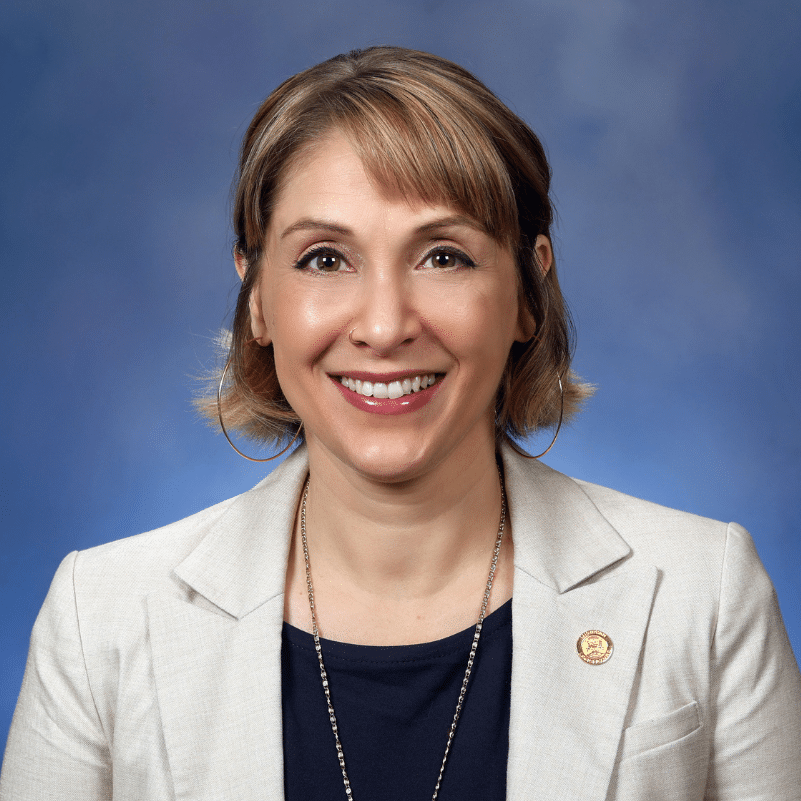
Rep. Emily Dievendorf
Sponsored bills
Maddy summaryThis bill amends Michigan's zoning enabling act to require local zoning ordinances to comply with the data center planning and responsibility act. It also clarifies rules for mining operations by setting conditions under which local governments can restrict extraction based on potential serious consequences, while allowing reasonable regulations on noise, traffic, and blasting hours. Additionally, the bill protects renewable energy projects that received special land use approval after January 1, 2021, from having their approvals revoked or modified once substantial construction or specific expenditures have occurred. The legislation will only take effect if it is passed together with a companion bill, HB 5882.
Maddy summaryHB 5896 requires people who use sewage sludge or its derivatives on land to test these materials for PFAS chemicals before application and report the results to the state Department of Environmental Quality. The bill mandates that these tests use methods approved by the federal EPA and requires anyone who prepares biosolids to notify landowners and farmers about the specific PFAS levels found in the material. Additionally, the legislation provides exceptions for certain high-quality compost used in landscaping, allowing it to bypass some existing rules if it meets specific maturity and quality standards and is used in approved locations like parks or home gardens.
Maddy summaryMichigan's HB 5892, known as the Safe Cosmetics Act, prohibits manufacturers from selling or distributing cosmetic products containing specific hazardous chemicals starting January 1, 2027. The law bans intentionally added substances such as asbestos, certain phthalates, formaldehyde-releasing agents, and heavy metals, while also setting strict limits on lead content in both general and color cosmetics. To enforce these rules, the state Department of Health and Human Services can request compliance statements from manufacturers and impose civil fines of up to $10,000 for repeat violations. This legislation directly affects companies that produce, sell, or distribute cosmetics within Michigan, requiring them to ensure their products are free from the listed restricted ingredients.
Maddy summaryThis bill proposes adding a new section to the Michigan state constitution to guarantee every person an inherent right to a clean environment, including clean water, air, and soil. It establishes that the state and all its agencies must act as trustees for natural resources, which are declared the common property of all people, including future generations. The amendment would require the government to protect these rights equitably for everyone regardless of race, ethnicity, socioeconomic status, or location, and it allows citizens to directly enforce these rights in court. If approved by voters, this change would legally bind the state to conserve and maintain natural resources while preventing any actions that infringe upon environmental rights.
Maddy summaryThis bill proposes to increase the number of judges available in Kalamazoo County by adding one new position to both the circuit court and the district court. The changes would take effect on January 1, 2025, for the circuit court and January 1, 2027, for the district court, allowing the courts to handle more cases with additional judicial staff. By amending existing state laws, the legislation directly impacts the judicial structure of the ninth judicial circuit and the eighth district within Kalamazoo County.
Maddy summaryThis bill (HB 4599) amends Michigan's criminal code to address gift card fraud by adding Section 3a to existing statutes (MCL 752.1081-752.1087). It directly affects individuals who commit gift card fraud, such as stealing or selling stolen gift card numbers. The bill creates specific criminal penalties for these offenses but does not provide details on the exact penalties or scope in the given context. The bill passed the House on September 9, 2025, with strong support, and was referred to the Civil Rights, Judiciary, and Public Safety Committee. The context provided does not include the specific provisions or who is affected beyond the general fraud focus.
Maddy summaryHB 4598 expands Michigan's Organized Retail Crime Act to specifically address new tactics used in theft. It adds provisions criminalizing the acquisition, alteration, or use of stolen gift cards (subsections i(i)-(iii)), fraudulent wireless device purchases (subsections h), and manipulating fire exit alarms (subsections g) as organized retail crime. The bill makes these acts felonies punishable by up to 5 years in prison, $5,000 fines, or both, and requires offenders to pay restitution to retailers and forfeit stolen merchandise. This directly affects retailers (through enhanced protections) and individuals committing these expanded theft methods, while clarifying that property representation as stolen is sufficient for prosecution.
Maddy summaryHB 5839 designates the Lunar New Year as a state holiday in Michigan. The bill defines the holiday based on the Chinese calendar and recognizes it as a celebration for people of Chinese, Korean, Taiwanese, Vietnamese, and other East or Southeast Asian origins. This legislation creates a new act to formally acknowledge the date as a holiday within the state.
Maddy summaryThis bill proposes to designate April 13 and April 14 of each year as official holidays in Michigan to recognize Vaisakhi, a significant holy day for Sikhs and Hindus. If passed, the legislation would formally acknowledge these dates as state holidays, allowing government employees and institutions to observe the day. The measure does not specify how businesses or private organizations must respond to the designation. It is a procedural bill that creates a new statutory definition for the holiday rather than mandating specific operational changes.