

Maddy summaryThis bill modifies Michigan's Public Health Code to require massage therapists to complete specific continuing education on identifying victims of human trafficking as a condition for renewing their licenses. It mandates that the state board establish rules for these training standards, which must be included in the required 18 hours of continuing education every three years. The legislation also clarifies the board's authority over training program accreditation and voting procedures for health profession subfields. Additionally, it includes a provision that prevents certain long-serving nursing faculty members from needing a baccalaureate degree in nursing science to meet faculty requirements. The bill is tied to a companion measure and will not take effect unless both are enacted into law.
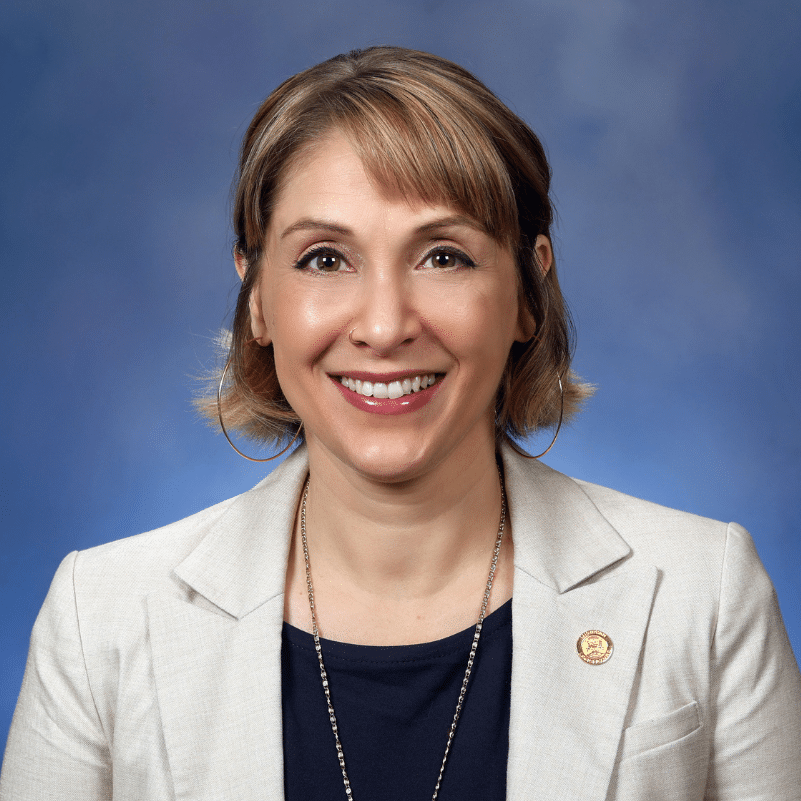
Rep. Emily Dievendorf
Sponsored bills
Maddy summaryThis bill enacts the Interstate Massage Compact in Michigan, allowing licensed massage therapists to practice across multiple states with a single multistate license. The legislation creates an Interstate Commission to manage the compact and establishes a shared data system for tracking licenses, disciplinary actions, and background checks among member states. While the compact aims to increase mobility for therapists and improve public access to services, it maintains that each state retains the authority to enforce its own laws and regulations regarding massage therapy practice.
Maddy summaryThis resolution declares May 2026 as Brain Tumor Awareness Month in Michigan to highlight the severity of brain tumors and the state's role in research and treatment. The bill does not change laws or allocate funding but serves as a symbolic gesture to raise public awareness about the disease's impact on patients and families. It recognizes Michigan's medical centers and the urgent need for better treatments given the limited number of approved therapies available.
Maddy summaryThis bill amends Michigan's clean energy laws to create a dedicated net metering program specifically for rooftop solar systems, ensuring these generators are excluded from the general distributed generation program. It mandates that the Public Service Commission establish uniform statewide rules for rooftop solar net metering within 180 days, guaranteeing consistent consumer protections across all electric utilities and alternative suppliers. The legislation also sets specific grid reliability limits, such as capping distributed generation at 10% of a utility's peak load, while protecting solar participants from service disconnection or rate discrimination. By defining eligible rooftop solar equipment and requiring standardized interconnection procedures, the bill aims to streamline how homeowners connect solar panels to the grid while maintaining safety standards.
Maddy summaryThis bill directs the Michigan Department of Community Health to establish a Medicaid estate recovery program that seeks repayment from the estates of deceased recipients for certain medical services. A key provision prohibits the state from filing claims against funds held in an ABLE savings account, protecting these assets from recovery efforts. The legislation also outlines specific exemptions, such as protecting the homes of surviving spouses, young children, disabled dependents, and certain caretaker relatives. Additionally, the bill requires the department to obtain federal approval before implementing the program and mandates that no interest be charged on recovered amounts.
Maddy summaryThis bill amends Michigan's ABLE program to allow individuals with disabilities to designate a specific survivor beneficiary for their savings accounts. It also exempts these accounts from Medicaid estate recovery, ensuring that funds remain protected for the individual's qualified disability expenses even after their death. The legislation clarifies the roles of account owners and designated representatives, permitting changes to beneficiaries within the family unit without requiring court approval. By updating the state's ABLE program rules, the bill aims to provide greater flexibility and financial security for people with disabilities and their families.
Maddy summaryThis bill, known as the Commercial Advertising Loudness Mitigation Act, would require video streaming services in Michigan to ensure that commercial advertisements are not louder than the accompanying video content. Starting July 1, 2027, these services must regulate audio levels so that ads do not exceed the volume of the programs or videos they interrupt. The law applies to internet-based streaming platforms but excludes traditional television stations, cable operators, and services that do not include ads. Violations of this rule could result in a civil fine of up to $10,000 for each instance, which would be collected by the state attorney general and deposited into the general fund.
Maddy summaryThis bill designates the week of May 4-10, 2026, as Maternal Mental Health Awareness Week in Michigan. It aims to highlight the importance of recognizing postpartum depression and other maternal mental health issues among women of all backgrounds. The resolution encourages the public and healthcare providers to share information about warning signs and available resources during this designated period. By setting aside this specific time frame, the bill seeks to reduce stigma and promote awareness rather than implementing new laws or funding changes.
Maddy summaryThis bill designates the week of May 4-8, 2026, as Teacher Appreciation Week throughout Michigan. It directly affects teachers, students, parents, and the general public by encouraging them to recognize and thank educators for their contributions. The resolution contains no new laws or funding, but rather serves as a formal declaration to honor the teaching profession.
Maddy summaryThis resolution officially designates May 2026 as Jewish American Heritage Month within the state of Michigan. It aims to honor the history, culture, and contributions of American Jews to the state and the nation. The measure does not change laws or create new programs but serves as a formal declaration of recognition.