

Maddy summaryThis bill amends Michigan's Credit Union Act to allow foreign credit unions, excluding federal ones, to operate within the state with the commissioner's written approval. To receive this approval, these institutions must meet specific criteria, including financial solvency, membership insurance from a federal or qualified private source, and supervision by their home authority, while also agreeing to charge interest rates no higher than those allowed for domestic credit unions and comply with local consumer protection laws. The legislation also requires foreign credit unions to designate a local agent for legal service, file necessary reports, and permit state examinations, provided their home jurisdiction allows reciprocal business for Michigan credit unions. This change is contingent upon the enactment of four other related bills, and it does not exempt foreign credit unions from any existing state laws that apply to them.
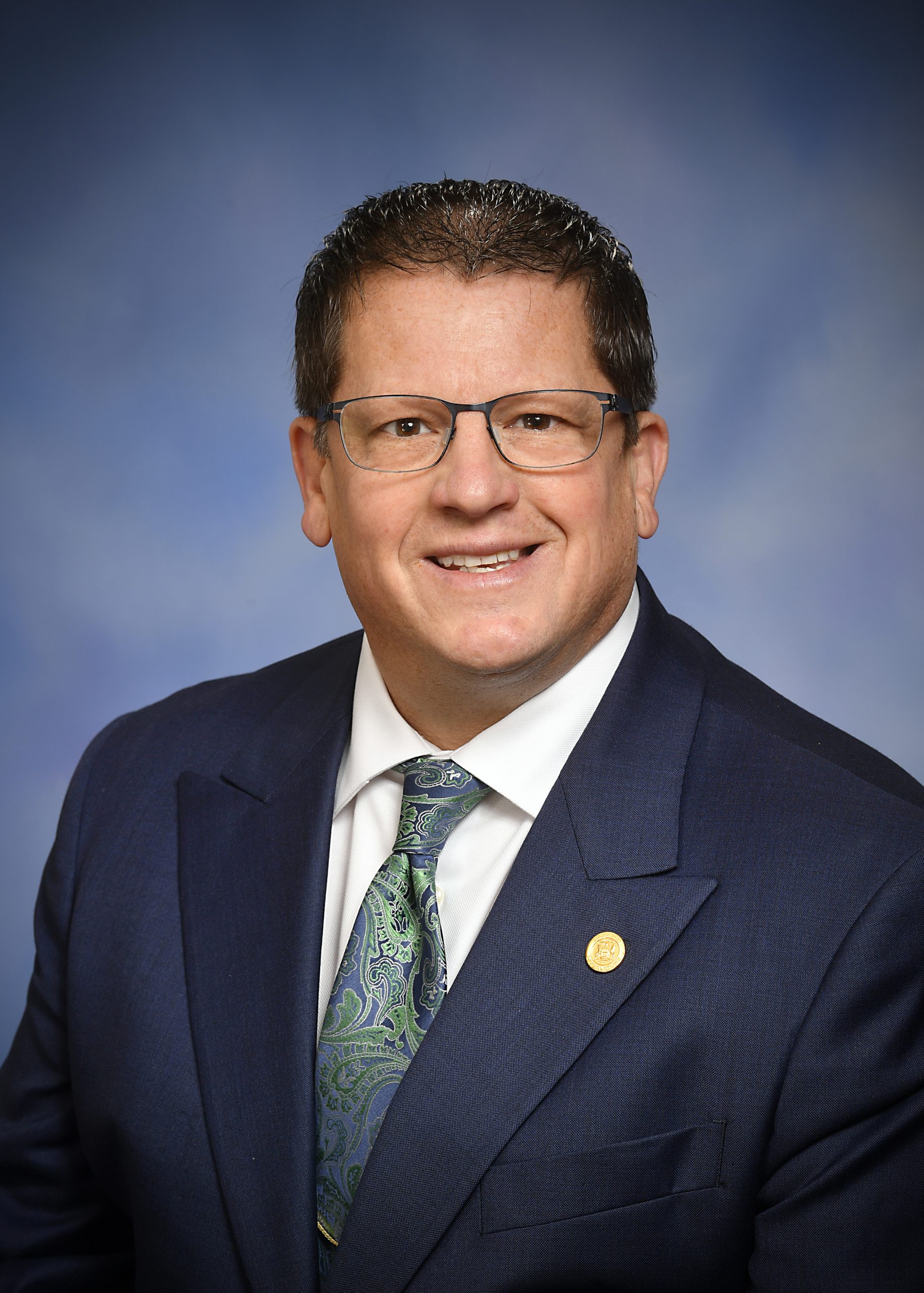
Rep. Brian BeGole
Sponsored bills
Maddy summaryThis bill amends Michigan's Credit Union Act to allow domestic credit unions to obtain primary share and deposit insurance from qualified private insurance organizations licensed in the state, in addition to federal agencies. It establishes a process where the state director can authorize private insurers to provide coverage and may deny or revoke this authorization if the insurer lacks sufficient resources or governance. The legislation also permits credit unions to contract with licensed carriers for coverage on account balances that exceed the limits of primary insurance. Importantly, the bill does not take effect unless four related companion bills are also enacted into law.
Maddy summaryHB 5457 creates a state fund to support hyperbaric oxygen therapy through grants and a temporary pilot program. The Department of Health and Human Services will administer the fund, using it for grants and operating the pilot program. After the pilot concludes, any remaining funds will transfer to the general state fund. The bill requires another bill (HB 5456) to be enacted first.
Maddy summaryHB 5456 establishes a pilot program providing free hyperbaric oxygen therapy to Michigan veterans diagnosed with traumatic brain injury or post-traumatic stress disorder. The bill creates a state grant program administered by the Department of Health and Human Services, funding providers to deliver treatment at no cost to eligible veterans. Providers must use FDA-cleared chambers meeting specific safety standards and be accredited by organizations like the American College of Hyperbaric Medicine. The program requires the department to implement rules within 12 months and ends after the pilot period concludes.
Maddy summaryHB 4358 modifies Michigan's Home Rule City Act to standardize when city officials' terms begin. It requires that all elected city officers (like mayors and council members) serving terms starting after December 31, 2024, must begin their terms at 12 noon on the first day of the month following their election - replacing any existing charter provisions allowing earlier start dates. The bill also mandates that individuals filling vacant positions cannot take the oath of office until election results are certified by the board of canvassers. This applies to all Michigan cities with home rule charters and takes effect immediately upon passage.
Maddy summaryHB 4359 modifies Michigan village election rules by changing the start date for elected officials' terms from November 20 to December 1. It clarifies that villages electing six trustees (instead of three) must serve two-year terms, rather than four-year terms, and updates vacancy procedures to require a petition signed by 10% of voters within 10 days to trigger a special election when the council falls below quorum. These changes directly affect village officials and voters in all Michigan villages operating under the General Law Village Act (MCL 62.4 et seq.), streamlining term start dates and vacancy resolution. The bill passed with immediate effect in September 2025.
Maddy summaryHB 5081 requires Michigan school districts, intermediate districts, and public school academies to employ at least one teacher trained in the Orton-Gillingham approach by the 2026-2027 school year to support students with dyslexia. This teacher must have completed training meeting International Dyslexia Association standards, which emphasizes multisensory reading instruction through phonemic awareness, phonics, and structured skill-building. Schools must also ensure these teachers receive at least 10 hours of annual professional development focused on dyslexia support. The bill directly affects all public school entities in Michigan and aims to improve specialized reading instruction for students with dyslexia.
Maddy summaryThis bill proposes to change the rules for preliminary examinations in Michigan criminal cases, which are early court hearings to determine if there is enough evidence to proceed with a felony trial. Currently, the bill would allow prosecutors and defense attorneys to introduce certain reports, such as drug test results and forensic lab findings, without needing the original author to testify in court. The legislation also establishes a specific timeline where these relaxed evidence rules would take effect on January 1, 2027, replacing the current requirement that live testimony be available for most evidence. By removing the application of standard evidence rules for future cases, the bill aims to streamline the process of deciding whether a defendant should be held for trial.
Maddy summaryHB 5124 modifies Michigan's Uniform Video Services Local Franchise Act to clarify reporting requirements for video service providers. It requires providers to submit specific information (name, service description, contact details) to the commission within 60 days of the law's effective date or 30 days after starting service in Michigan, using data they already collect. The bill also mandates that providers notify the commission 30 days in advance of name changes, closures, or mergers. Additionally, the commission must file an annual report by April 1st to the governor and legislature, detailing video service competition status and suggesting legislative changes. These provisions directly affect all video service providers operating in Michigan.
Maddy summaryHB 5123 amends Michigan's Uniform Video Services Local Franchise Act by clarifying the definition of "video service" to explicitly include cable, IPTV (internet protocol television), and OVS (open video systems), while excluding mobile streaming services, direct satellite TV, and internet-based video access. This definition directly affects video service providers (like cable companies and IPTV providers) who must operate under franchise agreements with local governments. The bill ensures these providers pay required fees for using public rights-of-way, without changing existing franchise obligations for current providers. It is a technical clarification of existing law, not a new policy change.