

Maddy summaryHB 4073 modifies Michigan's criminal procedure law to require specific warrant procedures for investigations involving the Department of Natural Resources (DNR). It amends Section 1602 of the Michigan Compiled Laws (MCL 324.1602) and adds a new Section 1507 to clarify warrant requirements for DNR officers conducting searches or seizures under environmental enforcement. This change directly affects DNR law enforcement actions, ensuring they follow defined judicial authorization processes for certain investigations. The bill passed the House on November 4, 2025, with 63 yeas and 37 nays.
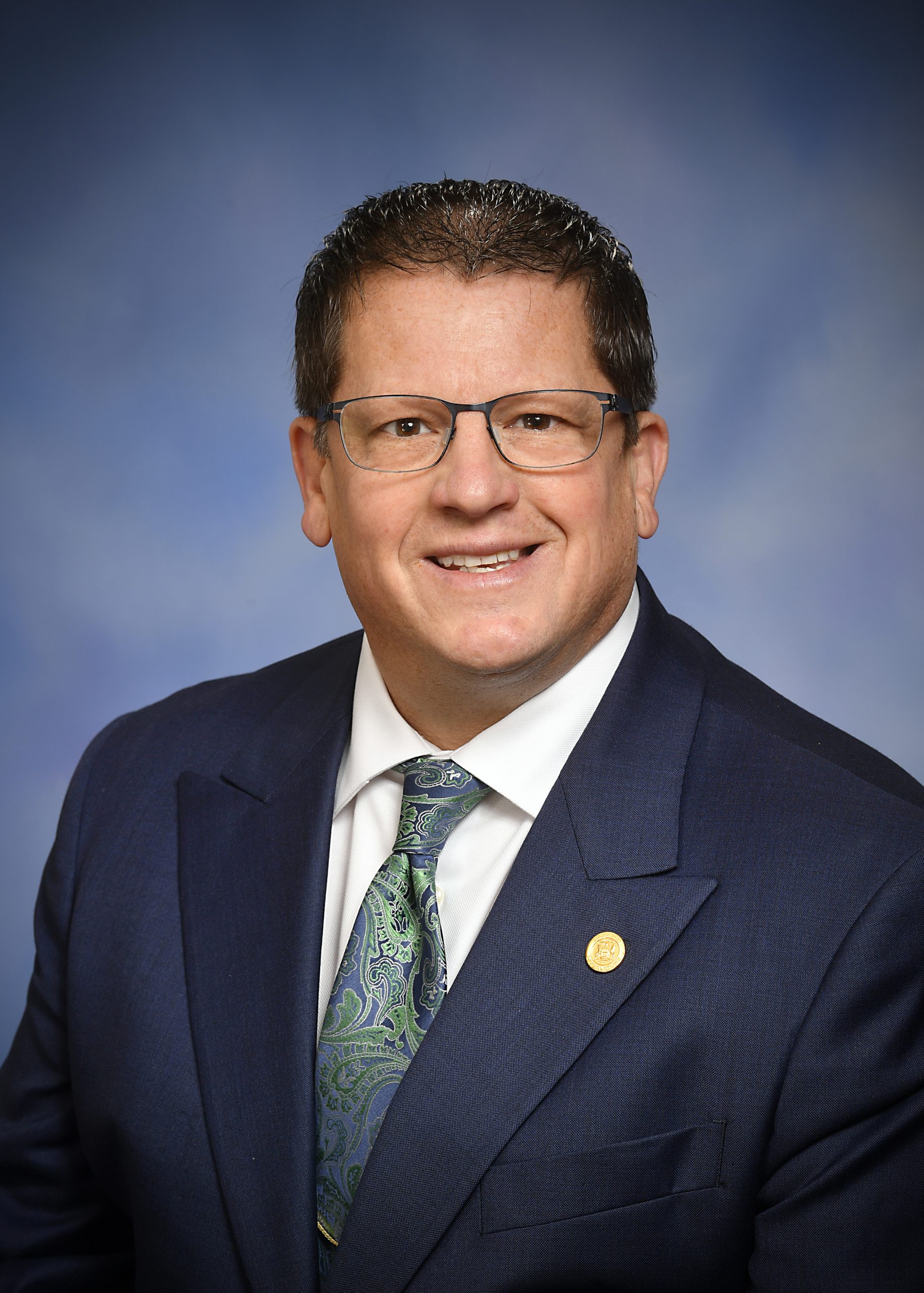
Rep. Brian BeGole
Sponsored bills
Maddy summaryThis resolution (HR 212) requests that the U.S. Congress adopt Section 143 from H.R. 3838 (the 2026 National Defense Authorization Act). Section 143 would require the Air Force to maintain at least 162 A-10 aircraft until 2029 and mandate reports to Congress about transition plans before retiring the fleet. It specifically aims to prevent an operational gap at Michigan's Selfridge Air National Guard Base, where A-10s were scheduled for retirement in 2026 but replacement F-15EX fighters won't arrive until 2028. The resolution does not change policy itself but urges Congress to incorporate these protections into law.
Maddy summaryHR 196 is a resolution demanding Michigan's Secretary of State comply with a federal request for an unredacted copy of the state's voter registration list, as required by the Civil Rights Act of 1960 and the National Voter Registration Act of 1993. It directly affects the Michigan Secretary of State's office by mandating disclosure of voter data within legal limits. The bill does not create new law but compels adherence to existing federal requirements for voter list transparency. This procedural resolution focuses solely on directing state compliance with federal mandates, not altering election policies.
Maddy summaryHB 5164 modifies Michigan law to regulate transporting firearms and certain air guns in moving vehicles. It prohibits carrying a firearm (other than a pistol) or a pneumatic gun expelling metal BBs/pellets over .177 caliber in a moving vehicle unless the weapon is unloaded and stored in one of four ways: disassembled, in a case, in the trunk, or inaccessible from inside the vehicle. Violating this would be a misdemeanor punishable by up to 90 days in jail or a $100 fine. The bill directly affects drivers transporting these items in vehicles while operating them, with no exception for pistols.
Maddy summaryHB 4129 creates a program to award annual grants to graduates working in Michigan's nuclear or hydrogen energy sector. It provides up to $3,000 per year for three years to individuals who: (1) graduate from a qualifying STEM program (like engineering or skilled trades supporting nuclear/hydrogen facilities), and (2) work at a qualified facility in Michigan within one year of graduation. The program requires annual employment verification, with repayment required if employment ends or false information is provided (penalties include fines up to $1,000). Funds are managed through a dedicated state account administered by the Department of Labor and Economic Opportunity.
Maddy summaryHB 4124 creates a tax credit for Michigan corporations that spend money on research and development for advanced small modular nuclear reactors (SMRs). It directly affects companies developing this specific type of nuclear technology within the state. The bill adds new sections to Michigan's tax code, allowing businesses to claim a credit against their corporate income tax for qualifying R&D expenses related to SMRs. This policy change aims to incentivize investment in emerging nuclear energy technology within Michigan. The bill passed the House on October 28, 2025, with 78 yeas and 26 nays.
Maddy summaryHB 4128 creates a new corporate income tax credit for businesses generating power from advanced small modular reactors (SMRs) in Michigan. It directly affects utility companies and energy developers investing in SMR technology by providing a financial incentive to offset project costs. The key provision adds Section 678 to Michigan's tax code, allowing qualifying entities to claim a credit against their state corporate income tax liability for SMR-generated electricity. This policy change aims to support clean energy development without specifying expected outcomes or endorsing particular technologies. The bill passed the House on October 28, 2025, and is now pending final approval in the Senate.
Maddy summaryHB 4127 adds a specific definition for "advanced nuclear reactor technologies" to Michigan's energy law. The bill defines these as nuclear reactors with significant safety improvements over pre-2016 U.S. models, including federally defined advanced reactors and existing Michigan nuclear facilities that completed life cycle management. This definition will directly affect the Michigan Public Service Commission and electric utilities when evaluating nuclear energy projects and regulatory approvals. It creates a clear standard for identifying qualifying nuclear technologies under state law, ensuring consistent application of energy regulations.
Maddy summaryHB 4126 creates a dedicated fund in the Michigan state treasury to provide grants to colleges and universities that establish or expand educational programs leading to degrees or credentials in the nuclear and hydrogen energy sectors. The fund, administered by the state Department of Education, will support institutions developing training programs aligned with these industries' workforce needs. Money in the fund does not expire annually and must be used solely for awarding these grants through state appropriations. This bill directly affects Michigan higher education institutions seeking to build or expand programs in nuclear and hydrogen energy fields.
Maddy summaryHB 4745 modifies Michigan's Charitable Organizations and Solicitations Act to expand exemptions from registration and reporting requirements. It exempts small charitable groups that raise under $25,000 annually through unpaid volunteers, individual relief efforts (like community fundraisers for named people), educational institutions, hospitals, veterans' organizations, and certain non-profits with specific tax statuses. The bill also adds requirements for some exempt groups, such as filing financial statements or using funds solely for stated charitable purposes. These changes directly affect local charities, community groups, and hospitals that previously faced registration burdens for smaller-scale fundraising.