

Maddy summaryThis bill creates a new Public Safety and Violence Prevention Fund in Michigan to manage money from specific sources, including sales tax revenues and donations. The fund will distribute money to cities, villages, and townships to support public safety initiatives, with a portion of the funds going to a grant program for community violence intervention and another part to a crime victim's rights fund. A key provision ties future funding to crime reduction goals, where local governments that fail to meet specific violent crime decrease targets will see their distributions reduced. The state treasurer is responsible for managing the fund and ensuring that unspent money at the end of each fiscal year remains available for future distribution rather than being returned to the general fund.
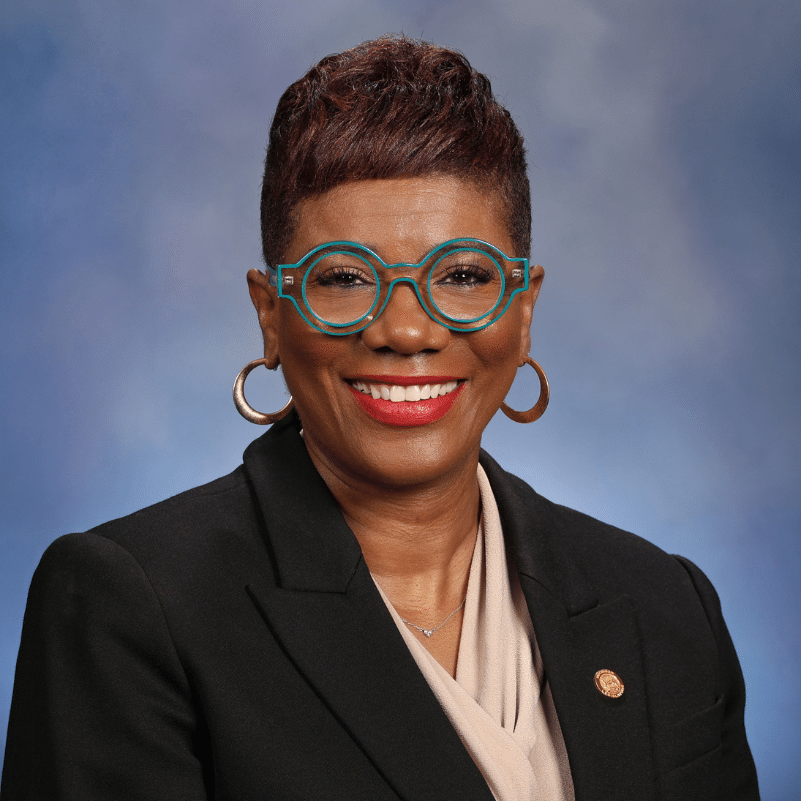
Rep. Cynthia Neeley
Sponsored bills
Maddy summaryThis bill establishes a new scholarship program in Michigan to help individuals who face financial hardship become doulas, providing continuous support to mothers before, during, and after childbirth. To qualify, applicants must demonstrate financial need, prove Michigan residency, and commit to serving as a doula in a health professional shortage area or with a medically underserved population. The program awards up to $3,000 per person to cover training costs such as books and workshop fees, with funds drawn from a dedicated state treasury account. Recipients must use the money to complete approved doula training and provide proof of their work or training progress within six months, or they must repay the award.
Maddy summaryThis bill establishes the "Protection from Intimate Deep Fakes Act" to provide legal remedies for individuals harmed by nonconsensual deep fake images depicting sexual conduct. It allows victims to file civil lawsuits against anyone who creates or shares these realistic but fake videos, provided the creator knew or should have known the content would cause harm and was made using artificial technology rather than physical impersonation. The law defines specific protections for identifiable individuals and clarifies that consent is not a valid defense unless it is documented in a clear, signed agreement describing exactly what the fake image entails. Additionally, the legislation sets rules for where lawsuits can be filed and ensures that plaintiffs can use pseudonyms to protect their privacy during legal proceedings.
Maddy summaryThis bill updates Michigan's sentencing guidelines to include specific penalties for crimes involving the abuse of companion animals. It assigns 25 points to a criminal score when an animal is subjected to sadistic, torturous, or brutally excessive conduct intended to cause fear or anxiety, while similar acts against humans carry a higher 50-point penalty. The legislation defines "sadism" as actions that inflict extreme or prolonged pain or humiliation for the offender's gratification. These changes apply only if the bill is passed alongside two related companion bills, HB 5588 and HB 5592.
Maddy summaryHB 5590 amends Michigan's sentencing guidelines to include specific provisions for crimes committed against animals. This change directly affects judges and prosecutors by providing updated rules for determining sentences in cases involving animal cruelty. The bill revises existing legal statutes to ensure that penalties for harming animals are clearly defined within the state's criminal code. By linking this measure to a companion bill, the legislation aims to standardize how such offenses are handled in the judicial system.
Maddy summaryThis bill proposes changes to Michigan's sentencing guidelines specifically for crimes committed against animals. It amends an existing section of the state's criminal procedure code to update how judges determine penalties in these cases. The legislation does not create new crimes but instead modifies the rules used to calculate sentences when animal abuse or neglect is charged.
Maddy summaryThis bill proposes changes to Michigan's sentencing guidelines specifically for crimes committed against animals. It directly affects judges and prosecutors who determine punishments for animal cruelty cases by updating the rules they must follow. The legislation revises the existing legal framework to ensure consistent and updated sentencing standards for these offenses. As a procedural amendment, it does not create new crimes but rather adjusts how penalties are calculated and applied under current law.
Maddy summaryHB 5570 updates Michigan's sentencing guidelines to include specific rules for cases involving the creation or distribution of deepfake sexual images. The bill modifies an existing section of the state's criminal procedure code to ensure that judges and prosecutors have clear standards when determining penalties for these offenses. By adding these provisions to the official sentencing framework, the legislation aims to provide consistency in how courts handle new types of digital sexual exploitation. This change directly affects judges, prosecutors, and defendants involved in cases related to non-consensual deepfake imagery.
Maddy summaryThis bill proposes updating Michigan's sentencing guidelines specifically for crimes committed against animals. It directly affects judges, prosecutors, and defendants involved in animal cruelty cases by modifying the legal rules used to determine punishments. The key mechanism involves revising the existing statutory language to ensure these guidelines are current and clearly applied within the criminal justice system. As a procedural amendment to the Code of Criminal Procedure, the bill focuses on the technical framework for sentencing rather than creating new crimes or changing penalty ranges.
Maddy summaryThis bill proposes to update Michigan's sentencing guidelines by modifying the specific factors judges consider when determining punishments for various crimes. It directly affects the judicial process by changing how points are assigned for offenses against persons, property, controlled substances, public order, and public safety. The key change involves adjusting which offense variables are scored for different crime categories, though the bill's final effect is currently contingent on the passage of two other related bills.