

Maddy summaryHB 4272 would create specific sentencing rules for people convicted of campaign finance violations in Michigan. It amends the state’s criminal procedure code to add a new sentencing guideline for these offenses, requiring judges to follow set sentencing ranges instead of general guidelines. This bill directly affects candidates, political committees, or individuals who break campaign finance laws by changing how judges impose penalties for such violations. The bill is currently in committee referral after being introduced on March 19, 2025.
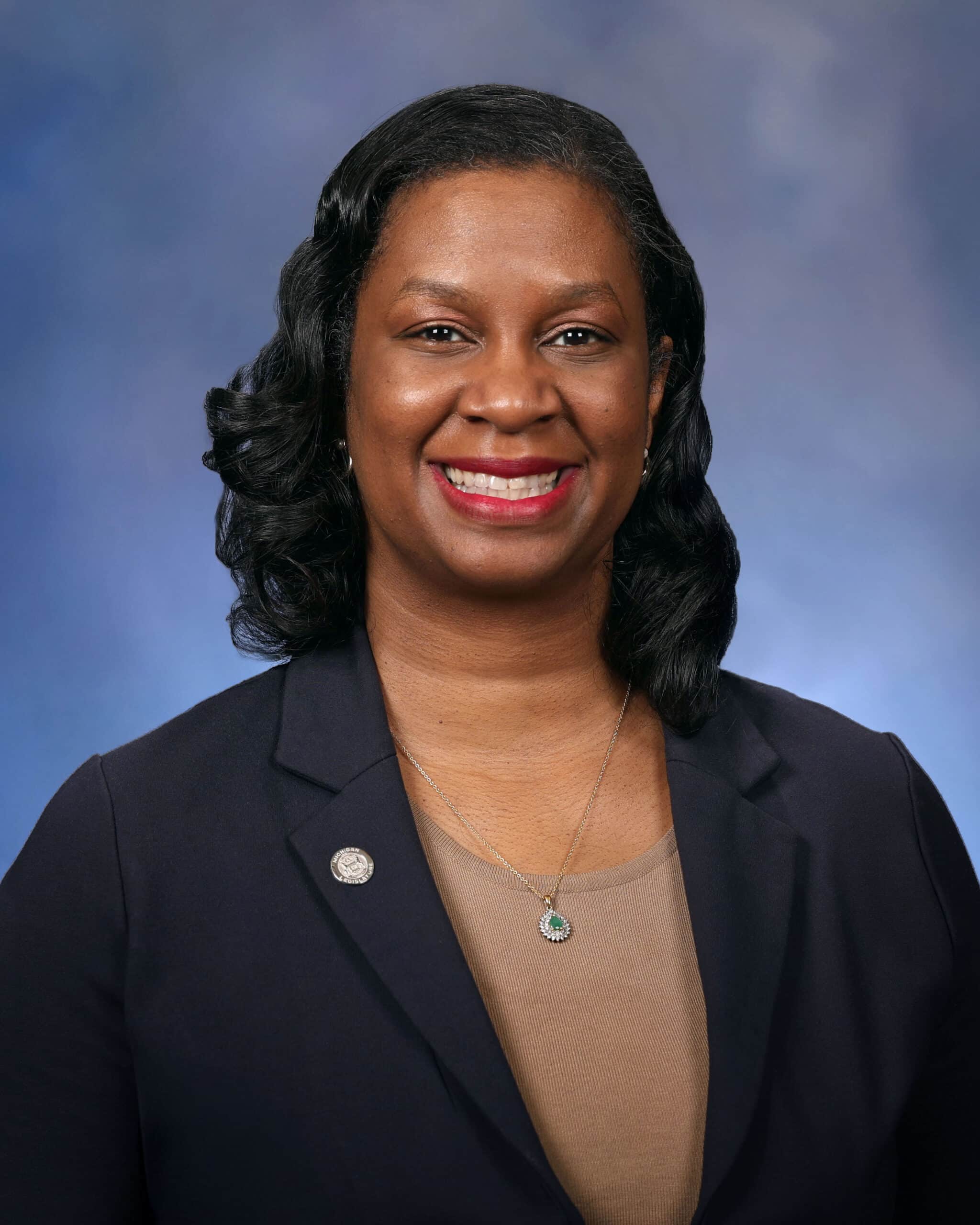
Rep. Tonya Phillips
Sponsored bills
Maddy summaryHB 4273 amends Michigan's lobbying law (MCL 4.415) to clarify definitions and registration requirements for lobbyists and legislative staff. It specifically defines "lobbying" as communicating to influence government action using information or data, and sets thresholds: anyone spending over $1,000 annually on lobbying must register, or $250 for lobbying a single official. The bill adds exemptions for certain government employees (like university staff, school board workers, and state department employees) who are not required to register. This is a procedural update to existing law, focusing on precise definitions rather than new policy.
Maddy summaryHB 4270 amends Michigan's Campaign Finance Act to clarify disclosure requirements for certain political nonprofits. It redefines "501(c)(4)" and "527" organizations to include those controlled by state candidates, elected officials, appointed officials, or their family members. These nonprofits would then be required to disclose their funding sources and activities, directly affecting organizations with ties to Michigan's political figures. The bill takes effect January 1, 2027, pending passage of companion legislation (HB 4269).
Maddy summaryHB 4271 modifies Michigan's campaign finance law to treat all independent committees established, financed, maintained, or controlled by a candidate for the Michigan House or Senate as a single committee for contribution limit purposes. This means a candidate cannot circumvent contribution limits by creating multiple committees under their name; all such committees will be counted together. The bill explicitly excludes House and Senate political party caucus committees from this rule. Violations carry penalties including up to 3 years in prison or a $5,000 fine for individuals, or a $10,000 fine for organizations. The bill directly affects candidates running for state legislative office who use independent committees.
Maddy summaryHB 4268 amends Michigan's Campaign Finance Act to give the Secretary of State authority to seek court orders (injunctive relief) to stop campaign finance violations. It adds specific circumstances for waiving late filing fees, such as medical emergencies, natural disasters, or loss of records, and requires the Secretary to provide public notice and comment periods for official interpretations of the law. The bill also establishes clear deadlines for handling complaints about violations, including requirements for signed complaints with factual certifications and structured timelines for responses and rebuttals. These changes aim to improve enforcement transparency and streamline compliance for campaign finance reporters.
Maddy summaryThis House Resolution (HR 51) is a symbolic request urging the U.S. Department of Homeland Security to release $56 million in FEMA disaster relief funds already allocated to Michigan. It directly affects Michigan's emergency management agencies, local governments, and nonprofits that rely on these funds for disaster response, recovery, and public safety programs. The resolution states delays in releasing these funds strain state resources and risk disrupting critical emergency services following natural disasters. As a non-binding resolution, it does not change funding policy but formally requests federal action.
Maddy summaryThis resolution designates March 21, 2025, as "Abolitionist Day" in Michigan to honor the state's history in the anti-slavery movement. It specifically recognizes Laura Smith Haviland, an Adrian, Michigan abolitionist who aided freedom seekers via the Underground Railroad and was inducted into the National Abolition Hall of Fame. The resolution has no policy or funding impact - it is purely commemorative. It directly affects Michigan residents by establishing an official state observance day. The resolution was introduced and adopted by the Michigan House on March 20, 2025.
Maddy summaryHB 4264, the "Job Applicant Credit Privacy Act," bans most employers in Michigan from using an applicant's credit history to make hiring decisions or asking about it during the recruitment process. It directly affects all job seekers and employers, except for specific roles in banking (state/nationally chartered banks, savings institutions, credit unions), licensed financial services, or casinos. The bill also prohibits employers from retaliating against applicants who oppose violations or participate in investigations, and bans any requirement for applicants to waive their rights under this law. Violators face civil lawsuits allowing for damages, injunctions, or attorney fees.
Maddy summaryThis resolution directs the Clerk of the House to present nine specific bills - passed by both legislative chambers in December 2024 and "enrolled" (formally prepared for the Governor) - to the Governor. It follows a court ruling (February 2025) that confirmed Michigan’s Constitution requires all passed bills to be presented to the Governor within 14 days, rejecting the House’s prior refusal to act. The resolution overrides a previous House attempt (Resolution 41) to delay this process and mandates immediate compliance with the court’s order. It affects the House Clerk, Governor, and the nine bills’ legislative timeline, ensuring they can proceed toward becoming law.
Maddy summaryHB 4231 redirects $75 million annually from Michigan's 4% general sales tax (starting fiscal year 2025) into the Public Safety and Violence Prevention Fund. It also specifies that aviation fuel tax revenue must be split 35% to the state aeronautics fund and 65% to qualified airport funds. Additionally, computer software sales tax revenue must fund Michigan's health initiatives at $9-12 million yearly. These changes directly affect state budget allocations, airport operators, and public safety programs without altering tax rates or creating new taxes.