

Maddy summaryHB 5216 requires Michigan correctional facilities to provide prisoners with a medical information release form, an emergency contact form, and explanatory materials upon intake. Prisoners must designate specific individuals to receive their medical information during critical emergencies (defined as hospitalization needs) and provide accurate contact details, with the responsibility to update this information if changes occur. During a critical medical emergency, the department must notify one designated emergency contact and may arrange hospital visits for approved family or clergy if medically appropriate. This bill directly affects prisoners in Michigan correctional facilities and their designated contacts, creating a formal process for sharing medical information during emergencies.
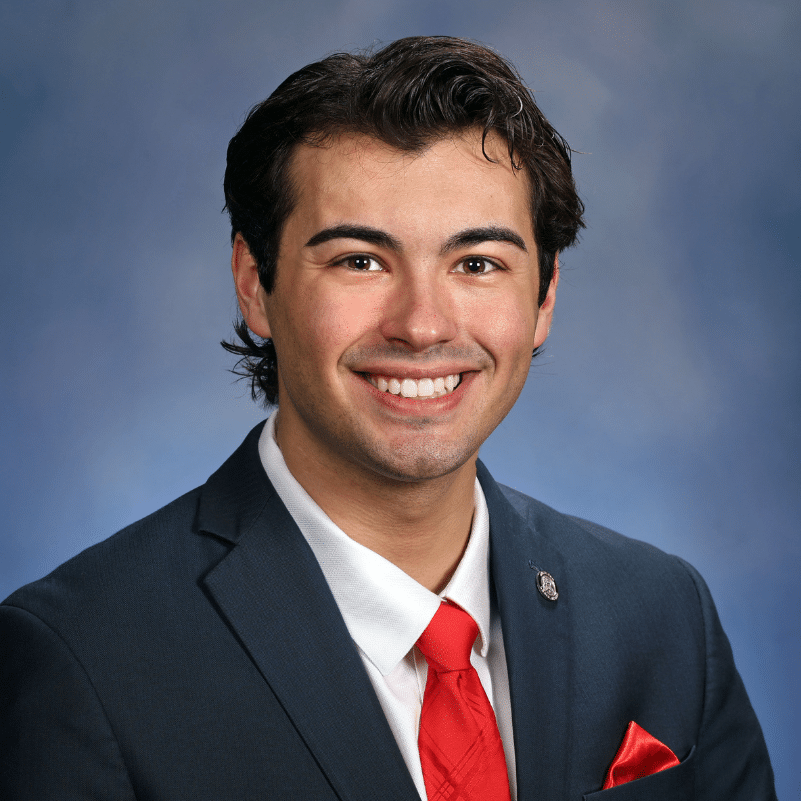
Rep. Jaz Martus
Sponsored bills
Maddy summaryHB 5225 modifies Michigan's property tax deferment program for summer property taxes, primarily affecting eligible homeowners aged 62+ or with specific disabilities (like blindness or veterans' status) and agricultural property owners. It updates income thresholds for deferment eligibility - current limits cap household income at $60,000 (adjusted annually for inflation after 2026) - and requires agricultural owners to meet gross receipts criteria. The bill mandates local treasurers to publish deferment notices, provide form assistance, and include deferred tax amounts in December tax statements, with payments due by February 15 without penalties. It also clarifies that agricultural deferment eligibility requires prior qualification before forming business entities like LLCs.
Maddy summaryThis resolution (HR 212) requests that the U.S. Congress adopt Section 143 from H.R. 3838 (the 2026 National Defense Authorization Act). Section 143 would require the Air Force to maintain at least 162 A-10 aircraft until 2029 and mandate reports to Congress about transition plans before retiring the fleet. It specifically aims to prevent an operational gap at Michigan's Selfridge Air National Guard Base, where A-10s were scheduled for retirement in 2026 but replacement F-15EX fighters won't arrive until 2028. The resolution does not change policy itself but urges Congress to incorporate these protections into law.
Maddy summaryThis resolution declares November 10-16, 2025, as Michigan Historical Music Week to honor the state's musical heritage. It directly affects Michiganders, cultural institutions, schools, and community organizations by encouraging them to host events celebrating Michigan's contributions to music genres like Motown, rock, techno, and hip-hop. The resolution highlights Michigan's role in producing influential artists (e.g., Motown founders, The White Stripes, Eminem) and institutions (e.g., Motown Museum, Rock Hall), urging educational and cultural groups to observe the week with programs. It does not create new laws or funding but serves as a symbolic recognition of the state's cultural impact.
Maddy summaryHB 5204 requires health insurers in Michigan to cover prescription drugs for advanced metastatic cancer without first forcing patients to fail other treatments or prove prior drug failures. It directly affects patients diagnosed with advanced metastatic cancer (cancer that has spread beyond its original site) and their health insurance plans. The law prohibits insurers from imposing conditions like "fail first" requirements or demanding proof of previous drug ineffectiveness before approving coverage for these drugs or related symptoms. This applies to all health insurance policies covering prescription drugs for such cancer cases. The bill defines "advanced metastatic cancer" and "associated conditions" (symptoms or side effects worsening without treatment) to clarify coverage requirements.
Maddy summaryHB 5205 requires Michigan health insurers to cover specific breast cancer-related services without cost-sharing. It mandates coverage for diagnostic exams, screening mammograms (every 5 years for ages 35-39, annually for 40+), outpatient treatment, and rehabilitation services like reconstructive surgery. The law prohibits deductibles, copays, or dollar limits on these services, aligning coverage terms with general medical care. This directly affects Michigan health insurance policyholders, particularly women needing breast cancer screening or treatment.
Maddy summaryHB 5208 prohibits the surgical removal of a cat's claws (declawing) unless it is medically necessary to treat an existing injury, illness, or health condition. It directly affects veterinarians, pet owners, shelters, and breeders who might otherwise perform the procedure for convenience or aesthetics. The bill defines "therapeutic purpose" narrowly to exclude cosmetic reasons, and violations carry civil fines of up to $2,500 for a first offense and $5,000 for repeat offenses. Enforcement would be handled by county prosecutors or the state attorney general.
Maddy summaryHB 4211 requires correctional facilities to provide reentry support services to certain individuals after they receive a resentencing. It directly affects people whose sentences were reduced or overturned through legal appeals or resentencing proceedings. The bill mandates that these individuals receive assistance with housing, job training, counseling, and other transitional support upon release. This requirement amends Michigan's correctional code to ensure structured reentry planning for eligible individuals.
Maddy summaryHB 5209 prohibits veterinarians from performing declawing procedures (including onychectomy, phalangectomy, or tendonectomy) on cats unless medically necessary for the cat's health. It explicitly bans these procedures for cosmetic or convenience reasons, such as preventing scratching furniture. The law applies to all domestic cats and hybrid breeds (like Savannah or Bengal cats) and defines "therapeutic purpose" to include medical conditions like infections or injuries, but excludes aesthetic or handling preferences. This bill directly affects veterinarians and cat owners by restricting declawing to only life-threatening or severe health cases.
Maddy summaryHB 5196 requires Michigan correctional facilities to create mandatory mental health discharge plans for incarcerated individuals receiving mental health services or medication before release. These plans must include specific assessments (using tools like the PHQ-9 and GAD-7), identify housing/transportation risks, schedule post-release mental health appointments, ensure medication continuity, and assess Medicaid eligibility. The bill directly affects incarcerated individuals transitioning from correctional facilities to community settings, aiming to support their mental health needs during reentry. It amends existing law (MCL 791.267) and adds new sections (34e, 67c, 67d) focused on structured discharge planning. The bill is currently in committee referral after its October 2025 introduction.