

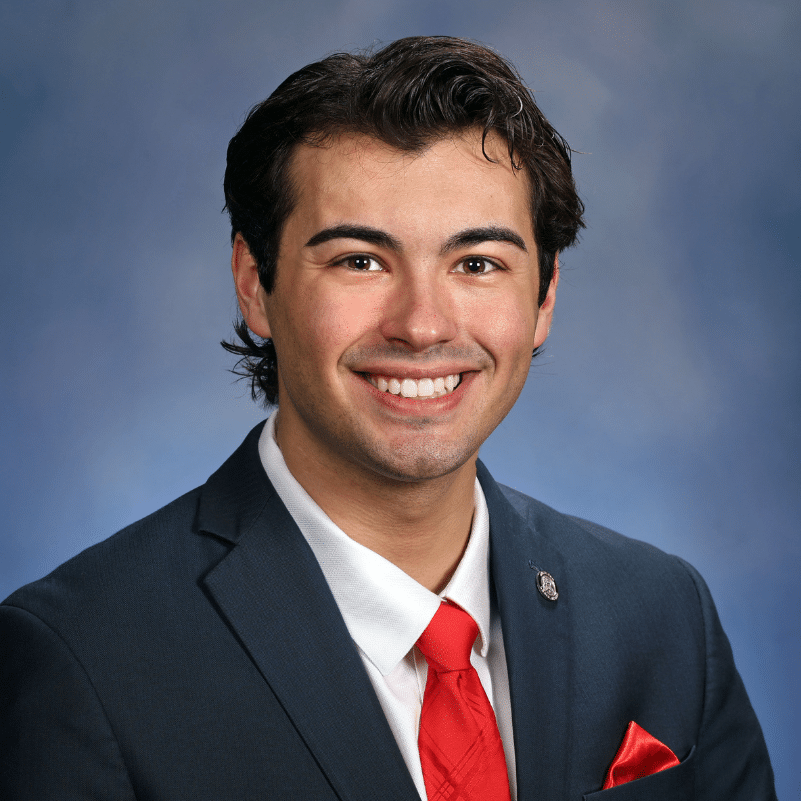
Photo of Jaz Martus
D Michigan House · District 69 On the 2026 ballot

Rep. Jaz Martus

Compare
Total votes
1,815
all sessions
Attendance
99%
10 missed
Higher than 83% of chamber peers
With party
98%
of cast votes
Near the chamber average
Bipartisan score
1%
crosses aisle rarely
Near the chamber average
Sponsored
741
bills & resolutions
Near the chamber average
Committees
1
assignment
741 bills and resolutions

Sponsored bills

Total
741
Primary
36
Co-sponsor
705
This page
741
matching current filters
Co-sponsor HB 5722
In committee · Michigan House · Co-sponsor
Trade: other; original equipment manufacturers of motorized wheelchairs to provide certain parts, tools, and documentation to owners and independent repair providers; require. Amends sec. 3 of 1976 PA 331 (MCL 445.903) & adds sec. 3p.

Maddy summaryThis bill requires original equipment manufacturers of motorized wheelchairs to provide certain parts, tools, and documentation to owners and independent repair providers. It amends Michigan's Consumer Protection Act to add new provisions specifically addressing the rights of wheelchair owners and third-party repair technicians. The legislation aims to ensure that wheelchair owners and independent repair providers have access to necessary components and information needed for maintenance and repairs. This policy change directly affects wheelchair manufacturers, owners of motorized wheelchairs, and independent repair service providers.

In committee Mar 18, 2026 1 co-sponsor
Co-sponsor HB 5704
In committee · Michigan House · Co-sponsor
Traffic control: traffic regulation; requirements for passing a stationary vehicle; modify to include county road worker vehicles. Amends secs. 2, 653a & 907 of 1949 PA 300 (MCL 257.2 et seq.) & repeals sec. 653b of 1949 PA 300 (MCL 257.653b). TIE BAR WITH: HB 5702'26, HB 5703'26

Maddy summaryThis bill amends Michigan's vehicle code to require drivers to pass county road worker vehicles with the same caution and speed restrictions as they must when passing stationary emergency vehicles. It defines road work vehicles as those used for construction, maintenance, or utility work displaying flashing red or amber lights, and updates the legal definitions of authorized emergency vehicles to include these road service vehicles. Drivers must reduce their speed by at least 10 miles per hour and move at least one lane or two vehicle widths away from the stationary vehicle when possible, with penalties including civil fines for violations. The changes apply to all public roadways and align the treatment of road workers with that of police, firefighters, and other emergency responders.

In committee Mar 11, 2026 1 co-sponsor
Co-sponsor HB 5702
In committee · Michigan House · Co-sponsor
Crimes: vehicle offenses; injuring or causing death to individual in a work zone; expand. Amends secs. 79d & 601b of 1949 PA 300 (MCL 257.79d & 257.601b). TIE BAR WITH: HB 5703'26, HB 5704'26

Maddy summaryThis bill expands the legal definition of a work zone to include areas marked by temporary traffic control devices like cones, flares, or vehicles with rotating beacons, ensuring clearer boundaries for construction and road work areas. It strengthens penalties for moving violations in work zones by doubling fines for standard violations and introducing misdemeanor or felony charges when such violations cause injury or death to workers or other individuals. The bill applies these stricter penalties only when the violation involves three or more points and excludes cases where the injured or deceased person was negligent. Like related bills HB 5703 and HB 5704, this legislation requires all three to be enacted together to take effect.

In committee Mar 11, 2026 1 co-sponsor
Co-sponsor HB 5703
In committee · Michigan House · Co-sponsor
Criminal procedure: sentencing guidelines; sentencing guidelines for injuring or causing death to individual in a work zone; provide for. Amends sec. 12e, ch. XVII of 1927 PA 175 (MCL 777.12e). TIE BAR WITH: HB 5702'26, HB 5704'26

Maddy summaryThis bill proposes changes to Michigan's sentencing guidelines for crimes that result in injury or death within work zones. It directly affects prosecutors, judges, and defendants involved in such cases by modifying how sentences are calculated under existing criminal procedure law. The amendment to section 12e of the Code of Criminal Procedure would update the statutory framework governing these specific offenses. The bill is tied with related legislation HB 5702 and HB 5704, indicating coordinated legislative action on sentencing policy.

In committee Mar 11, 2026 1 co-sponsor
Co-sponsor HR 258
In committee · Michigan House · Co-sponsor
A resolution calling on Congress to investigate all of the individuals implicated in the Epstein files and compel them to testify under oath.

Maddy summaryThis House resolution calls on Congress to investigate individuals linked to Jeffrey Epstein and require them to testify under oath. It directly affects high-profile figures across technology, finance, real estate, and government who have been implicated in Epstein's criminal network. The resolution asserts that current Department of Justice actions have failed to protect survivors or fully disclose information, citing concerns over redacted names and unredacted photos of victims. It seeks to use congressional authority to compel testimony from those who participated in or covered up Epstein's crimes. The measure was introduced in March 2026 and referred to the Committee on Government Operations.

In committee Mar 5, 2026 1 co-sponsor
Co-sponsor HB 5662
In committee · Michigan House · Co-sponsor
Law enforcement: other; certain federal agents to utilize body-worn cameras; require in certain circumstances. Creates new act.

Maddy summaryThis bill requires United States Immigration and Customs Enforcement agents working in Michigan to activate body-worn cameras when interacting with the public, except in private places where individuals expect privacy. The law mandates that these cameras record audio and video of the agents' activities during such interactions and establishes a civil infraction with a fine of up to $500 for non-compliance. Additionally, the bill specifies that agents who fail to pay the imposed fine would be deemed ineligible to work in the state until the debt is settled. The legislation applies specifically to federal ICE agents operating within Michigan's borders and creates a new regulatory framework for their use of recording technology.

In committee Mar 4, 2026 1 co-sponsor
Primary HB 4594
Passed · Michigan House · Lead sponsor
Health occupations: dentists; use of the title "dental specialist"; prohibit. Amends sec. 16605 of 1978 PA 368 (MCL 333.16605). TIE BAR WITH: HB 4593'25

Maddy summaryHB 4594 bans Michigan dentists from using the title "dental specialist" by amending state law (MCL 333.16605). This directly affects dentists who currently use or might seek to use that title, as it removes it as an allowable designation under the law. The bill's key provision eliminates the existing legal allowance for the term, requiring dentists to use only standard titles like "dentist" or recognized specialty designations (e.g., orthodontist). The bill is pending in committee after being referred to the Health Policy Committee and reported with a substitute.

Passed Mar 4, 2026 0 co-sponsors
Co-sponsor HB 5592
In committee · Michigan House · Co-sponsor
Health facilities: other; licensure of freestanding hyperbaric oxygen therapy facilities; provide for. Amends secs. 20104, 20106, 20155, 20161, 20162 & 20164 of 1978 PA 368 (MCL 333.20104 et sec.). TIE BAR WITH: HB 5590'26, HB 5591'26, HB 5593'26

Maddy summaryHB 5592 creates a new licensure requirement for freestanding hyperbaric oxygen therapy facilities in Michigan. It directly affects independent medical facilities that provide hyperbaric oxygen therapy, which uses high-oxygen environments to treat specific medical conditions like non-healing wounds. The bill amends Michigan's Public Health Code to establish specific standards and oversight for these facilities, including facility requirements and operational guidelines. This change ensures these specialized treatment centers meet defined safety and quality standards under state regulation.

In committee Mar 3, 2026 1 co-sponsor
Co-sponsor HB 5591
In committee · Michigan House · Co-sponsor
Health facilities: other; licensure of freestanding hyperbaric oxygen therapy facilities; provide for. Amends 1978 PA 368 (MCL 333.1101 - 333.25211) by adding pt. 212. TIE BAR WITH: HB 5590'26, HB 5592'26, HB 5593'26

Maddy summaryHB 5591 updates Michigan's Public Health Code to establish licensing requirements for freestanding hyperbaric oxygen therapy facilities (which treat conditions like non-healing wounds using pressurized oxygen). It directly affects these specialized facilities by requiring them to be accredited by approved organizations (like The Joint Commission), appoint a medical director licensed as a physician or nurse practitioner, and designate a safety coordinator. Key provisions include defining terms like "qualified health professional" and mandating compliance with NFPA 99 fire safety standards. The bill does not change patient access but sets new operational standards for facility operators. (Note: This bill is pending and requires companion bills HB 5590-5593 to take effect.)

In committee Mar 3, 2026 1 co-sponsor
Co-sponsor HB 5590
In committee · Michigan House · Co-sponsor
Health facilities: other; licensure of freestanding hyperbaric oxygen therapy facilities; provide for. Amends 1978 PA 368 (MCL 333.1101 - 333.25211) by adding secs. 21211, 21213, 21215, 21217, 21219, 21221, 21223, 21227 & 21231 to pt. 212. TIE BAR WITH: HB 5591'26, HB 5592'26, HB 5593'26

Maddy summaryHB 5590 requires freestanding hyperbaric oxygen therapy facilities (which use pressurized oxygen chambers for medical treatment) to obtain state licensure. It directly affects facility owners, operators, medical directors, and safety coordinators by mandating specific qualifications, safety protocols (like NFPA 99 compliance), and accreditation standards. Facilities must publicly display licenses, accreditation, FDA-approved treatment indications, and safety rules, and provide patients with written information about risks, benefits, and insurance coverage limitations. The bill also requires facilities to document compliance with safety standards and patient consent forms detailing FDA-approved uses.

In committee Mar 3, 2026 1 co-sponsor
Showing 141 to 150 of 741 bills
Previous 1 … 14 15 16 … 75 Next