

Maddy summaryHB 4657 allows Michigan state police retirees to name a special needs trust as a beneficiary for their retirement payments. The bill amends the State Police Retirement Act to explicitly permit the retirement system to pay benefits directly to such a trust upon written direction from the retiree or their designated beneficiary. This change affects state police members who have established special needs trusts under federal law (42 USC § 1396p(d)(4)(A)/(C)) and wish to provide for dependents with disabilities. The key provision replaces previous restrictions that required individual beneficiaries, enabling trusts to receive payments without requiring the retiree to name a specific person.
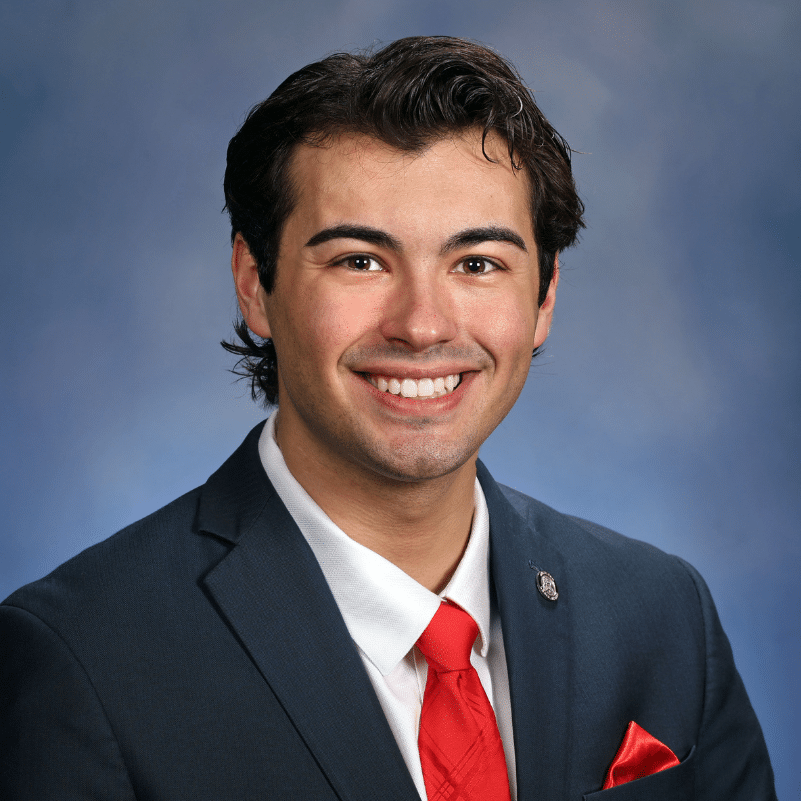
Rep. Jaz Martus
Sponsored bills
Maddy summaryHB 5251 requires Michigan's medical assistance program (Medicaid for low-income residents) to cover prescribed pediatric extended care for children. This specifically affects low-income children in Michigan who need specialized, long-term medical care beyond standard hospital stays. The bill amends state law to mandate this coverage under existing rules for pediatric extended care (Part 219A of the Public Health Code). The coverage would apply to children receiving medically necessary care as prescribed by a doctor. The bill is contingent on the passage of companion legislation (HB 5252).
Maddy summaryHB 5252 amends Michigan's Public Health Code to create a new licensing category for "prescribed pediatric extended care facilities," which provide specialized long-term medical care for children with complex health needs. The bill establishes specific licensing requirements for these facilities, including standards for staffing, medical oversight, and facility operations, directly affecting providers seeking to operate such services. Key provisions include adding Part 219A to the code and revising existing sections (20106, 20109, 20115, 20161) to incorporate these new requirements. This change aims to ensure consistent safety and quality standards for pediatric extended care facilities across the state. The bill is currently pending in the House Health Policy Committee.
Maddy summaryThis bill amends Michigan's Consumer Protection Act to prohibit merchants from charging consumers prices that are grossly in excess of what similar products or services cost elsewhere. It directly affects businesses and consumers by establishing clearer rules against predatory pricing practices. The key provision adds a new unfair practice definition that makes it unlawful to charge prices significantly higher than market rates for comparable goods or services. This change aims to protect consumers from price gouging while maintaining the existing framework of consumer protection laws.
Maddy summaryThis bill grants immunity from nuisance lawsuits to owners and operators of racing facilities and racetracks in Michigan if the facility was built before the plaintiff purchased their property or began construction nearby. It protects these racing venues from legal claims filed by neighbors within a 5-mile radius who acquired their land or started building after the racetrack was established. The law applies to all claims filed after the bill takes effect, regardless of when the alleged nuisance occurred, but does not exempt racetracks from complying with environmental or health and safety regulations.
Maddy summaryThis bill would add a new section to Michigan's civil procedure laws that allows the state attorney general and private individuals to sue firearm industry members for creating or maintaining a public nuisance through the sale, manufacture, or marketing of firearms and related products. The legislation requires these companies to establish reasonable controls over their products to prevent sales to prohibited persons, prevent theft, and stop the installation of devices like pistol converters, without needing to prove the company intended to cause harm. If a company violates these requirements, the attorney general can seek injunctions, damages, and other relief, while private victims of harm can also file lawsuits for compensatory and punitive damages. The bill defines firearm industry members broadly to include sellers, manufacturers, and distributors, and explicitly includes 3D printers and other manufacturing equipment in its scope.
Maddy summaryThis bill prohibits licensed concealed pistol carriers from bringing firearms into specific state buildings and certain public venues, including schools, hospitals, sports arenas, and places of worship. It also bans portable electro-muscular disruption devices in these same locations, with exceptions for parking areas and certain law enforcement personnel. The legislation applies to all licensed individuals except retired police officers, security contractors, private investigators, and other designated law enforcement roles who are permitted to carry weapons on these premises. Violations result in civil fines, license suspensions, or criminal penalties depending on whether it is a first, second, or subsequent offense.
Maddy summaryThis bill, known as Messiah's Law, creates a new felony offense for intentionally firing a gun at a vehicle the shooter knows or should know is occupied. The law directly affects individuals who commit this act and establishes penalties of up to 10 years in prison and a $10,000 fine. If a minor is present in the vehicle, the penalties increase to up to 20 years in prison and a $20,000 fine. The legislation amends Michigan's penal code by adding a specific section to address this conduct. The bill would take effect 90 days after being signed into law.
Maddy summaryThis bill would require sellers to wait at least three days after completing a firearm sale before delivering the weapon to the buyer. It also prohibits sellers from selling firearms to individuals under indictment for a felony or those legally barred from owning guns. The legislation applies to anyone selling firearms in Michigan and carries penalties ranging from misdemeanor fines to felony imprisonment for violations.
Maddy summaryThis bill expands Michigan's gun-free zone laws to include all buildings owned, operated, or leased by the state, with the exception of state-owned shooting ranges. The legislation directly affects individuals who possess firearms in state facilities such as government offices, administrative buildings, and other state property. Key provisions amend existing statutes to clarify that state buildings fall under gun-free zone restrictions while maintaining exemptions for licensed concealed carry permit holders, peace officers, and security personnel performing their duties. The bill also retains existing restrictions on firearms in polling places, election-related locations, and other designated areas like schools, hospitals, and places of worship. Violations of these provisions could result in civil infractions or criminal penalties depending on the severity and frequency of the offense.