

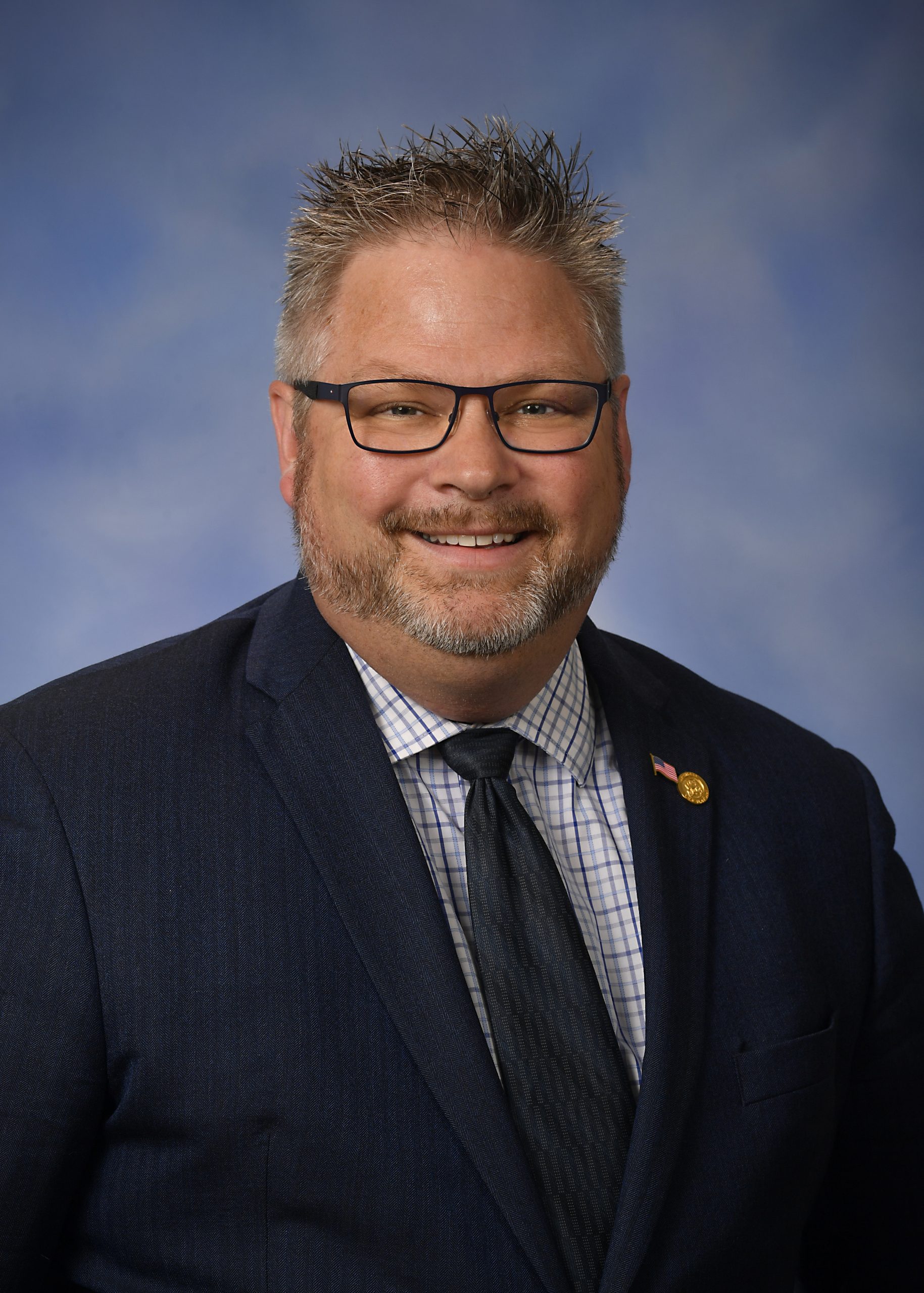
Photo of Phil Green
R Michigan House · District 67 On the 2026 ballot

Rep. Phil Green

Compare
Total votes
3,801
all sessions
Attendance
97%
102 missed
Near the chamber average
With party
93%
of cast votes
Near the chamber average
Bipartisan score
3%
crosses aisle rarely
Near the chamber average
Sponsored
456
bills & resolutions
Lower than 93% of chamber peers
Committees
1
assignment
456 bills and resolutions

Sponsored bills

Total
456
Primary
56
Co-sponsor
400
This page
456
matching current filters
Co-sponsor HB 4138
In committee · Michigan House · Co-sponsor
Civil procedure: service of process; provisions relating to service of process and court fees; amend to reflect repeal of the extreme risk protection order act. Amends secs. 1908, 2529 & 2559 of 1961 PA 236 (MCL 600.1908 et seq.).

Maddy summaryHB 4138 amends Michigan's civil procedure code to remove references to the Extreme Risk Protection Order (ERPO) Act, which was repealed. It specifically revises Sections 1908, 2529, and 2559 of the Revised Judicature Act (1961 PA 236) to eliminate exemptions and provisions that previously applied to ERPO-related cases. This change affects court procedures for service of process and filing fees, ensuring the code no longer includes outdated references to the repealed ERPO law. The bill makes no new policy changes to fees or procedures - only aligns the civil code with the ERPO repeal.

In committee Mar 4, 2025 1 co-sponsor
Co-sponsor HB 4139
In committee · Michigan House · Co-sponsor
Weapons: firearms; firearms law; amend to reflect repeal of the extreme risk protection order act. Amends secs. 2, 2b, 5b & 8 of 1927 PA 372 (MCL 28.422 et seq.). TIE BAR WITH: HB 4140'25, HB 4140'25

Maddy summaryHB 4139 removes references to "extreme risk protection orders" from Michigan's firearm licensing requirements. Specifically, it amends sections of the state's firearms law (MCL 28.422, 28.422b, 28.425b, and 28.428) by deleting the provision that previously required applicants to disclose if they were subject to such orders. This change directly affects individuals applying for firearm licenses, as they will no longer need to certify whether they are under an extreme risk protection order. The bill does not repeal extreme risk protection orders themselves but modifies the licensing process to exclude this specific requirement. The change reflects the repeal of the Extreme Risk Protection Order Act as noted in the bill's title.

In committee Mar 4, 2025 1 co-sponsor
Co-sponsor HB 4140
In committee · Michigan House · Co-sponsor
Civil procedure: injunctions; extreme risk protection order act; repeal. Repeals 2023 PA 38 (MCL 691.1801 - 691.1821). TIE BAR WITH: HB 4138'25, HB 4139'25

Maddy summaryHB 4140 repeals the 2023 "Extreme risk protection order act" (2023 PA 38, MCL 691.1801-691.1821), which established a legal process for temporarily removing firearms from individuals deemed a risk to themselves or others. The bill does not create new provisions or directly affect any individuals or groups, as it solely removes an existing law. This repeal is contingent on two other bills (HB 4138 and HB 4139) also being enacted into law. The bill was introduced on February 26, 2025, and referred to the Judiciary Committee.

In committee Mar 4, 2025 1 co-sponsor
Co-sponsor HB 4102
In committee · Michigan House · Co-sponsor
Health occupations: physical therapists; licensing process; modify to incorporate physical therapy licensing compact. Amends secs. 16335, 17801 & 17821 of 1978 PA 368 (MCL 333.16335 et seq.) & adds secs. 17820a & 17820b. TIE BAR WITH: HB 4101'25

Maddy summaryHB 4102 updates Michigan's physical therapy licensing rules to allow the state to join the Physical Therapy Licensure Compact. The bill amends existing licensing sections and adds new provisions (17820a and 17820b) to enable this participation. This change would let physical therapists licensed in Michigan or other compact states practice in Michigan without needing separate state licenses. The bill directly affects physical therapists seeking to work across state lines and Michigan residents needing physical therapy services. It creates a streamlined process for interstate practice under the compact agreement.

In committee Feb 25, 2025 1 co-sponsor
Co-sponsor HR 24
Passed · Michigan House · Co-sponsor
A resolution to declare February 15-22, 2025, as National FFA Week in the state of Michigan.

Maddy summaryThis resolution declares February 15-22, 2025, as National FFA Week in Michigan. It encourages Michigan citizens to recognize the National FFA Organization's role in supporting agricultural education, youth leadership development, and career preparation for students in grades 7-12. As a symbolic resolution, it does not create new laws or allocate funds but formally acknowledges FFA's contributions to agricultural education programs across the state.

Passed Feb 19, 2025 1 co-sponsor
Co-sponsor HB 4006
In committee · Michigan House · Co-sponsor
Agriculture: agribusiness; exclusion of commercial weddings or similar events in agricultural zones; prohibit. Amends 2006 PA 110 (MCL 125.3101 - 125.3702) by adding sec. 204b.

Maddy summaryHB 4006 amends Michigan's zoning law to prevent local governments from banning weddings or similar events in barns or farm facilities located in agricultural zones. It directly affects farmers and rural property owners who host commercial events, allowing them to use agricultural land for this purpose without zoning restrictions. The bill permits reasonable regulations like noise limits, traffic management, or operating hours but prohibits outright bans on the event use. This change would apply to existing zoning ordinances under Michigan's zoning enabling act (MCL 125.3101-125.3702). The bill is currently in committee review after its January 2025 introduction.

In committee Jan 15, 2025 1 co-sponsor
Primary HB 5372
Passed · Michigan House · Lead sponsor
Human services: medical services; certified community behavioral health clinics; provide certification and funding for. Amends 1939 PA 280 (MCL 400.1 - 400.119b) by adding sec. 109p.

Maddy summaryThis bill requires the state to avoid policies that conflict with federal rules for certified community behavioral health clinics. It mandates the creation of a process to determine where new clinic sites should be located to prevent overlapping service areas. Additionally, the state must continue cooperating with the federal government on these clinics unless the legislature votes to stop such participation. The bill does not take effect until another related piece of legislation is passed.

Passed Dec 18, 2024 0 co-sponsors
Co-sponsor HB 5371
Passed · Michigan House · Co-sponsor
Human services: medical services; certified community behavioral health clinics; provide certification and funding for. Amends 1939 PA 280 (MCL 400.1 - 400.119b) by adding sec. 109o.

Maddy summaryThis bill directs the Michigan Department of Health and Human Services to create a new funding system that pays certified community behavioral health clinics in advance for their expected costs. The law applies to clinics, nonprofit groups, and private organizations that provide mental health services and meet specific federal and state certification standards. To ensure fair treatment, the bill requires the department to establish rules that prevent retaliation against these providers and creates a process for resolving payment disputes through an independent adjudicator. Implementation of this payment system must be completed by October 1, 2027, but the bill will only take effect if a companion bill is also passed into law.

Passed Dec 18, 2024 1 co-sponsor
Co-sponsor HB 4169
Passed · Michigan House · Co-sponsor
Health occupations: occupational therapists; occupational therapy licensure compact; enact. Amends 1978 PA 368 (MCL 333.1101 - 333.25211) by adding sec. 16188.

Maddy summaryThis bill establishes an interstate licensure compact for occupational therapists and occupational therapy assistants in Michigan, allowing them to practice in other member states without obtaining separate licenses. The legislation creates a system where a therapist licensed in their home state can receive a "compact privilege" to work in remote states, provided the patient is located in that remote state during the encounter. Key provisions include the mutual recognition of licenses, the sharing of disciplinary and investigative information between states, and specific accommodations for military families relocating. The law also aims to improve public access to therapy services by facilitating the use of telehealth technology and ensuring consistent regulatory standards across participating jurisdictions.

Passed Dec 12, 2024 1 co-sponsor
Showing 111 to 120 of 456 bills
Previous 1 … 11 12 13 … 46 Next