

Maddy summaryHouse Bill 4366 proposes to amend Michigan's Code of Criminal Procedure. Specifically, it modifies section 13c of chapter XVII (MCL 777.13c), which outlines sentencing guidelines. The bill aims to adjust the sentencing guidelines for certain offenses related to excess discharges into the waters of the state. This change would directly affect individuals or entities convicted of such environmental violations, impacting how their sentences are determined by the courts.
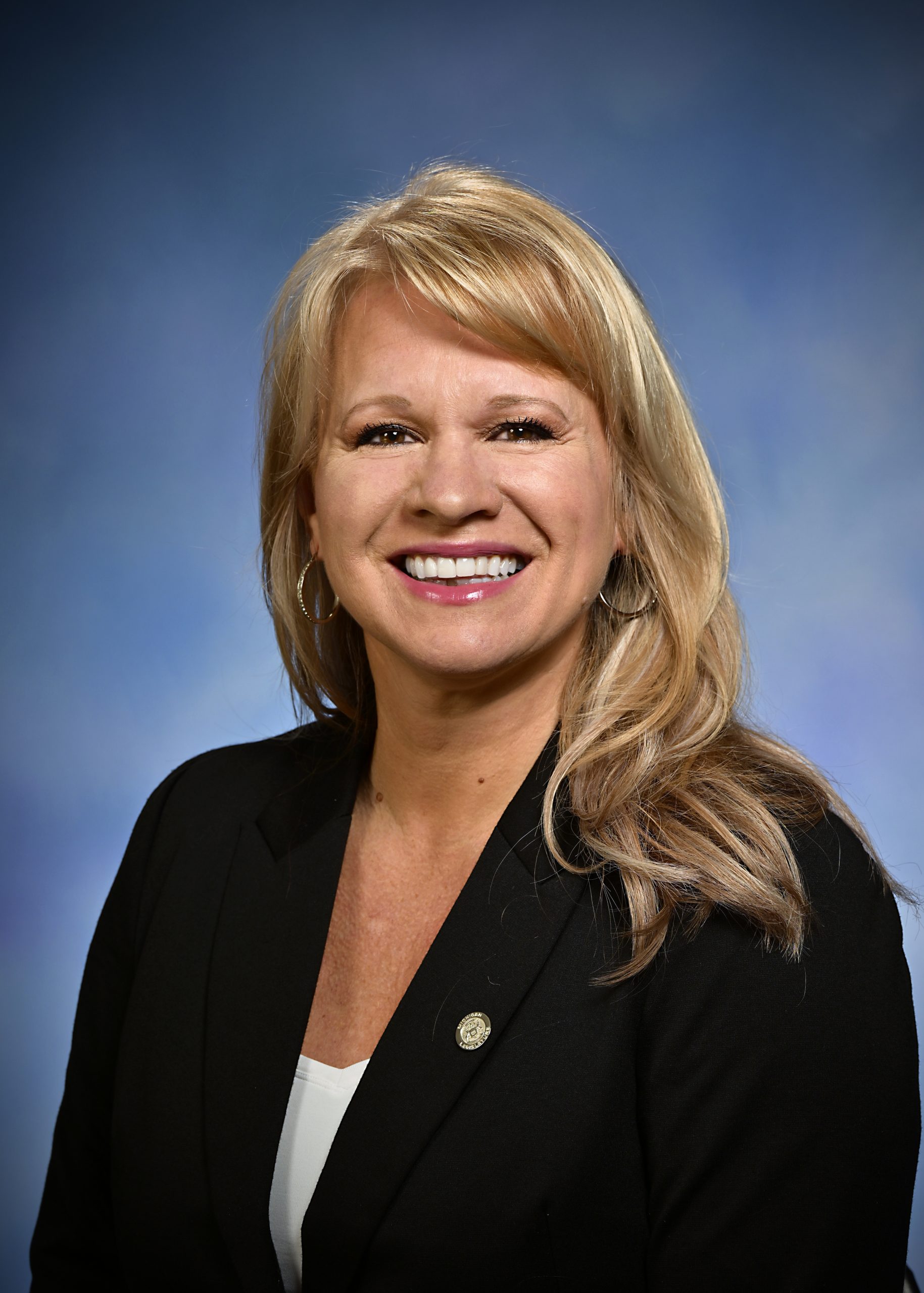
Rep. Alicia St. Germaine
Sponsored bills
Maddy summaryHouse Bill 4364 modifies the requirements for obtaining permits to discharge waste into Michigan's waters. Beginning January 1, 2026, any person applying for a new or increased discharge permit must provide documentation of permission from any contiguous county that would be impacted by the discharge. This permission must be in the form of a resolution adopted by the contiguous county's board of commissioners. If an applicant fails to secure this permission, the state department will deny the permit application.
Maddy summaryHouse Bill 4370 proposes a new individual income tax credit for Michigan taxpayers, directly affecting eligible students and their families. Beginning in tax year 2026, taxpayers could claim a credit equal to the sales or use tax paid on textbooks purchased for themselves or their dependents. To qualify, the student must be enrolled in an eligible Michigan institution and meet specific financial aid criteria, such as being a Federal Pell Grant recipient or a professional/graduate student who would have been Pell-eligible based on financial need. Any portion of the credit that exceeds a taxpayer's liability would be refunded.
Maddy summaryHouse Bill 4365 amends Michigan's Natural Resources and Environmental Protection Act concerning discharges of untreated or partially treated sewage. It expands the list of parties that sewer system operators must notify immediately (within 24 hours) after a discharge begins, including additional county officials and local newspapers in potentially affected counties. The bill also clarifies requirements for testing affected waters for E. coli to assess public health risks. Violations of these updated notification and testing requirements are subject to existing civil fines ranging from $2,500 to $25,000 per day.
Maddy summaryHouse Resolution 30 is a resolution urging the United States Congress to enact legislation that would remove the gray wolf from the endangered species list. This action would transfer the authority for managing gray wolf populations from the federal government back to individual states.
Maddy summaryHouse Bill 4368 amends Michigan's Public Health Code regarding the reporting of infant deaths. It expands existing provisions to include the death of an infant who was born alive after an attempted abortion and then surrendered to an emergency service provider or a newborn safety device under the safe delivery of newborns law. For such cases, the bill mandates that the deceased infant be listed as "Baby Doe" and prohibits reporting any information that would directly identify the infant or their parents, such as names or addresses. It also reinforces the timelines for funeral directors and physicians to certify and file death records.
Maddy summaryHB 4157 creates a pilot program for a state-administered assessment system in Michigan public schools, replacing the current M-STEP testing. It requires item analysis for all tests (showing which questions students answered correctly and common mistakes) and mandates that districts use only student enrollment data from the time of testing when calculating school performance scores. The bill allocates $500,000 for an online tool to provide secure, immediate access to student-level assessment data for educators and parents. This bill directly affects public school districts receiving state aid and their students in grades 11-12, as it modifies assessment requirements under the State School Aid Act.
Maddy summaryHB 4156 amends Michigan's high school graduation requirements for diplomas. It modifies mathematics credit rules by allowing students to fulfill algebra II requirements through approved career and technical education programs (e.g., engineering, computer science) that cover equivalent content, rather than solely through traditional math courses. The bill also clarifies social science requirements, specifying that students entering grade 8 before 2023 may satisfy the economics credit with a personal economics course containing financial literacy, while maintaining core history and civics requirements for all students. These changes directly affect Michigan high school students and school districts by altering diploma eligibility criteria.
Maddy summaryThis bill, HB 4313, proposes an amendment to Michigan's Income Tax Act of 1967. Its stated purpose is to provide a new individual income tax deduction for residents who live in a legislative district with a vacant seat. The provided bill text outlines the existing structure for calculating taxable income and various current deductions, but it does not include the specific language or mechanisms for the proposed deduction related to vacant legislative seats. Therefore, the details of how this deduction would be implemented are not available in this truncated text.
Maddy summaryHouse Bill 4179 modifies the Michigan insurance code regarding gifts from life insurance producers. It increases the maximum value of merchandise that a life insurer or life insurance producer can give to an applicant or insured under a life insurance policy. The bill raises this limit from $5.00 to $50.00 per person per calendar year. This change directly affects life insurers, life insurance producers, and individuals applying for or holding life insurance policies.