

Maddy summaryThis bill allows candidates for the offices of governor and U.S. Senator in Michigan to avoid collecting nominating petitions by paying a nonrefundable filing fee of $15,000 to the Secretary of State. Under the new provisions, candidates who choose this option must adhere to the same withdrawal rules as those who submit petitions, meaning they cannot withdraw their candidacy unless they move out of state or become physically unfit. The legislation also updates deadlines for filing petitions, requiring them to be submitted by the fifteenth Tuesday before the August primary starting in 2014. Any fees collected under this plan are deposited into the state's general fund.
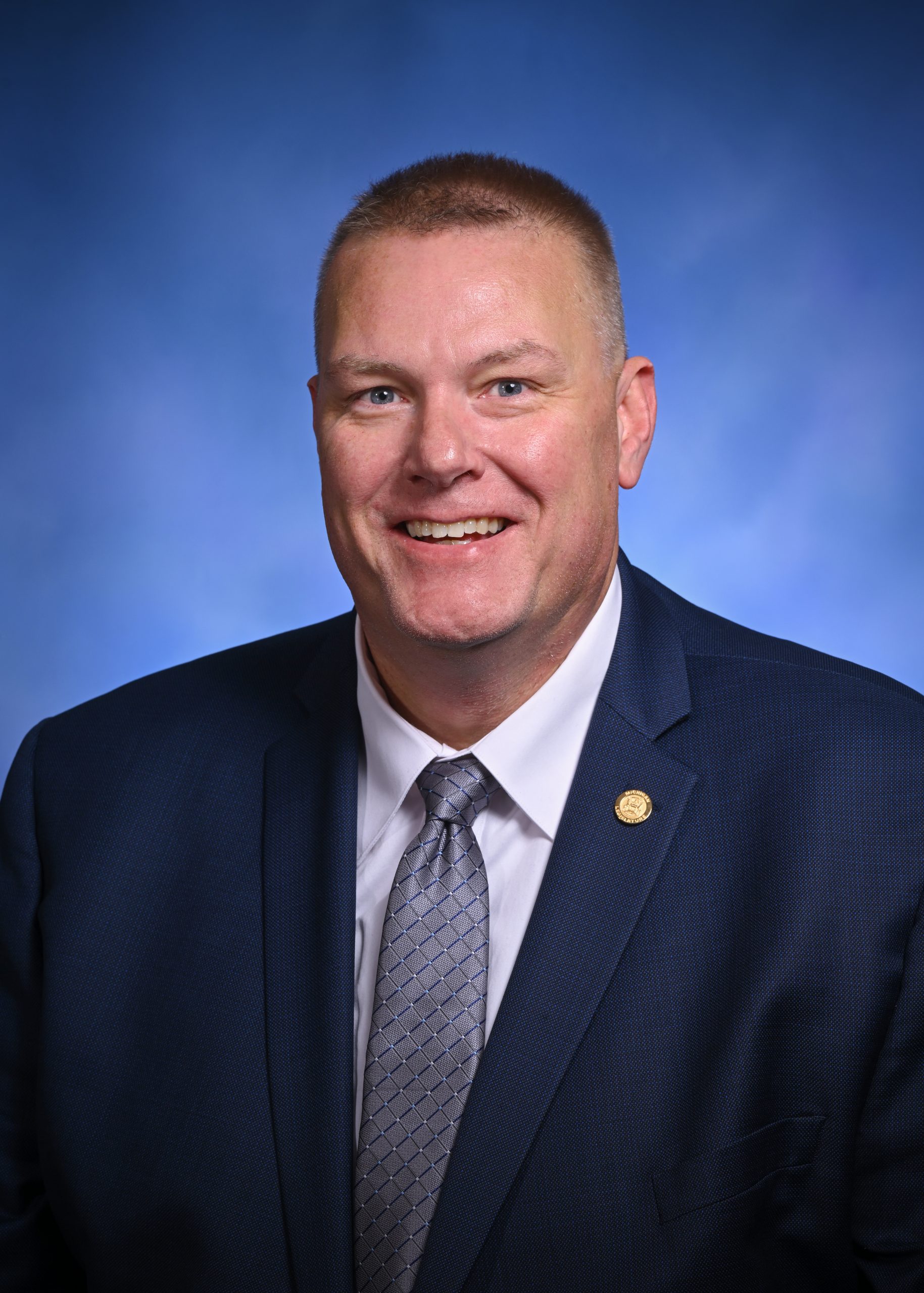
Rep. Ron Robinson
Sponsored bills
Maddy summaryHB 5457 creates a state fund to support hyperbaric oxygen therapy through grants and a temporary pilot program. The Department of Health and Human Services will administer the fund, using it for grants and operating the pilot program. After the pilot concludes, any remaining funds will transfer to the general state fund. The bill requires another bill (HB 5456) to be enacted first.
Maddy summaryHB 5456 establishes a pilot program providing free hyperbaric oxygen therapy to Michigan veterans diagnosed with traumatic brain injury or post-traumatic stress disorder. The bill creates a state grant program administered by the Department of Health and Human Services, funding providers to deliver treatment at no cost to eligible veterans. Providers must use FDA-cleared chambers meeting specific safety standards and be accredited by organizations like the American College of Hyperbaric Medicine. The program requires the department to implement rules within 12 months and ends after the pilot period concludes.
Maddy summaryHB 4119 exempts sales of large aircraft (over 6,000 pounds) and certain parts/materials attached to them from Michigan's sales tax when used by commercial airlines for passenger or cargo transport. It specifically applies to domestic air carriers operating under federal aviation rules, covering both new aircraft purchases and maintenance-related transactions. Key conditions include requiring aircraft to leave Michigan within 15 days of temporary use (e.g., for evaluation or repairs) and ensuring they were not based or registered in Michigan before or after the transaction. This policy change directly affects commercial airlines and aircraft sellers, reducing tax liability on qualifying equipment purchases and maintenance services.
Maddy summaryHB 4120 exempts certain aircraft purchases and maintenance from Michigan's use tax. It applies to domestic air carriers using aircraft over 6,000 pounds for cargo, passenger, or combined transport, and to parts/materials affixed to such aircraft under specific conditions (e.g., aircraft not based in Michigan). The bill also exempts temporary aircraft in Michigan for maintenance or sales if they leave within 15 days, and extends tax exemptions to interstate trucking equipment used across state lines. These changes reduce tax burdens for airlines, aircraft maintenance providers, and interstate trucking companies operating in Michigan.
Maddy summaryThis bill proposes to change the rules for preliminary examinations in Michigan criminal cases, which are early court hearings to determine if there is enough evidence to proceed with a felony trial. Currently, the bill would allow prosecutors and defense attorneys to introduce certain reports, such as drug test results and forensic lab findings, without needing the original author to testify in court. The legislation also establishes a specific timeline where these relaxed evidence rules would take effect on January 1, 2027, replacing the current requirement that live testimony be available for most evidence. By removing the application of standard evidence rules for future cases, the bill aims to streamline the process of deciding whether a defendant should be held for trial.
Maddy summaryThis bill proposes changes to Michigan's construction code to clarify the procedures for modifying building permits after they have been issued. It allows building permit holders to request changes while ensuring that the department can only require additional modifications directly related to those specific requests. The legislation includes a ten-day deadline for the department to notify permit holders of any required changes and prevents the need to restart the entire application process. Because the bill is tied to another piece of legislation, it will only take effect if that companion bill is also passed into law.
Maddy summaryHB 5511 would allow courts to delay officially recording a conviction (entry of judgment) until sentencing occurs, under specific conditions. This applies when the prosecutor agrees after consulting the victim, and either the court finds good cause to delay or the defendant enters a specialty rehabilitation program. The bill does not apply to certain traffic offenses involving vehicle operation (even if felony/misdemeanor) or convictions already eligible for delayed sentencing under other laws. The delay mechanism aims to support rehabilitation efforts while ensuring victims are consulted, but the bill requires another related bill (HB 5510) to pass first.
Maddy summaryHB 5510 allows Michigan courts to delay final sentencing for up to one year (or longer for specific cases) for certain non-violent offenses, giving defendants time to participate in rehabilitation programs like drug court. It requires courts to collect supervision fees ($30-$60 per month, depending on electronic monitoring) during the delay period, with maximum limits of 12 months for most cases or 60 months for child support violations. The bill exempts juveniles in specific cases and permits courts to waive fees for indigent defendants. This modifies existing sentencing procedures to prioritize rehabilitation while adding structured financial obligations during the delay.
Maddy summaryHB 5387 amends Michigan's "Mozelle senior or vulnerable adult medical alert act" to specifically include "missing veterans at risk" in the definition of persons eligible for emergency alerts. The bill defines a "missing veteran at risk" as an active-duty service member or veteran reported missing with a documented physical or mental health condition. This change directly affects veterans who go missing and have health conditions, ensuring they are covered under the same alert protocols as seniors and vulnerable adults. The law does not create new procedures but clarifies who qualifies for existing emergency reporting mechanisms.