

Maddy summaryHB 4677 requires Michigan courts to provide petitioners with written information about alternatives to full guardianship before filing a petition, including supported decision-making. This bill directly affects individuals potentially declared incapacitated and their families or caregivers navigating guardianship proceedings. The key mechanism mandates courts to explain options like limited guardianship, durable power of attorney, and supported decision-making - where individuals with disabilities receive support from trusted people to make their own choices. The change aims to prioritize less restrictive options before appointing a full guardian.
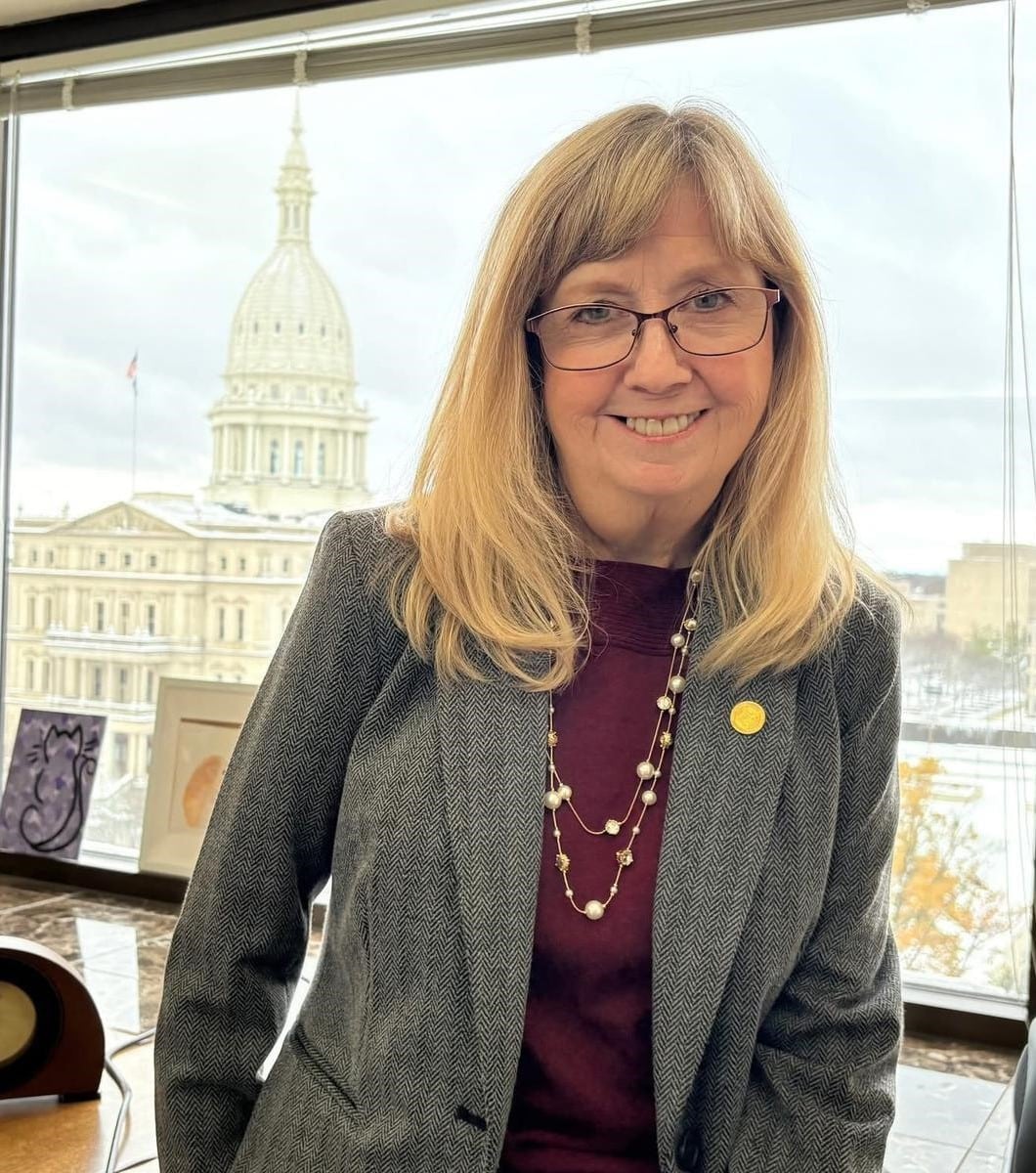
Rep. Sharon MacDonell
Sponsored bills
Maddy summaryHB 4676 amends Michigan's mental health guardianship law to require courts and guardians to prioritize the "least restrictive means" when appointing guardians for individuals with mental health conditions. This directly affects people needing court-appointed guardianship due to mental health challenges, such as those with severe depression, schizophrenia, or developmental disabilities. The key provision mandates that guardians and courts must first consider less restrictive options - like supported living arrangements or limited guardianship - before imposing full guardianship. This change aims to preserve individual autonomy and minimize unnecessary restrictions on personal decision-making.
Maddy summaryHB 4760 requires Michigan law enforcement officers to wear visible identification (showing their name or badge number and agency) and not wear masks or disguises during public interactions while performing duties. Exceptions allow masks for health protection (e.g., airborne diseases), safety from toxins, or physical protection during high-risk incidents like shootouts. The law applies to all state and federal officers in Michigan during public engagements, with violations punishable as misdemeanors (up to 90 days in jail or $1,000 fine). It does not affect covert operations or officers wearing protective gear for legitimate safety reasons.
Maddy summaryThis resolution urges the federal government to maintain funding and reinstate staff for the Low Income Home Energy Assistance Program (LIHEAP) while negotiating the "One Big Beautiful Bill Act." It directly affects Michigan residents who rely on the state's Home Heating Credit Program, which provided assistance to 248,765 Michiganders in 2022 - including low-income families, seniors, and people with disabilities - by helping cover heating costs. The resolution highlights that proposed federal budget cuts to LIHEAP and the recent firing of LIHEAP program staff threaten the program's continuation, potentially causing payment delays or termination. As a non-binding request, it asks federal leaders to prioritize LIHEAP funding to prevent disruption of this critical aid.
Maddy summaryThis House Resolution (HR 143) urges members of Congress to reject President Trump's proposed "One Big Beautiful Bill Act" and instead support policies that fully fund Medicaid, SNAP, and WIC. It directly affects millions of low-income Americans, including children, seniors, people with disabilities, and vulnerable communities who rely on these programs for healthcare, food assistance, and nutrition support. The resolution opposes cuts to Medicaid (which covers 1 in 4 Michiganders), SNAP (impacting 1.4 million Michiganders), and WIC, while criticizing tax breaks for wealthy households and reduced clean energy funding. It calls for expanding healthcare access, promoting clean energy, and ensuring a fair tax system as concrete policy alternatives.
Maddy summaryThis resolution urges Congress to maintain funding for the Federal TRIO programs, which support low-income, first-generation college students, and individuals with disabilities. It highlights that TRIO provides academic tutoring, counseling, financial guidance, and other assistance through eight specific programs (like Upward Bound for high school students and the McNair Program for doctoral preparation). The resolution responds to a proposed budget cut that would eliminate all TRIO funding, potentially affecting over 880,000 participants annually, including 6,000 veterans. The measure has been introduced and referred to committee but does not create new law.
Maddy summaryHR 148 is a ceremonial resolution declaring August 2, 2025, as Neighborhood Empowerment Day in Michigan. It honors community organizations, volunteers, and grassroots efforts that improve neighborhoods through initiatives like beautification, youth programs, and civic engagement. The resolution has no policy or funding mechanisms - it is a symbolic gesture recognizing existing community work, such as efforts by groups like ARISE Detroit! that mobilize residents for local revitalization. It directly affects no individuals or entities beyond acknowledging these volunteer-driven community achievements.
Maddy summaryThis House Resolution (HR 147) formally declares August 7, 2025, as Purple Heart Day in Michigan. It commemorates the anniversary of the Purple Heart medal's founding (August 7, 1782) and honors military personnel wounded or killed in combat. The resolution directs the state to recognize Purple Heart recipients' sacrifices and expresses appreciation through the Michigan Department of Military and Veterans Affairs. As a ceremonial resolution, it has no legal effect but serves to publicly honor veterans.
Maddy summaryThis resolution (HR 146) symbolically declares August 3-9, 2025, as National Health Center Week in Michigan. It recognizes Michigan's community health centers, which serve over 675,000 residents across 450+ sites and provide primary care, behavioral health, and other services. The resolution honors these centers' role in improving health outcomes, supporting local economies ($1.7 billion impact), and addressing healthcare access barriers statewide. As a procedural resolution, it does not create new policy or alter existing law.
Maddy summaryThis resolution declares July 21-25, 2025, as Fibroids Awareness Week in Michigan. It symbolically recognizes uterine fibroids - noncancerous uterine tumors affecting many women, especially Black women - and aims to raise public awareness about their health impacts. The resolution has no policy or funding provisions; it simply encourages Michiganders to learn about fibroids and support affected individuals. It is a ceremonial measure introduced by Representative Morgan Foreman and adopted on July 24, 2025.