

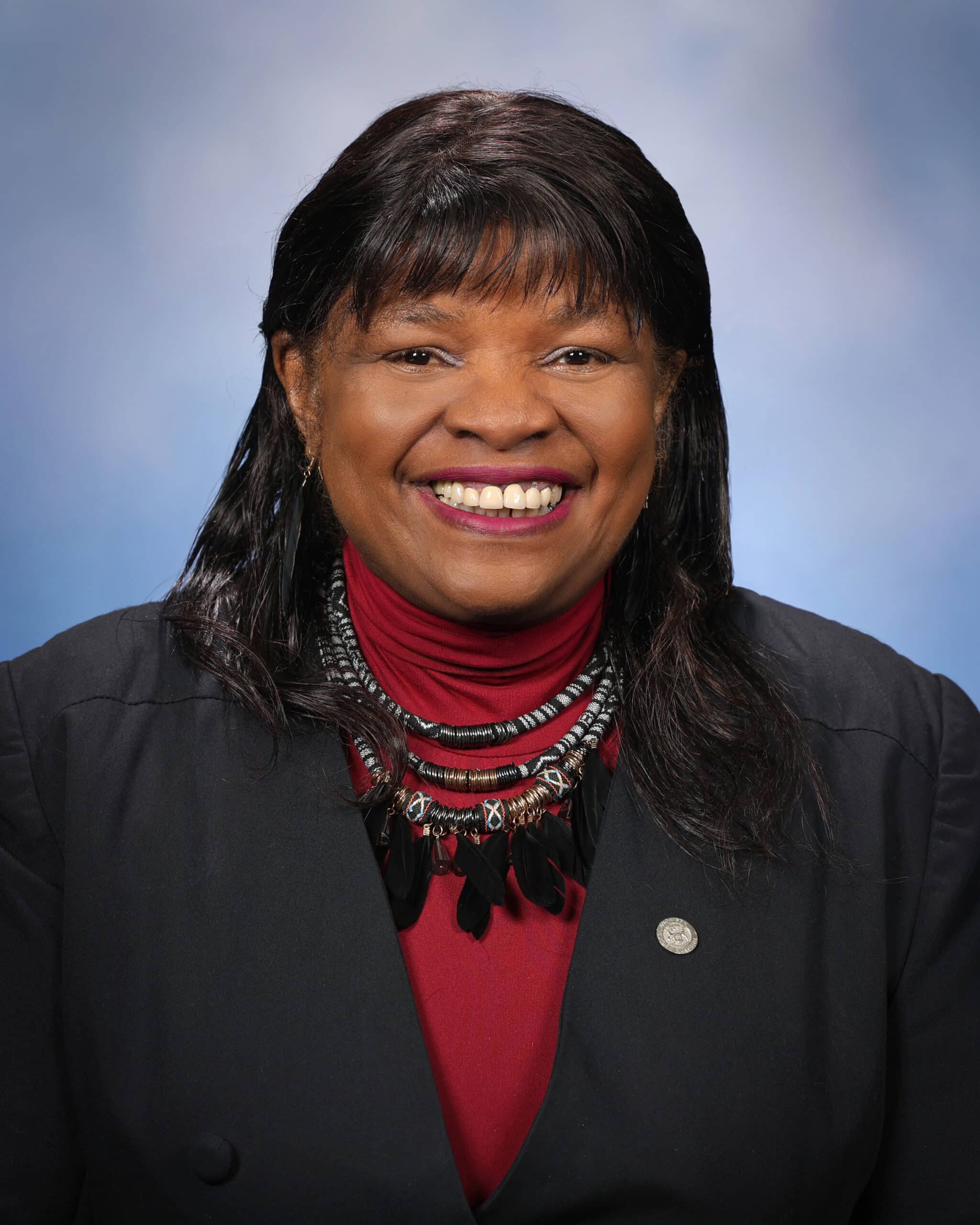
Photo of Brenda Carter
D Michigan House · District 53 On the 2026 ballot

Rep. Brenda Carter

Compare
Total votes
3,673
all sessions
Attendance
93%
262 missed
Lower than 97% of chamber peers
With party
97%
of cast votes
Near the chamber average
Bipartisan score
2%
crosses aisle rarely
Near the chamber average
Sponsored
1,988
bills & resolutions
Near the chamber average
Committees
3
assignments
1,988 bills and resolutions

Sponsored bills

Total
1,988
Primary
123
Co-sponsor
1,865
This page
1,988
matching current filters
Co-sponsor HB 4843
Passed · Michigan House · Co-sponsor
Consumer protection: unfair trade practices; disclosure of automatic renewal provisions in consumer contracts; require. Amends sec. 3 of 1976 PA 331 (MCL 445.903) & adds sec. 3j.

Maddy summaryThis bill amends Michigan's Consumer Protection Act to require businesses to clearly disclose automatic renewal terms in consumer contracts. It mandates that any provision allowing a service or subscription to continue without explicit consumer consent must be prominently displayed within the agreement itself. The law directly affects businesses offering recurring services and consumers who sign up for such products, ensuring they are fully informed about how their subscriptions will renew. By adding a new section to the statute, the bill aims to prevent hidden fees and unexpected charges by making these renewal conditions transparent and easy to understand.

Passed Dec 18, 2024 1 co-sponsor
Co-sponsor HB 5839
Passed · Michigan House · Co-sponsor
Crimes: human trafficking; safe harbor protection for minors who are victims of sex and labor trafficking; modify certain requirements. Amends sec. 451 of 1931 PA 328 (MCL 750.451).

Maddy summaryThis bill modifies Michigan's penal code to strengthen protections and procedures for minors involved in human trafficking cases. It establishes a legal presumption that children under 18 are coerced into sex or labor trafficking offenses, shifting the burden to the prosecution to prove otherwise if they wish to avoid this classification. The legislation also mandates that law enforcement immediately report suspected trafficking involving minors to the Department of Health and Human Services, which must then begin an investigation within 24 hours. Additionally, the bill clarifies how prior convictions affect sentencing severity and outlines specific evidence types courts can use to verify a defendant's criminal history. These changes directly impact law enforcement, prosecutors, courts, and the Department of Health and Human Services in handling cases involving child victims of trafficking.

Passed Dec 18, 2024 1 co-sponsor
Co-sponsor HB 5957
Passed · Michigan House · Co-sponsor
Criminal procedure: expunction; certain conditions allowing for setting aside convictions and certain implementation dates; amend. Amends secs. 1b, 1d & 1e of 1965 PA 213 (MCL 780.621b et seq.).

Maddy summaryThis bill updates Michigan's laws on expunging criminal convictions by clarifying how multiple offenses are counted and adjusting the waiting periods before individuals can apply to have their records set aside. Under the new rules, crimes committed within a 24-hour window and stemming from the same incident will be treated as a single offense unless they involve assault, weapons, or carry a maximum penalty of ten years or more. The legislation also establishes specific waiting times based on the severity of the crime, ranging from three years for standard misdemeanors to seven years for serious felonies, and requires applicants to have no pending charges or new convictions during those waiting periods. Additionally, the bill mandates that expungement applications include detailed personal information, a certified record of the convictions, and a $50 processing fee paid to the state police.

Passed Dec 18, 2024 1 co-sponsor
Co-sponsor HB 5837
Passed · Michigan House · Co-sponsor
Criminal procedure: defenses; affirmative defense that individual committed a crime because the individual was a victim of human trafficking; establish. Amends 1927 PA 175 (MCL 760.1 - 777.69) by adding sec. 21d to ch. VIII.

Maddy summaryThis bill creates a legal defense for people charged with crimes if they can prove they committed those acts because they were victims of human trafficking. Under the new rule, a defendant must show by a "preponderance of the evidence" that their criminal behavior was a direct result of being trafficked. This provision applies to both felony and misdemeanor charges and allows courts to consider the trafficking victim status as a reason for the offense. The law takes effect 90 days after it is signed into legislation.

Passed Dec 18, 2024 1 co-sponsor
Co-sponsor HB 5849
Passed · Michigan House · Co-sponsor
Crimes: prostitution; references to prostitute and prostitution; modify in the revised judicature act of 1961. Amends sec. 3801 of 1961 PA 236 (MCL 600.3801).

Maddy summaryHB 5849 amends Michigan's Revised Judicature Act to update the legal definitions and references regarding prostitution within the state's nuisance laws. The bill modifies specific sections of the law to ensure consistency with current terminology and statutes concerning commercial sexual activity and related offenses. It classifies buildings, vehicles, and other locations used for prostitution as nuisances and holds owners or operators accountable for maintaining such spaces. This change is a technical update to existing legal frameworks rather than a new criminal prohibition, and it requires the passage of a companion bill to become effective.

Passed Dec 18, 2024 1 co-sponsor
Co-sponsor HB 5889
Passed · Michigan House · Co-sponsor
Education: other; the department to develop and provide an informational notice regarding certain crimes; require. Amends 1976 PA 451 (MCL 380.1 - 380.1852) by adding sec. 1509.

Maddy summaryThis bill requires Michigan's Department of Education to create and distribute informational notices about sextortion to school districts, academies, and their staff, students in grades 6 through 12, and parents. The notices must explain the legal definition of sextortion, include the relevant state law, and provide contact details for the state police office of school safety. Additionally, school boards are mandated to develop educational policies on the topic and hold at least one annual meeting to share free resources on sextortion from federal and national organizations. The legislation defines sextortion as a form of child sexual exploitation where an adult threatens to share a minor's nude or sexual image unless they provide more content, engage in sexual activity, or pay money.

Passed Dec 18, 2024 1 co-sponsor
Co-sponsor HB 5853
Passed · Michigan House · Co-sponsor
Crimes: prostitution; references to prostitute and prostitution; modify in sex offender registration act. Amends sec. 2 of 1994 PA 295 (MCL 28.722).

Maddy summaryThis bill amends Michigan's Sex Offender Registration Act to clarify how certain legal statuses are defined for registration purposes. It expands the definition of "convicted" to include specific juvenile adjudications and orders of disposition for individuals aged 14 or older who would be classified as tier III offenders, while excluding convictions that have been expunged or set aside. Additionally, the legislation updates the definition of "custodial authority" to explicitly cover a broader range of relationships and positions, including specific roles within schools, correctional facilities, and county probation programs where an individual might have access to or authority over a victim. These changes aim to ensure that sex offenders with these specific backgrounds are properly identified and registered under the state's tracking system.

Passed Dec 18, 2024 1 co-sponsor
Co-sponsor HB 5850
Passed · Michigan House · Co-sponsor
Crimes: prostitution; references to prostitute and prostitution; modify in the child care organizations act. Amends sec. 5r of 1973 PA 116 (MCL 722.115r).

Maddy summaryThis bill updates Michigan's child care laws to strengthen background check requirements for staff, household members, and license applicants. It establishes specific rules that automatically disqualify individuals from working in child care if they refuse background checks, provide false information, or have convictions for crimes such as child abuse, sexual offenses, domestic violence, and certain felonies involving harm or fraud. The legislation also sets time limits on how long past felony or misdemeanor convictions must have occurred before an individual becomes eligible to work in a child care setting.

Passed Dec 18, 2024 1 co-sponsor
Co-sponsor HB 5846
Passed · Michigan House · Co-sponsor
Crimes: prostitution; references to prostitute and prostitution; modify in public health code. Amends sec. 5129 of 1978 PA 368 (MCL 333.5129).

Maddy summaryThis bill updates Michigan's public health code to clarify and expand testing and counseling requirements for individuals charged with or convicted of prostitution and related offenses. It mandates that courts order medical examinations for sexually transmitted infections, hepatitis B, hepatitis C, and HIV for defendants at various stages of the legal process, including arrest, pre-trial release, and after conviction. The law also requires that test results be shared with defendants and health departments for partner notification, while ensuring that counseling and testing services are provided confidentially. Additionally, the bill specifies that victims of sexual offenses can request expedited testing within 48 hours of a defendant's custody or indictment.

Passed Dec 18, 2024 1 co-sponsor
Co-sponsor HB 5843
Passed · Michigan House · Co-sponsor
Crimes: prostitution; references to prostitute and prostitution; modify in the probate code of 1939. Amends secs. 2, 13a & 18k, ch. XIIA of 1939 PA 288 (MCL 712A.2 et seq.).

Maddy summaryHB 5843 amends Michigan's Probate Code to clarify which specific offenses require a juvenile court to assert exclusive jurisdiction over minors under 18. The bill explicitly lists violations such as certain criminal acts, possession of dangerous weapons, escape from juvenile facilities, and commercial sexual activity as grounds for the court to take immediate control of a case. By updating these definitions, the legislation ensures that the juvenile court system handles cases involving these serious behaviors without interference from other courts. This change directly affects the legal process for minors charged with these specific offenses and their parents or guardians.

Passed Dec 18, 2024 1 co-sponsor
Showing 471 to 480 of 1,988 bills
Previous 1 … 47 48 49 … 199 Next