

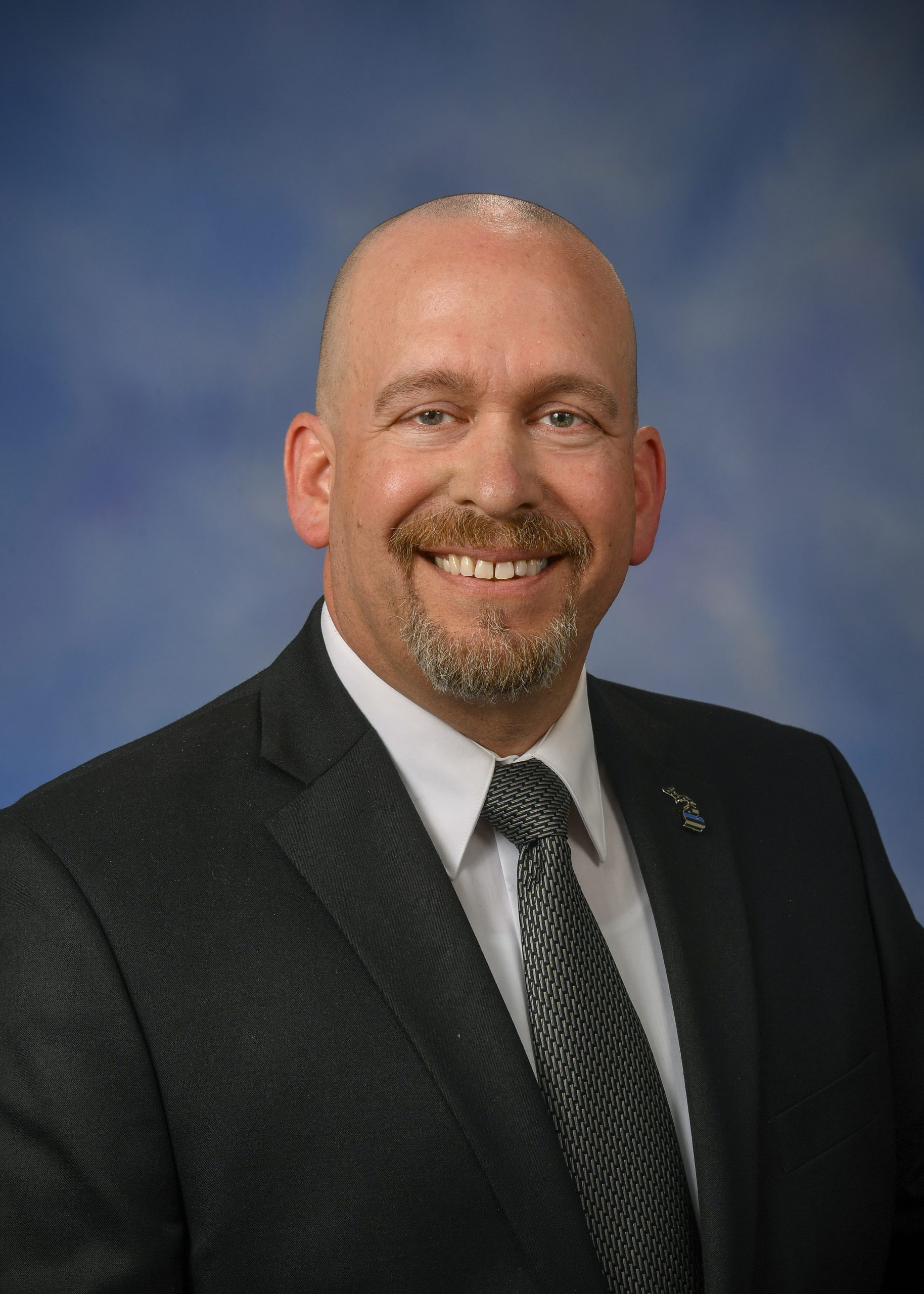
Photo of Mike Harris
R Michigan House · District 52 On the 2026 ballot

Rep. Mike Harris

Compare
Total votes
1,713
all sessions
Attendance
97%
61 missed
Higher than 83% of chamber peers
With party
96%
of cast votes
Higher than 81% of chamber peers
Bipartisan score
2%
crosses aisle rarely
Lower than 83% of chamber peers
Sponsored
437
bills & resolutions
Near the chamber average
Committees
5
assignments
437 bills and resolutions

Sponsored bills

Total
437
Primary
45
Co-sponsor
392
This page
437
matching current filters
Co-sponsor HB 5489
In committee · Michigan House · Co-sponsor
Health occupations: emergency medical services personnel; licensure of medical first responders and emergency medical technicians; allow at 17 years of age. Amends 1978 PA 368 (MCL 333.1101 - 333.25211) by adding sec. 20950a. TIE BAR WITH: HB 5488'26

Maddy summaryHB 5489 would allow 17-year-olds to apply for medical first responder and emergency medical technician (EMT) licenses in Michigan, provided their application includes parental or guardian consent. It maintains an 18-year-old minimum for higher-level roles like paramedics, emergency medical services instructors, or EMT specialists. The bill amends Michigan's Public Health Code to establish these age requirements for EMS licensure, directly affecting young individuals seeking entry into emergency medical careers. This change requires the concurrent passage of HB 5488 to take effect.

In committee Feb 3, 2026 1 co-sponsor
Co-sponsor HB 5488
In committee · Michigan House · Co-sponsor
Health occupations: emergency medical services personnel; licensure of medical first responders and emergency medical technicians; allow at 17 years of age. Amends sec. 20950 of 1978 PA 368 (MCL 333.20950). TIE BAR WITH: HB 5489'26

Maddy summaryHB 5488 lowers the minimum age requirement for licensure as a medical first responder or emergency medical technician (EMT) in Michigan from 18 to 17 years old. It amends Section 20950 of the Public Health Code (MCL 333.20950), specifically changing the age requirement in subsection (2)(a) from "18 years of age or older" to allow 17-year-olds to apply. The bill does not alter other licensing requirements, such as education programs, passing exams administered by the National Registry of Emergency Medical Technicians, or military service pathways. This change directly affects 17-year-olds seeking these emergency medical services roles who previously could not obtain licensure until age 18.

In committee Feb 3, 2026 1 co-sponsor
Co-sponsor HB 4734
Passed · Michigan House · Co-sponsor
Human services: county services; designation of a patient surrogate for health care decisions; allow. Amends sec. 66h of 1939 PA 280 (MCL 400.66h).

Maddy summaryHB 4734 expands who can legally consent to medical treatment for patients unable to make decisions themselves. It adds "designated surrogates" (people formally appointed under Michigan's Estates Code) to the list of authorized decision-makers, alongside relatives, patient advocates, and guardians. This directly affects patients without decision-making capacity, healthcare providers needing consent, and the individuals authorized to act for them. The bill clarifies that emergency care can still be provided without consent during urgent situations requiring immediate action.

Passed Jan 29, 2026 1 co-sponsor
Co-sponsor HB 4980
Passed · Michigan House · Co-sponsor
Weapons: licensing; license to carry a concealed pistol; modify requirement to file in county of residence. Amends secs. 5b & 5l of 1927 PA 372 (MCL 28.425b & 28.425l).

Maddy summaryHB 4980 amends Michigan's concealed pistol licensing law to allow applicants to file their license applications with *any* county clerk in the state where they reside, rather than requiring filing only in their county of residence. This change directly affects Michigan residents seeking concealed carry permits, simplifying the initial application process. The bill modifies Section 5b of the state's firearms licensing act (MCL 28.425b) to remove the residency county restriction, while maintaining all other requirements like fingerprinting, background checks, fees ($100), and training documentation. It does not alter eligibility criteria, fees, or processing timelines - only the location where applications must be submitted. The bill is pending in the Judiciary Committee as introduced on September 18, 2025.

Passed Jan 27, 2026 1 co-sponsor
Co-sponsor HR 235
Passed · Michigan House · Co-sponsor
A resolution to declare January 18-24, 2026, as Sanctity of Human Life Week in the state of Michigan.

Maddy summaryThis resolution declares January 18-24, 2026, as "Sanctity of Human Life Week" in Michigan. It encourages citizens to reflect on the value of human life, support women and families, and strengthen a "culture of life" through symbolic recognition. The bill does not create new laws, alter policies, or directly affect any specific group or program. It is a ceremonial declaration with no binding requirements or funding mechanisms.

Passed Jan 22, 2026 1 co-sponsor
Co-sponsor HB 5218
In committee · Michigan House · Co-sponsor
Food: milk; sale of raw milk and raw milk products under the manufacturing milk law of 2001; allow. Amends secs. 111 & 136 of 2001 PA 267 (MCL 288.671 & 288.696) & adds sec. 70a. TIE BAR WITH: HB 5217'25, HB 5219'25

Maddy summaryThis bill amends Michigan's 2001 Manufacturing Milk Law to explicitly permit the sale of raw milk and raw milk products under the existing regulatory framework. It directly affects dairy producers and sellers who currently cannot legally sell these items under the law's current restrictions. The key change adds new Section 70a and revises Sections 111 and 136 to allow such sales while maintaining the law's overall structure. The bill updates the legal language to align with current market practices without creating new safety standards or requirements.

In committee Jan 22, 2026 1 co-sponsor
Co-sponsor HB 5127
Passed · Michigan House · Co-sponsor
Children: child care; regulation of child care facilities; modify. Amends sec. 8e of 1973 PA 116 (MCL 722.118e).

Maddy summaryThis bill requires child care centers operating in multi-occupancy buildings (like apartment complexes or shared commercial spaces) to notify Michigan's child care department about changes in building occupancy or use. It mandates inspections before licensing or renewal to ensure specific safety measures are in place, including self-contained facilities with dedicated bathrooms, secure entry during operations, separation from hazardous areas, and schedules to keep children separate from other building occupants. Centers must also prevent alcohol use within child care areas during operating hours. These requirements apply to all child care centers in shared buildings across Michigan.

Passed Jan 21, 2026 1 co-sponsor
Co-sponsor HB 5207
Passed · Michigan House · Co-sponsor
Occupations: barbers; barber instructor licensing requirements; modify. Amends secs. 1109 & 1206 of 1980 PA 299 (MCL 339.1109 & 339.1206).

Maddy summaryHB 5207 updates licensing requirements for barber and cosmetology instructors in Michigan. It increases the required instructor training hours from 500 to 600 for cosmetology instructors (effective July 1, 2024) and from 600 to 900 hours for barber instructors. The bill also clarifies that prior experience cannot waive requirements like high school diplomas or exams. These changes directly affect individuals seeking to become licensed instructors in these fields.

Passed Jan 21, 2026 1 co-sponsor
Co-sponsor HB 4947
Passed · Michigan House · Co-sponsor
Health: pharmaceuticals; manufacturers of products containing ephedrine or pseudoephedrine; require to participate in a national logging system. Amends secs. 7340 & 7340a of 1978 PA 368 (MCL 333.7340 & 333.7340a).

Maddy summaryHB 4947 requires pharmaceutical manufacturers selling products containing ephedrine or pseudoephedrine in Michigan to join a national real-time tracking system (NPLEx) starting June 1, 2026. This bill directly affects manufacturers of these products, mandating they participate in the system to log retail sales. The key mechanism is the NPLEx, which tracks purchases to prevent diversion into methamphetamine production, with retailers already required to use it for sales. The bill amends Michigan’s Public Health Code (sections 7340a(6)) to extend this tracking requirement to manufacturers, not just retailers.

Passed Jan 21, 2026 1 co-sponsor
Co-sponsor HB 5059
Passed · Michigan House · Co-sponsor
Liquor: other; engraving of bottles of spirits; allow. Amends 1998 PA 58 (MCL 436.1101 - 436.2303) by adding sec. 609k.

Maddy summaryHB 5059 allows liquor vendors, their sales staff, or third-party engravers to personalize bottles of spirits sold by licensed distributors in Michigan. It permits engraving before sale (at the distributor's location) or after purchase (with the bottle returned to the distributor's premises for engraving and pickup). The bill clarifies that retailers holding engraved bottles for consumer pickup does not violate existing liquor laws. This directly affects spirits distributors, vendors, engraving businesses, and consumers seeking customized bottles.

Passed Jan 14, 2026 1 co-sponsor
Showing 131 to 140 of 437 bills
Previous 1 … 13 14 15 … 44 Next