

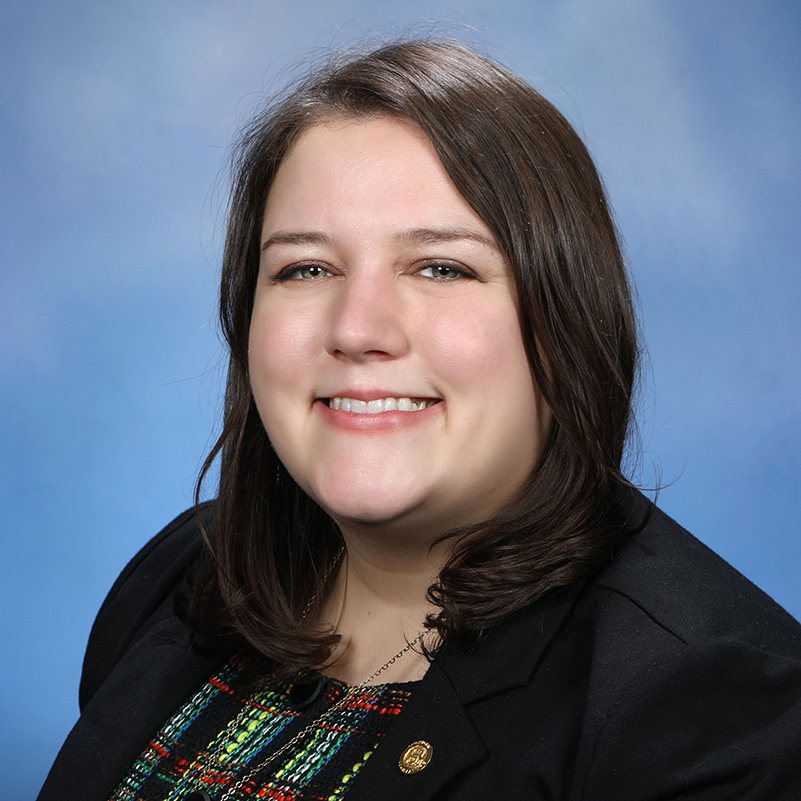
Maddy summaryThis resolution designates April 2026 as Multiple Birth Awareness Month in Michigan to highlight the unique challenges and needs of families with twins, triplets, or higher-order multiples. The measure aims to increase public understanding of risks associated with multiple births, such as preterm delivery and low birth weight, while encouraging parents to connect with support networks like local clubs and medical professionals. By officially recognizing this month, the state legislature intends to foster community education and resources for expectant and current parents of multiple children.
Sponsored bills
Maddy summaryThis bill designates April 2026 as National Donate Life Month within the state of Michigan to honor organ and tissue donors. It aims to recognize the generosity of individuals registered with the Michigan Organ Donor Registry and highlight the life-saving impact of their contributions. The resolution does not alter laws or funding but serves as a formal declaration of appreciation to be shared with relevant donor registry partners.
Maddy summaryThis bill designates April 2026 as Financial Literacy Month throughout the state of Michigan. It encourages parents, schools, businesses, and financial institutions to organize programs and activities focused on personal finance education during that month. The resolution aims to raise public awareness about the importance of financial knowledge to help citizens manage money effectively.
Maddy summaryHB 5251 requires Michigan's medical assistance program (Medicaid for low-income residents) to cover prescribed pediatric extended care for children. This specifically affects low-income children in Michigan who need specialized, long-term medical care beyond standard hospital stays. The bill amends state law to mandate this coverage under existing rules for pediatric extended care (Part 219A of the Public Health Code). The coverage would apply to children receiving medically necessary care as prescribed by a doctor. The bill is contingent on the passage of companion legislation (HB 5252).
Maddy summaryHB 5252 amends Michigan's Public Health Code to create a new licensing category for "prescribed pediatric extended care facilities," which provide specialized long-term medical care for children with complex health needs. The bill establishes specific licensing requirements for these facilities, including standards for staffing, medical oversight, and facility operations, directly affecting providers seeking to operate such services. Key provisions include adding Part 219A to the code and revising existing sections (20106, 20109, 20115, 20161) to incorporate these new requirements. This change aims to ensure consistent safety and quality standards for pediatric extended care facilities across the state. The bill is currently pending in the House Health Policy Committee.
Maddy summaryThis bill would add a new section to Michigan's civil procedure laws that allows the state attorney general and private individuals to sue firearm industry members for creating or maintaining a public nuisance through the sale, manufacture, or marketing of firearms and related products. The legislation requires these companies to establish reasonable controls over their products to prevent sales to prohibited persons, prevent theft, and stop the installation of devices like pistol converters, without needing to prove the company intended to cause harm. If a company violates these requirements, the attorney general can seek injunctions, damages, and other relief, while private victims of harm can also file lawsuits for compensatory and punitive damages. The bill defines firearm industry members broadly to include sellers, manufacturers, and distributors, and explicitly includes 3D printers and other manufacturing equipment in its scope.
Maddy summaryThis bill prohibits licensed concealed pistol carriers from bringing firearms into specific state buildings and certain public venues, including schools, hospitals, sports arenas, and places of worship. It also bans portable electro-muscular disruption devices in these same locations, with exceptions for parking areas and certain law enforcement personnel. The legislation applies to all licensed individuals except retired police officers, security contractors, private investigators, and other designated law enforcement roles who are permitted to carry weapons on these premises. Violations result in civil fines, license suspensions, or criminal penalties depending on whether it is a first, second, or subsequent offense.
Maddy summaryThis bill would prohibit the sale, offer for sale, and possession of ammunition magazines capable of holding more than 10 rounds in Michigan starting January 1, 2027. The law applies to all individuals within the state and would classify violations as misdemeanors punishable by up to 90 days in jail, a fine of $500, or both. It directly affects gun owners, retailers, and manufacturers by restricting access to high-capacity magazines while allowing magazines with 10 rounds or fewer. The legislation amends Michigan's penal code to establish these new restrictions on ammunition storage and distribution.
Maddy summaryThis bill, known as Messiah's Law, creates a new felony offense for intentionally firing a gun at a vehicle the shooter knows or should know is occupied. The law directly affects individuals who commit this act and establishes penalties of up to 10 years in prison and a $10,000 fine. If a minor is present in the vehicle, the penalties increase to up to 20 years in prison and a $20,000 fine. The legislation amends Michigan's penal code by adding a specific section to address this conduct. The bill would take effect 90 days after being signed into law.
Maddy summaryThis bill would require sellers to wait at least three days after completing a firearm sale before delivering the weapon to the buyer. It also prohibits sellers from selling firearms to individuals under indictment for a felony or those legally barred from owning guns. The legislation applies to anyone selling firearms in Michigan and carries penalties ranging from misdemeanor fines to felony imprisonment for violations.