

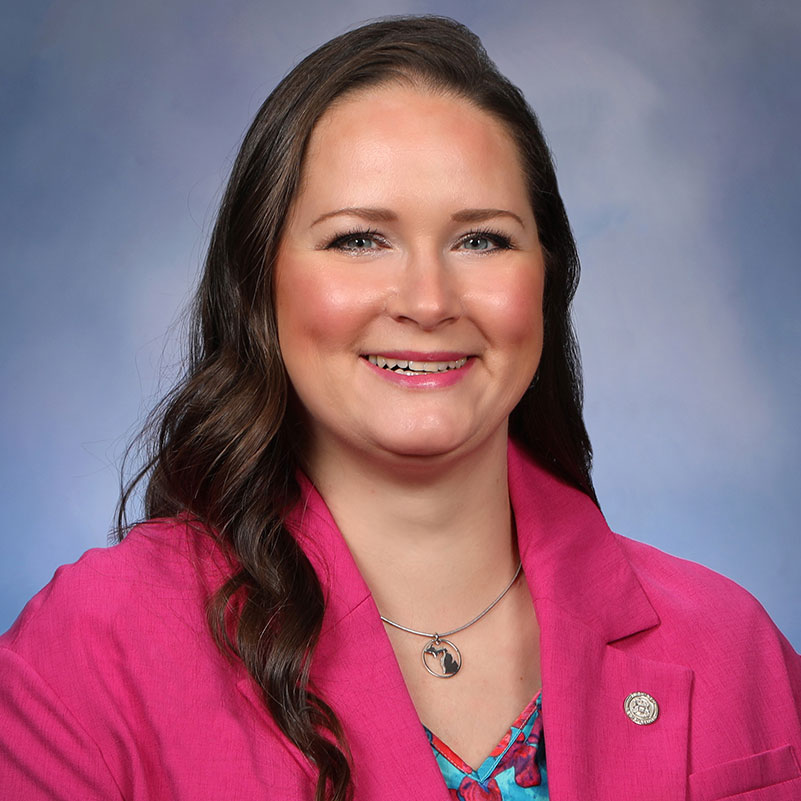
Photo of Carrie Rheingans
D Michigan House · District 47 On the 2026 ballot

Rep. Carrie Rheingans

Compare
Total votes
1,830
all sessions
Attendance
99%
21 missed
Near the chamber average
With party
94%
of cast votes
Lower than 88% of chamber peers
Bipartisan score
3%
crosses aisle rarely
Higher than 86% of chamber peers
Sponsored
1,882
bills & resolutions
Higher than 99% of chamber peers
Committees
2
assignments
1,882 bills and resolutions

Sponsored bills

Total
1,882
Primary
74
Co-sponsor
1,808
This page
1,882
matching current filters
Co-sponsor HB 4766
In committee · Michigan House · Co-sponsor
Trade: consumer goods and services; personal care products containing plastic microbeads; prohibit manufacture and acceptance for sale. Amends 1994 PA 451 (MCL 324.101 - 324.90106) by adding subpt. 3 to pt. 147.

Maddy summaryHB 4766 prohibits the manufacture and sale of personal care products (like face washes and lotions) and cleaning products (including soaps and air fresheners) containing plastic microbeads in Michigan. Starting January 1, 2026, manufacturers cannot make such products, and retailers cannot sell them starting January 1, 2027, with an exception for microbeads below 1 part per million by weight. The law applies to businesses producing or selling these items in Michigan, and violations can result in daily fines up to $2,000. Enforcement falls to the Department of Environment, Great Lakes, and Energy, which will track compliance and report annually.

In committee Aug 14, 2025 1 co-sponsor
Co-sponsor HB 4677
In committee · Michigan House · Co-sponsor
Probate: guardians and conservators; provision for supported decision-making agreements; create. Amends sec. 5303 of 1998 PA 386 (MCL 700.5303).

Maddy summaryHB 4677 requires Michigan courts to provide petitioners with written information about alternatives to full guardianship before filing a petition, including supported decision-making. This bill directly affects individuals potentially declared incapacitated and their families or caregivers navigating guardianship proceedings. The key mechanism mandates courts to explain options like limited guardianship, durable power of attorney, and supported decision-making - where individuals with disabilities receive support from trusted people to make their own choices. The change aims to prioritize less restrictive options before appointing a full guardian.

In committee Aug 13, 2025 1 co-sponsor
Co-sponsor HB 4676
In committee · Michigan House · Co-sponsor
Mental health: guardians; appointing certain guardians after considering least restrictive means; require. Amends sec. 602 of 1974 PA 258 (MCL 330.1602).

Maddy summaryHB 4676 amends Michigan's mental health guardianship law to require courts and guardians to prioritize the "least restrictive means" when appointing guardians for individuals with mental health conditions. This directly affects people needing court-appointed guardianship due to mental health challenges, such as those with severe depression, schizophrenia, or developmental disabilities. The key provision mandates that guardians and courts must first consider less restrictive options - like supported living arrangements or limited guardianship - before imposing full guardianship. This change aims to preserve individual autonomy and minimize unnecessary restrictions on personal decision-making.

In committee Aug 13, 2025 1 co-sponsor
Co-sponsor HB 4758
In committee · Michigan House · Co-sponsor
Labor: other; reemployment and unemployment services for dislocated federal employees and veterans; provide for. Creates new act.

Maddy summaryHB 4758 requires Michigan Works agencies to create teams providing job transition services to two groups: individuals who lost federal jobs involuntarily between January 2025 and January 2027 (dislocated federal employees), and veterans. The bill mandates these teams to analyze job matches with public employers, assess transferable skills, and refer individuals to both public and private employers needing staff. It also requires assistance with filing for unemployment benefits under Michigan’s existing employment security system. The law applies specifically to Michigan Works agencies and public employers like state/local governments, schools, and community colleges. This bill creates a new coordination framework but does not establish new benefits or funding.

In committee Aug 12, 2025 1 co-sponsor
Co-sponsor HB 4760
In committee · Michigan House · Co-sponsor
Law enforcement: other; law enforcement officer use of facial coverings or disguises in certain circumstances; prohibit, and require appropriate identification. Amends 1931 PA 328 (MCL 750.1 - 750.568) by adding sec. 396a.

Maddy summaryHB 4760 requires Michigan law enforcement officers to wear visible identification (showing their name or badge number and agency) and not wear masks or disguises during public interactions while performing duties. Exceptions allow masks for health protection (e.g., airborne diseases), safety from toxins, or physical protection during high-risk incidents like shootouts. The law applies to all state and federal officers in Michigan during public engagements, with violations punishable as misdemeanors (up to 90 days in jail or $1,000 fine). It does not affect covert operations or officers wearing protective gear for legitimate safety reasons.

In committee Aug 12, 2025 1 co-sponsor
Co-sponsor HB 4759
In committee · Michigan House · Co-sponsor
Labor: other; expedited hiring process for certain dislocated federal employees; encourage for public employers. Creates new act. TIE BAR WITH: HB 4758'25

Maddy summaryHB 4759 encourages public employers (like state agencies, cities, schools, and community colleges) to use an expedited hiring process for dislocated federal employees who are referred through the state's reemployment services program. The bill requires public employers receiving such referrals to prioritize these candidates, though it does not mandate hiring. Key provisions include defining "public employer" broadly and specifying that this process must follow existing constitutional hiring rules for state positions. It does not override other laws but depends on another bill (HB 4758) being enacted first. The measure directly affects dislocated federal workers seeking new jobs and public employers hiring for open positions.

In committee Aug 12, 2025 1 co-sponsor
Co-sponsor HR 142
In committee · Michigan House · Co-sponsor
A resolution to urge the federal government to ensure continued funding, and reinstate staff, of the Low Income Home Energy Assistance Program (LIHEAP) as they negotiate the “One Big Beautiful Bill Act” so that Michigan can continue its Home Heating Credit Program.

Maddy summaryThis resolution urges the federal government to maintain funding and reinstate staff for the Low Income Home Energy Assistance Program (LIHEAP) while negotiating the "One Big Beautiful Bill Act." It directly affects Michigan residents who rely on the state's Home Heating Credit Program, which provided assistance to 248,765 Michiganders in 2022 - including low-income families, seniors, and people with disabilities - by helping cover heating costs. The resolution highlights that proposed federal budget cuts to LIHEAP and the recent firing of LIHEAP program staff threaten the program's continuation, potentially causing payment delays or termination. As a non-binding request, it asks federal leaders to prioritize LIHEAP funding to prevent disruption of this critical aid.

In committee Jul 24, 2025 1 co-sponsor
Co-sponsor HR 143
In committee · Michigan House · Co-sponsor
A resolution urging members of Congress to reject President Trump’s “One Big Beautiful Bill Act” in its entirety, and to instead pursue policies that fully fund Medicaid, SNAP, and WIC, protect vulnerable communities, expand access to healthcare, promote clean energy, and ensure a fair and equitable tax system for all Americans.

Maddy summaryThis House Resolution (HR 143) urges members of Congress to reject President Trump's proposed "One Big Beautiful Bill Act" and instead support policies that fully fund Medicaid, SNAP, and WIC. It directly affects millions of low-income Americans, including children, seniors, people with disabilities, and vulnerable communities who rely on these programs for healthcare, food assistance, and nutrition support. The resolution opposes cuts to Medicaid (which covers 1 in 4 Michiganders), SNAP (impacting 1.4 million Michiganders), and WIC, while criticizing tax breaks for wealthy households and reduced clean energy funding. It calls for expanding healthcare access, promoting clean energy, and ensuring a fair tax system as concrete policy alternatives.

In committee Jul 24, 2025 1 co-sponsor
Co-sponsor HR 144
In committee · Michigan House · Co-sponsor
A resolution to urge the United States Congress to ensure continued funding for the Federal TRIO programs.

Maddy summaryThis resolution urges Congress to maintain funding for the Federal TRIO programs, which support low-income, first-generation college students, and individuals with disabilities. It highlights that TRIO provides academic tutoring, counseling, financial guidance, and other assistance through eight specific programs (like Upward Bound for high school students and the McNair Program for doctoral preparation). The resolution responds to a proposed budget cut that would eliminate all TRIO funding, potentially affecting over 880,000 participants annually, including 6,000 veterans. The measure has been introduced and referred to committee but does not create new law.

In committee Jul 24, 2025 1 co-sponsor
Co-sponsor HR 145
Passed · Michigan House · Co-sponsor
A resolution to declare July 26, 2025, as National Disability Independence Day in the state of Michigan.

Maddy summaryThis is a ceremonial resolution, not a substantive bill. It declares July 26, 2025, as "National Disability Independence Day" in Michigan to commemorate 35 years since key federal disability rights progress. The resolution encourages all Michigan residents to recognize and celebrate the contributions and achievements of people with disabilities. It directly affects Michigan residents by symbolically acknowledging the state's disability community and their ongoing journey toward accessibility and inclusion. The resolution has no binding policy changes or funding provisions.

Passed Jul 24, 2025 1 co-sponsor
Showing 591 to 600 of 1,882 bills
Previous 1 … 59 60 61 … 189 Next