

Maddy summaryHB 5949 creates a new program allowing vehicle owners in Michigan to request a free 'communication impediment' decal for their windshield or license plate. This decal signals that the driver or a household member has a condition, such as deafness or autism, that might make communicating with police during a traffic stop difficult. To qualify, owners must submit a certification from a licensed medical professional confirming the communication barrier. The bill also updates existing vehicle registration laws to include a digital designation in state records for these individuals, while establishing penalties for fraud and procedures for revoking the designation if abuse is suspected.
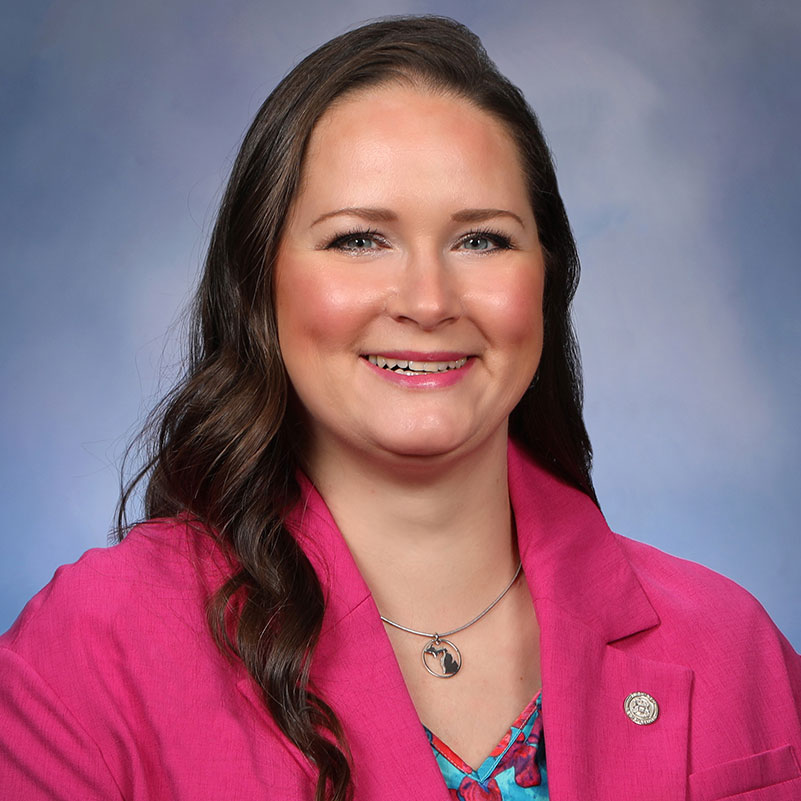
Rep. Carrie Rheingans
Sponsored bills
Maddy summaryThis resolution declares May 2026 as Brain Tumor Awareness Month in Michigan to highlight the severity of brain tumors and the state's role in research and treatment. The bill does not change laws or allocate funding but serves as a symbolic gesture to raise public awareness about the disease's impact on patients and families. It recognizes Michigan's medical centers and the urgent need for better treatments given the limited number of approved therapies available.
Maddy summaryThis resolution declares May 10-16, 2026, as Skilled Nursing Care Week in Michigan to honor residents, staff, and volunteers in skilled nursing facilities. The measure aligns with the national observance established by the American Health Care Association and encourages the state to participate in related events under the theme 'Moments in Bloom!' By officially recognizing this week, the bill aims to promote awareness and community engagement with nursing care services without altering any laws or funding.
Maddy summaryThis bill officially designates May 2026 as "Michigan Moves Month" within the state of Michigan. It serves as a commemorative resolution intended to encourage residents to increase their physical activity during that specific month. The measure relies on a series of "whereas" clauses to highlight the health benefits of exercise and the existing support from various organizations, rather than creating new laws or funding. By adopting this resolution, the House of Representatives aims to promote a culture of active living without altering any existing policies or budgets.
Maddy summaryThis resolution designates May 2026 as ALS Awareness Month in Michigan to highlight the impact of amyotrophic lateral sclerosis, also known as Lou Gehrig's disease. The bill does not create new laws or funding but serves as a symbolic declaration to encourage public support for patients, caregivers, and ongoing research efforts. By formally recognizing the month, the legislation aims to increase community solidarity and draw attention to the need for continued medical advancements and resources for those affected by the disease.
Maddy summaryThis bill, titled the "Homes Are for People Act," prohibits hedge funds from purchasing or owning single-family homes in Michigan. It defines a hedge fund as an organization managing at least $50 million in assets and a single-family home as a property with one to four units that is not a vacant foreclosure or a government-funded project. While new purchases by these funds are banned, the law allows hedge funds to keep any single-family homes they already own when the act takes effect. Any property acquired in violation of this rule would be subject to legal forfeiture.
Maddy summaryThis bill modifies Michigan's laws regarding the seizure and forfeiture of property connected to criminal activities. It directly affects property owners, creditors, and law enforcement agencies by clarifying which assets can be taken by the government. The legislation updates rules on what constitutes forfeitable property, specifically protecting primary residences of spouses and children unless they knew about and agreed to the crime, while also detailing protections for homeowners with unpaid land contracts and security interests. Additionally, it sets limits on how much money can be recovered from substituted proceeds, ensuring the government only takes the value of the original crime proceeds plus specific legal costs. The bill will only become effective if two related companion bills are also passed by the legislature.
Maddy summaryThis bill updates Michigan's legal definitions regarding property forfeiture by specifying which crimes allow the government to seize assets. It directly affects individuals and businesses involved in offenses related to environmental protection, healthcare fraud, antitrust violations, securities law, and various criminal acts. The key mechanism is expanding the list of qualifying crimes to include specific violations of environmental and financial regulations, while also clarifying terms like "instrumentality," "proceeds," and "willful blindness" to ensure consistent application in court. By tying this legislation to companion bills, the measure ensures that these new definitions only take effect if the related procedural bills are also passed.
Maddy summaryThis bill directs the Michigan Department of Transportation to allow transit agencies access to park-and-ride lots so they can use them as intermodal transfer points, regardless of whether the state provided accommodations during the lot's construction. It requires the department to coordinate a statewide park-and-ride program and work with local transit agencies to prioritize these transfer points. The legislation also mandates annual funding from the legislature to support these ridesharing and park-and-ride initiatives.
Maddy summaryThis bill directs the Michigan Department of Community Health to establish a Medicaid estate recovery program that seeks repayment from the estates of deceased recipients for certain medical services. A key provision prohibits the state from filing claims against funds held in an ABLE savings account, protecting these assets from recovery efforts. The legislation also outlines specific exemptions, such as protecting the homes of surviving spouses, young children, disabled dependents, and certain caretaker relatives. Additionally, the bill requires the department to obtain federal approval before implementing the program and mandates that no interest be charged on recovered amounts.