

Maddy summaryHB 4180 removes the sales tax requirement for motor fuel sales in Michigan by amending the state tax code. It directly affects gas stations and fuel retailers by exempting motor fuel transactions from the standard sales tax. The bill creates a new tax exemption provision (Section 4gg) in the tax code, specifically excluding motor fuel sales from taxable transactions. This change became effective immediately upon the Governor's approval on October 7, 2025.
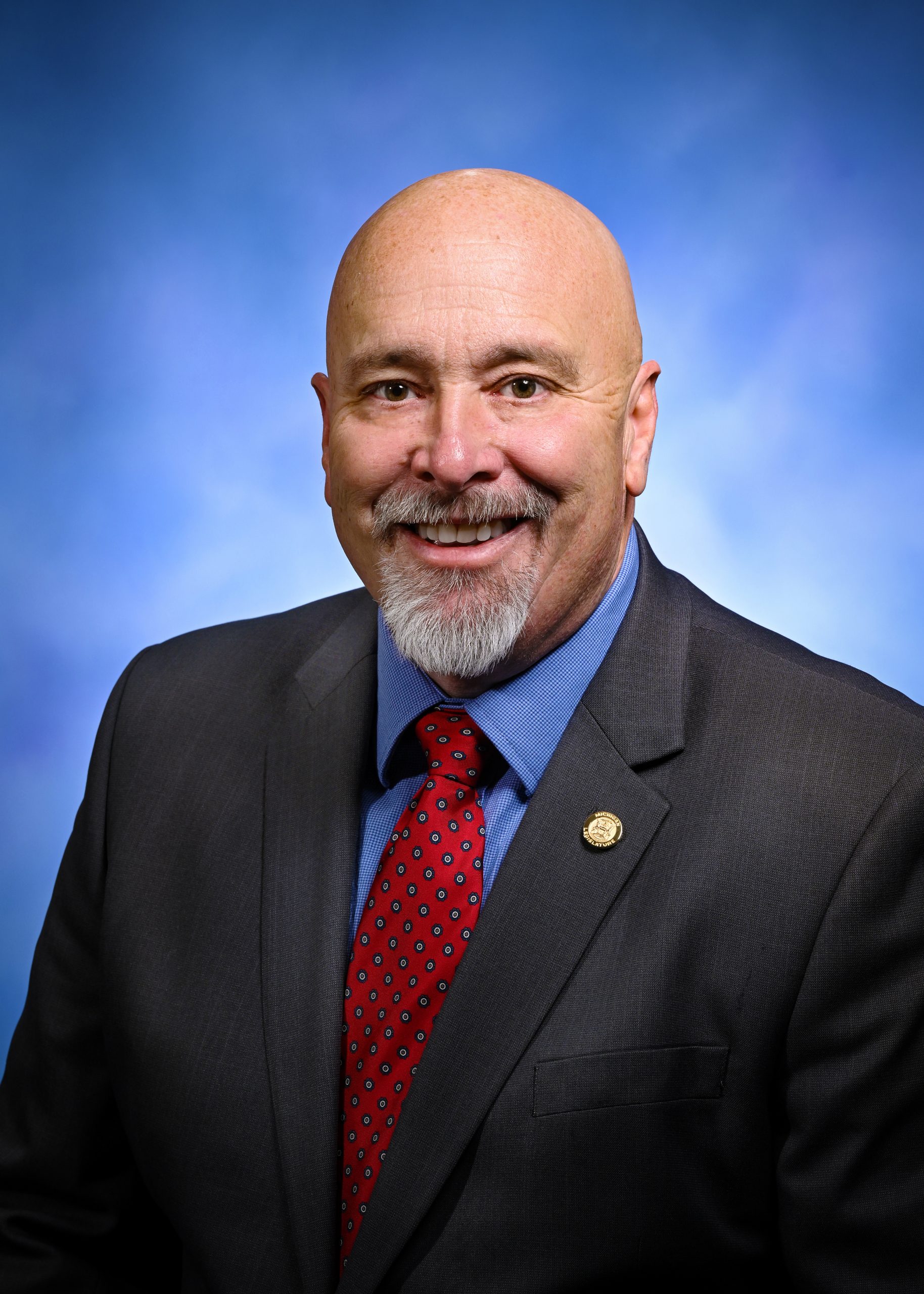
Rep. Steve Frisbie
Sponsored bills
Maddy summaryHB 4181 removes a sales tax exemption for certain motor fuel purchases by amending Michigan's 2004 tax code (MCL 205.173 & 205.175). The bill directly affects businesses and consumers purchasing motor fuel by eliminating an existing tax exemption, meaning these purchases will now be subject to sales tax. It streamlines the tax code by clarifying that motor fuel is no longer exempt from sales tax under the specified sections. The bill was enacted on October 7, 2025, and is now law as Public Act 18 of 2025.
Maddy summaryHB 4183 increases the motor fuel tax rate and expands the types of fuels subject to the tax under Michigan law. It directly affects motor fuel sellers (like gas stations) and consumers through higher costs for gasoline and other taxed fuels. The bill amends Section 8 of the 2000 Motor Fuel Tax Act (MCL 207.1008) to implement these changes, which became law immediately upon approval by the Governor on October 7, 2025.
Maddy summaryHB 5090 amends Michigan's LiHEAP (Low Income Home Energy Assistance Program) funding rules to require a higher percentage of funds to be used for weatherization assistance. Specifically, it increases the mandatory allocation for weatherization services - such as home insulation and heating system upgrades - from existing levels. This change directly affects low-income households receiving weatherization support through state programs. The bill modifies Section 527a of the Income Tax Act (MCL 206.527a) to implement this funding shift. (Note: The bill is currently in committee referral stage and has not yet passed.)
Maddy summaryHB 4107 requires Michigan schools to include specific health education content for students in grades 7-12. It mandates instruction in cardiopulmonary resuscitation (CPR), automated external defibrillator (AED) use, and first aid response kits (including tourniquets and bleeding control supplies) as part of the health curriculum. Schools may use trained personnel like Red Cross instructors, EMTs, or properly trained teachers to deliver this instruction, with hands-on practice encouraged but not required for all students. The bill exempts 100% online schools from requiring hands-on CPR practice.
Maddy summaryHB 4160 prevents Michigan state agencies from creating rules stricter than federal standards, unless they prove a "clear and convincing need" for stricter rules. It directly affects all state agencies that create regulations, requiring them to justify any rule exceeding federal benchmarks. The bill mandates that agencies must either cite specific state law authorizing stricter rules or provide detailed justification for exceptional circumstances. This applies whether federal rules exist or not, though it excludes special education rules from this restriction. The law aims to align state regulations with federal standards unless compelling state-specific reasons exist.
Maddy summaryHB 4522 modifies Michigan's vehicle code to require heavy trucks (over 10,000 pounds gross weight) to drive in any lane on freeways with three or more lanes for travel in the same direction, rather than restricting them to the rightmost lanes. This directly affects commercial truck drivers and fleet operators on Michigan freeways. The law specifies exceptions allowing trucks to use the right lane only for left turns, safety reasons, or construction-related lane closures. It also prohibits local governments from creating conflicting lane-use ordinances for these situations.
Maddy summaryHB 5048 creates special vehicle registration plates in Michigan for specific military service groups. It allows eligible veterans, survivors, and family members to apply for plates featuring unique identifiers: "EX-POW" for prisoners of war or spouses, "WWI" for World War I/Cold War veterans (defined as 1945-1991), "Pearl Harbor survivor," "Purple Heart" with medal vignette, "Gold Star Family" (for families of fallen service members), and "Blue Star Family" (for families of currently serving members). Applicants must provide proof of eligibility to the Secretary of State, with no application or renewal fees required. These plates are displayed on vehicles and expire annually, with standard registration taxes applying except for the "EX-POW" plate for one vehicle per household.
Maddy summaryHB 5029 modifies Michigan's Movable Bridge Fund to clarify how funds are distributed for the operation of publicly owned movable bridges (like drawbridges). It requires bridge owners and operators to submit annual operational cost data, which the state transportation department uses to calculate fund distributions based on estimated costs. The fund, which retains unused money year-to-year, may also cover required federal bridge inspections or analyses if no other funding exists - until December 2030. Operational costs covered include routine operation expenses (e.g., staffing), but exclude maintenance, repairs, or capital improvements.
Maddy summaryHB 4971 amends Michigan's Use Tax Act to clarify that promotional merchandise (including items like baby diapers) transferred to out-of-state customers via redemption offers qualifies for resale exemptions. It specifically updates Section 4(c)(i) to include promotional merchandise shipped outside Michigan as exempt from use tax, directly affecting retailers and businesses selling such items to out-of-state customers. The key mechanism expands existing resale exemptions to cover promotional goods sent to customers in other states, aligning with how businesses handle cross-state promotions. This change does not create new exemptions but clarifies existing rules for promotional sales. (Note: The bill title mentions "baby diapers," but the actual amendment applies broadly to all promotional merchandise, not specifically diapers.)