

Maddy summaryHB 4845 proposes to adjust competitive bidding requirements for road construction projects in Michigan. It raises the threshold for mandatory competitive bidding from $100,000 to $350,000 for individual local road projects (or $1,350,000 annually per agency, excluding cities over 500,000 population) and adds an annual inflation adjustment using the Consumer Price Index. The bill exempts traffic signal system upgrades and local road resurfacing from bidding rules. It directly affects state and local road agencies (counties, cities, villages) managing projects above these thresholds, requiring them to justify non-competitive contracts to oversight bodies. The changes aim to modernize cost thresholds while maintaining public bidding for significant infrastructure work.
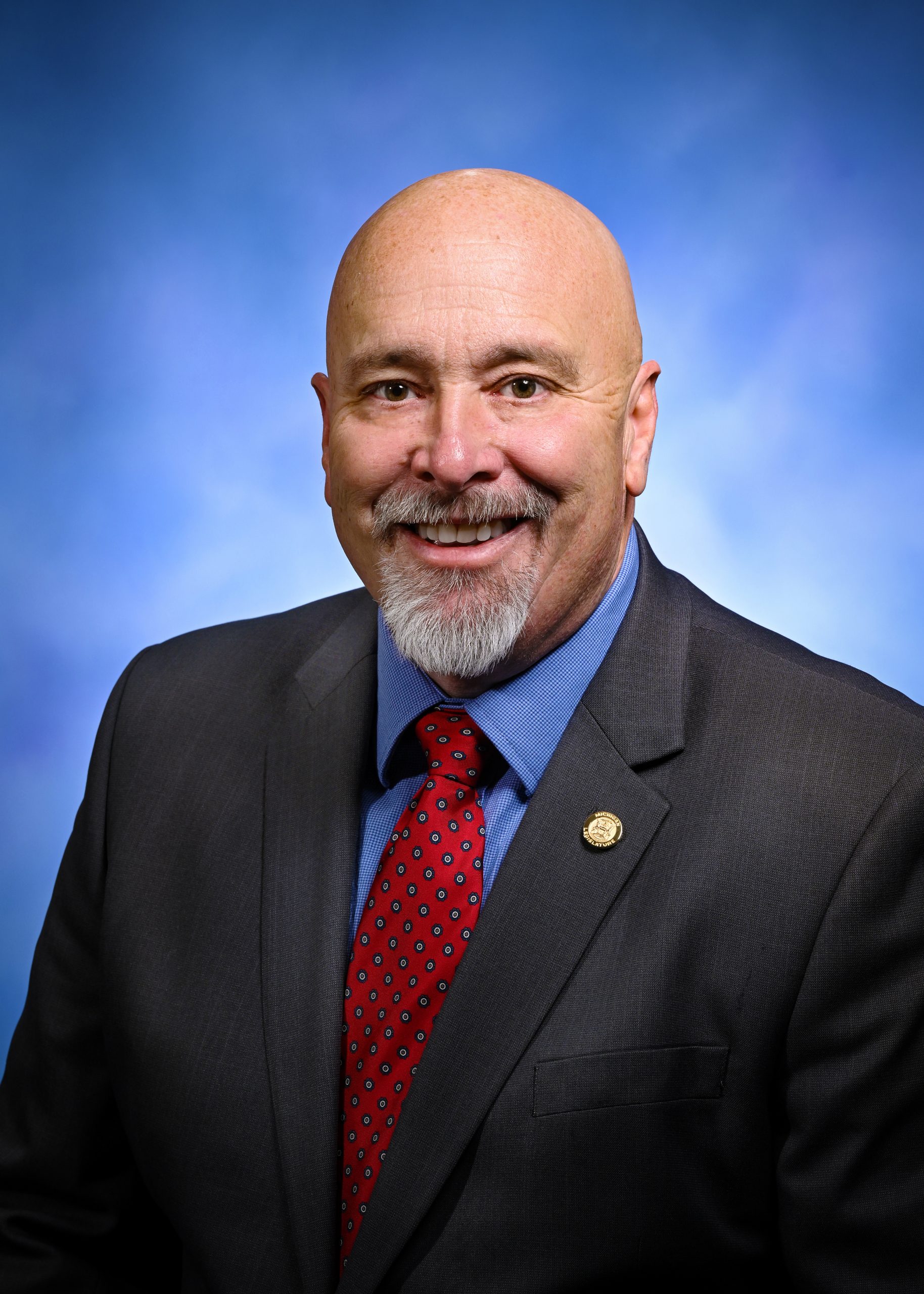
Rep. Steve Frisbie
Sponsored bills
Maddy summaryHB 4855 would amend Michigan law to permit bow hunters to carry a pistol while hunting. This directly affects licensed bow hunters who currently cannot possess a firearm during hunting activities under existing law (MCL 324.43510). The bill changes the prohibition in the 1994 Michigan Penal Code to allow pistol possession specifically for bow hunters during hunting. The amendment would remove the current restriction, enabling bow hunters to carry a pistol for lawful use while hunting.
Maddy summaryHB 4361 requires Michigan electric utilities to establish worker transition programs for employees during restructuring events, such as ownership transfers of divisions or facilities. It mandates that new owners must first hire existing non-supervisory workers and maintain their wages and benefits for at least 30 months, with dispute resolution mechanisms for workplace concerns. The bill also directs the Public Service Commission to set service quality and reliability standards for utilities, including outage response and maintenance, and to review annual reports from utilities on compliance. These changes directly affect electric utility workers, employers, and the Public Service Commission.
Maddy summaryHB 4806 proposes updating Michigan's vehicle code to require that "Children's Trust" license plates be designed with input from the State Child Abuse and Neglect Prevention Board. It directs all donations collected from these plates to the existing Children's Trust Fund, which supports children's programs under state law. The bill would affect vehicle owners who purchase these specialty plates and the fund's beneficiaries. The bill depends on companion legislation (HB 4807) passing first, as noted in its enacting section.
Maddy summaryHB 4807 amends Michigan's 1982 Child Abuse and Neglect Prevention Act (MCL 722.602 et seq.) by modifying specific sections of the law, including provisions related to definitions, reporting requirements, and prevention programs. The bill directly affects children in Michigan and the state's child welfare systems, including agencies and professionals responsible for child abuse prevention and response. Key mechanisms involve updating statutory language in sections 2, 3, 4, 9, 10, and 12 to clarify or adjust existing requirements. This is a proposed legislative change currently pending committee review, not an enacted law.
Maddy summaryHB 5489 would allow 17-year-olds to apply for medical first responder and emergency medical technician (EMT) licenses in Michigan, provided their application includes parental or guardian consent. It maintains an 18-year-old minimum for higher-level roles like paramedics, emergency medical services instructors, or EMT specialists. The bill amends Michigan's Public Health Code to establish these age requirements for EMS licensure, directly affecting young individuals seeking entry into emergency medical careers. This change requires the concurrent passage of HB 5488 to take effect.
Maddy summaryHB 5488 lowers the minimum age requirement for licensure as a medical first responder or emergency medical technician (EMT) in Michigan from 18 to 17 years old. It amends Section 20950 of the Public Health Code (MCL 333.20950), specifically changing the age requirement in subsection (2)(a) from "18 years of age or older" to allow 17-year-olds to apply. The bill does not alter other licensing requirements, such as education programs, passing exams administered by the National Registry of Emergency Medical Technicians, or military service pathways. This change directly affects 17-year-olds seeking these emergency medical services roles who previously could not obtain licensure until age 18.
Maddy summaryHB 5315 amends Michigan law to clarify when the Attorney General must intervene in court cases involving the state. It changes Section 28 of the Revised Statutes to require the Attorney General to intervene in state court cases when specifically requested by the Governor or either legislative chamber, rather than having discretion. This directly affects the Attorney General's office and state entities involved in civil or criminal cases where the state has an interest. The bill modifies existing procedure by making intervention mandatory upon request, streamlining the process for state representation in court. (Procedural bill; summary concise per guidelines.)
Maddy summaryHB 5484 updates Michigan's tax rules for businesses operating across state lines, specifically clarifying how income from flow-through entities (like S-corps and partnerships) is allocated to Michigan for tax purposes. It revises sections of the Income Tax Act to better define when income earned outside Michigan must still be taxed by Michigan, particularly for nonresident business owners. Key changes include refining rules for sourcing income from services performed in Michigan, business activities conducted within the state, and capital gains on property. This directly affects business owners with multi-state operations who must now follow updated guidelines to determine Michigan's tax share.
Maddy summaryHB 5314 repeals a specific section (MCL 14.102) from an old 1919 law that required certain lawsuits brought by the Michigan Attorney General on behalf of the state to be filed in Ingham County circuit court. This procedural change eliminates the requirement for those cases to be filed in a specific county, allowing the Attorney General to file such lawsuits in appropriate courts as needed. The bill does not create new legal requirements or affect who can bring lawsuits; it only removes a historical jurisdictional rule. This is a straightforward procedural update with no direct impact on public employees, officers, or state operations.