

Maddy summaryHB 4173 is a supplemental funding bill that allocates state money specifically for testing commercial poultry facilities and backyard flocks in Michigan for H5N1 bird flu. It directly affects poultry farmers, commercial hatcheries, and state agricultural testing labs by providing resources to conduct these tests. The key mechanism is creating a new appropriation (funding line) within the state budget for this purpose, separate from regular funding. This bill focuses solely on enabling testing capacity, not on disease prevention or other policy changes.
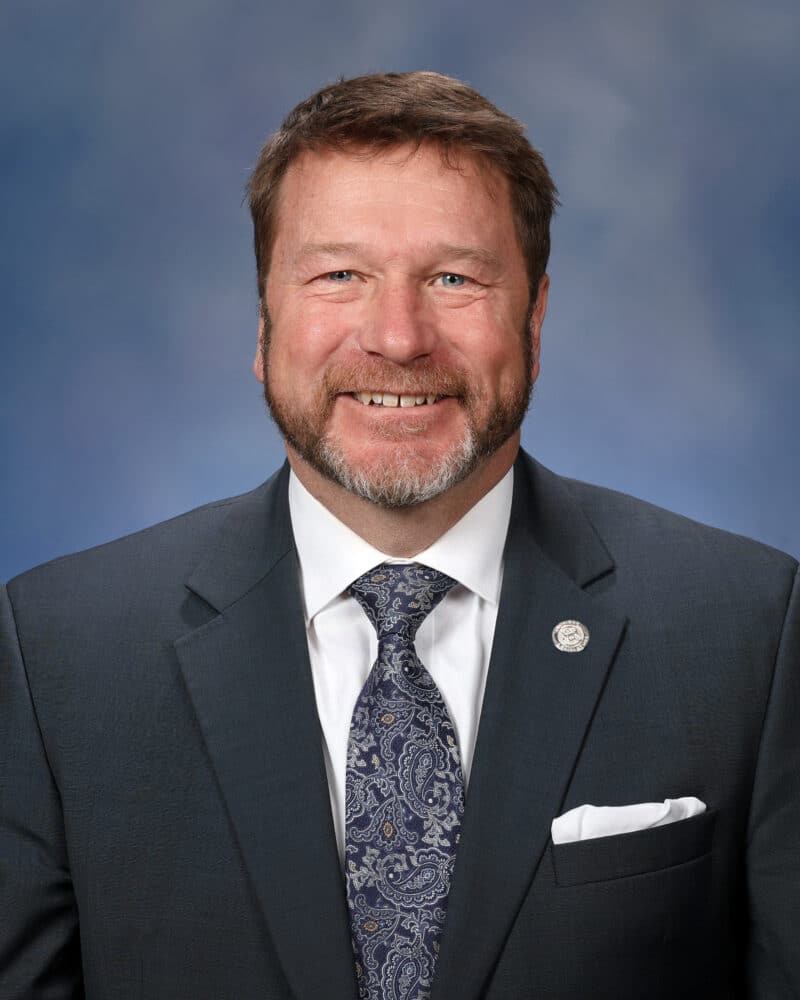
Rep. Matt Longjohn
Sponsored bills
Maddy summaryThis proposed constitutional amendment (HJR F) would remove gender-specific language from two Michigan constitutional provisions. It would repeal Article I, Section 25 - which defined marriage as "the union of one man and one woman" - and amend Article X, Section 1 to make property rights language gender-neutral. If approved, it would eliminate the constitutional ban on same-sex marriage and update outdated references to gender in property law. The amendment would require voter approval at the next general election. (Note: The bill is currently in committee referral, with no further action taken as of March 2025.)
Maddy summaryHB 4169 creates a Rare Disease Advisory Council within Michigan's Department of Health to advise on research, diagnosis, and treatment of rare diseases. The council, composed of 12-18 members including physicians, patients, caregivers, insurers, researchers, and industry representatives, must identify policy priorities to improve access to care and reduce discrimination for individuals with rare diseases (defined as affecting fewer than 200,000 people in the U.S.). Key duties include researching cost-effective treatments, sharing best practices from other states, and developing a public webpage with rare disease resources by March 2026. The bill establishes a formal advisory body but does not change existing laws or funding.
Maddy summaryHB 4171 provides supplemental state funding for hospitals in Michigan to test for H5N1 avian influenza (bird flu) in clinical settings. It directly affects hospitals and healthcare facilities that need to conduct these specific tests. The bill creates a new appropriation (funding line) to cover the costs of testing, ensuring hospitals have resources to screen patients for H5N1. This is a funding measure, not a policy change, and it applies to the 2025 fiscal year.
Maddy summaryHB 4167 amends Michigan's sentencing guidelines to specifically address the illicit use of xylazine, a veterinary drug increasingly misused in illicit drug mixtures. The bill adds xylazine to the list of substances covered under sentencing guidelines (MCL 777.13m), meaning courts must now apply standardized sentencing ranges for convictions involving its unauthorized possession or use. This directly affects individuals convicted of xylazine-related offenses, including those using it alone or combined with other drugs. The change creates a clear, defined sentencing path for this specific offense, moving beyond general drug sentencing rules to address xylazine's growing public health impact. The bill was introduced on March 5, 2025, and referred to the Judiciary Committee.
Maddy summaryHB 4172 provides supplemental state funding for bird flu testing in Michigan for the 2025 fiscal year. It directly affects state health and agriculture departments by allocating resources to support testing efforts for avian influenza in poultry. The bill creates a specific appropriation to cover these testing costs without changing existing laws or creating new requirements.
Maddy summaryHR 36 is a non-binding resolution introduced by 18 House members urging the federal government to create a national strategy to address the bird flu outbreak. It highlights the outbreak's impacts - including over 150 million affected poultry, 1,000 dairy herds impacted, and 68 human cases - as justification for this request. The resolution does not create new programs or funding but formally calls on federal agencies to prioritize developing a coordinated response. It directly addresses the federal government, not specific communities or industries, though the outbreak affects agriculture and public health nationwide.
Maddy summaryHB 4166 prohibits the non-medical use of xylazine (a sedative sometimes mixed with drugs like fentanyl) in Michigan. It defines "illicit use" as any xylazine use not covered under "licit use," which includes legal veterinary applications, pharmaceutical manufacturing, or approved medical treatments. The bill amends Michigan's Public Health Code to make possessing or using xylazine for non-licensed purposes a felony, with penalties ranging from up to 20 years in prison or fines up to $1 million depending on the amount. This directly affects individuals using xylazine outside approved medical or veterinary contexts, aligning penalties with those for other controlled substances like opioids.
Maddy summaryThis House Resolution (HR 34) urges the federal government to consider the economic impacts of tariffs on trade with Canada and Mexico. It directly affects Michigan businesses, particularly in agriculture (where Canada is the top export market), manufacturing, and auto production, which rely on stable North American supply chains. The resolution reaffirms support for the U.S.-Mexico-Canada Agreement (USMCA) and highlights Michigan’s $3 billion annual agricultural exports and $55 billion in annual trade with Ontario. As a non-binding resolution, it does not create new laws but formally advocates for fair trade negotiations to protect Michigan’s economy.
Maddy summaryHB 4131 updates Michigan's animal care laws by clarifying definitions and requirements for dog shelter and tethering. It directly affects dog owners, breeders, pet shops, and animal shelters by specifying that dog shelters must include properly insulated doghouses with dry bedding (like straw or cedar shavings) during freezing temperatures, excluding items like blankets, cardboard, or crawl spaces. The bill also requires tethers for dogs to be at least three times the dog's length (nose-to-tail) unless used for grooming, training, transport, or hunting. These changes aim to ensure dogs have adequate protection from weather and prevent harmful tethering practices. The bill is currently in committee after its February 2025 introduction.