

Maddy summaryHouse Resolution 115 is a resolution from the Michigan House of Representatives that urges the President and the United States Congress to fully fund Medicaid. It also calls on federal officials to reject any proposals that would reduce access to care or shift costs onto states, healthcare providers, and vulnerable individuals.
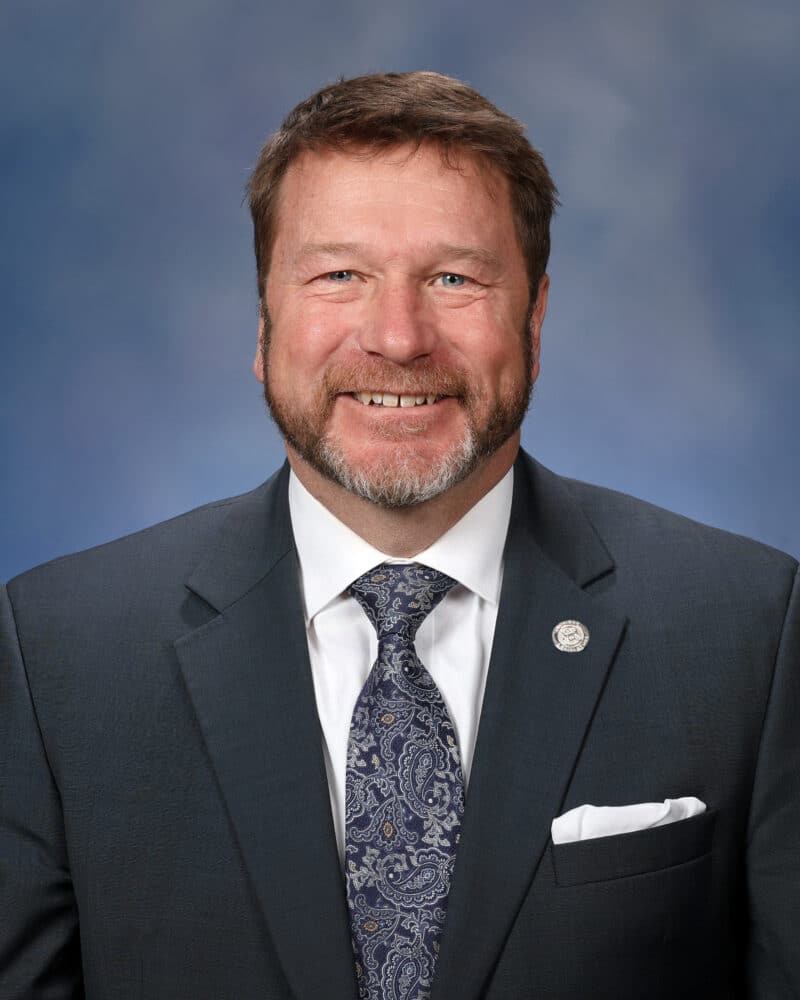
Rep. Matt Longjohn
Sponsored bills
Maddy summaryHouse Resolution 114 declares May 22, 2025, as Stop the Bleed Day in the state of Michigan. This resolution aims to raise awareness about the "Stop the Bleed" campaign, encouraging Michigan citizens to learn bleeding control measures and promoting the equipping of public places with bleeding control kits.
Maddy summaryHouse Resolution 110 declares May 21, 2025, as Cherry Industry Day in the state of Michigan. This resolution commemorates the significance of Michigan's cherry industry, which is the nation's leading producer of tart cherries, and recognizes its economic and cultural contributions to the state.
Maddy summaryHouse Resolution 108 declares May 18-24, 2025, as Emergency Medical Services Week in the state of Michigan. This resolution encourages communities throughout Michigan to observe the week with appropriate programs and activities, recognizing the vital public service provided by EMS teams.
Maddy summaryHouse Resolution 111 is a commemorative resolution that declares May 2025 as Asian Pacific American Heritage Month in the state of Michigan. It encourages all citizens to celebrate the contributions of Asian Pacific Americans to the state and the country.
Maddy summaryHouse Resolution 109 declares May 19-23, 2025, as Affordable Housing Week in the state of Michigan. This resolution aims to raise public awareness about the importance of safe, healthy, and affordable housing for all residents.
Maddy summaryHB 4038 amends Michigan's Insurance Provider Assessment Act to redirect funds collected from insurance companies. It specifies that money must be used for: (1) paying Medicaid managed care organizations up to $14 million annually for capitation rates; (2) offsetting lost revenue from health insurance claims assessments ($315 million for 2018-19, $240 million for 2019-20); and (3) funding a health data utility with $6 million in 2026, increasing to $8 million annually starting in 2028 (adjusted for inflation via the Consumer Price Index). The bill ensures these funds remain in a dedicated account and do not lapse to the general fund. This directly affects Medicaid providers, the state treasury, and the health data utility managing public health information.
Maddy summaryHouse Bill 4498 proposes to amend Michigan's Public Health Code to allow the Department of Health or local government agencies to authorize and establish "needle and hypodermic syringe access programs." These programs aim to reduce the spread of communicable diseases by providing sterile needles and syringes, as well as other related items. Individuals participating in these authorized programs would be exempt from criminal penalties for possessing or distributing needles, syringes, drug paraphernalia, trace amounts of controlled substances in used equipment, or drug testing equipment. The bill amends sections 7401 and 7403 of the Public Health Code to incorporate these new exemptions.
Maddy summaryHB 4497 amends Michigan's Public Health Code to modify the legal definition of "drug paraphernalia." The bill establishes that "drug paraphernalia" does not include testing products used to determine if a controlled substance contains harmful chemicals, toxic substances, or hazardous compounds that could cause physical harm or death. This specifically includes items like fentanyl testing strips. This change affects individuals who possess or use such testing products, clarifying their legal status under the law.
Maddy summaryHouse Bill 4500 establishes a grant program for a research institution to conduct a pilot program in Michigan. This program aims to assess the levels of PFAS (per- and polyfluoroalkyl substances) in the blood of qualified participants and study their health effects. A dedicated PFAS pilot program fund will be created to cover grants, blood testing, and the development of educational materials. The Department of Health will oversee the program, select the research institution, and submit reports to the legislature on the program's findings and recommendations.