

Maddy summaryHB 4590 adds Part 9 to Michigan's Clean and Renewable Energy Act, requiring the Michigan Public Service Commission (MPSC) to create rules for "Locally Distributed Shared Solar Facilities" (LDSS). This bill directly affects community solar projects and subscribers, mandating that LDSS facilities must use solar panels not made in China, North Korea, or Iran, have at least three subscribers, limit any single subscriber to 40% of output, and meet specific size caps (5 MW or 20 MW). Key provisions include requiring facilities to provide bill credits proportional to each subscriber's contribution and ensuring 60% of capacity is subscribed by small users (40 kW or less). The MPSC must establish these rules to govern community solar programs under this new framework.
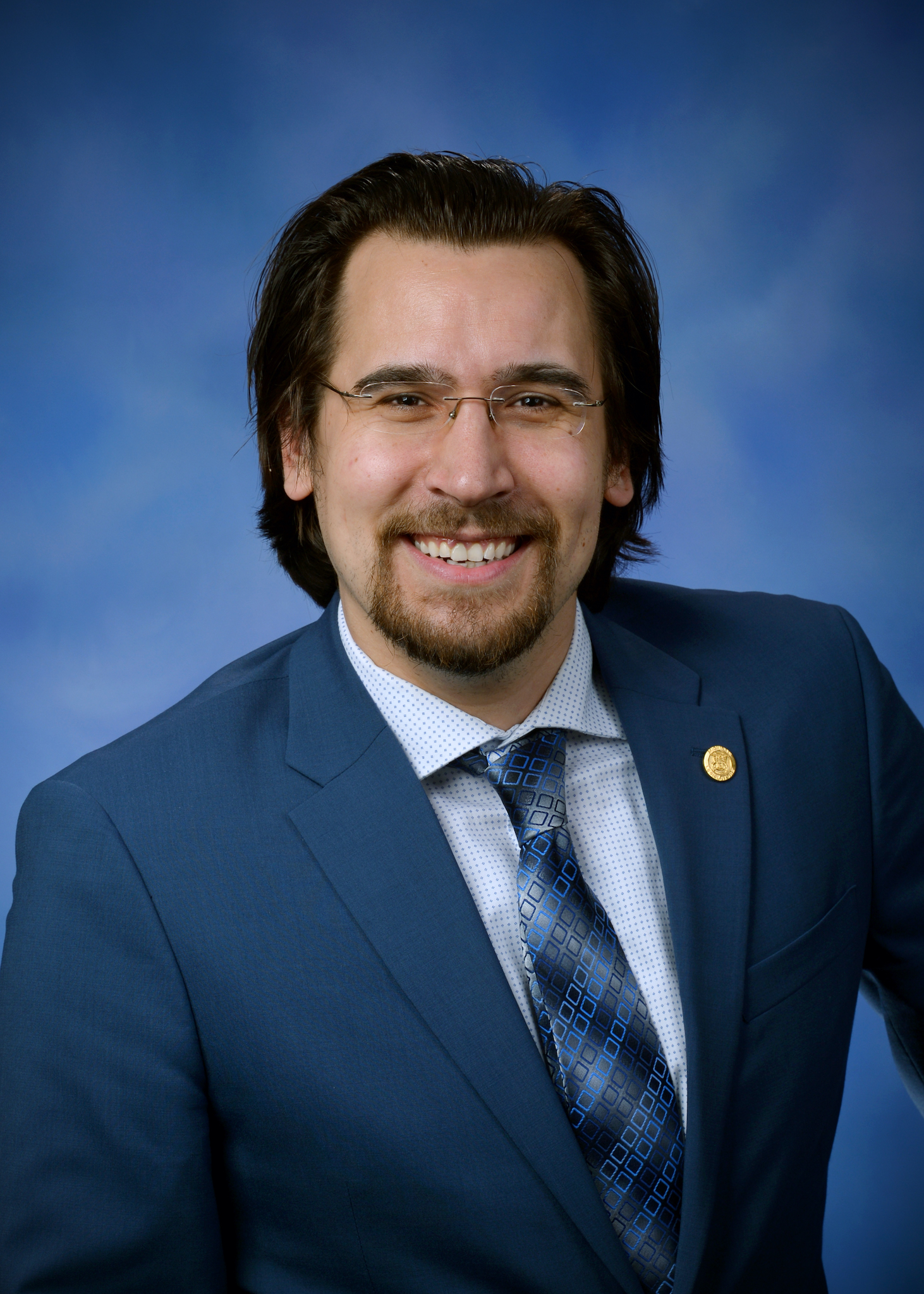
Rep. Brad Paquette
Sponsored bills
Maddy summaryHB 4522 modifies Michigan's vehicle code to require heavy trucks (over 10,000 pounds gross weight) to drive in any lane on freeways with three or more lanes for travel in the same direction, rather than restricting them to the rightmost lanes. This directly affects commercial truck drivers and fleet operators on Michigan freeways. The law specifies exceptions allowing trucks to use the right lane only for left turns, safety reasons, or construction-related lane closures. It also prohibits local governments from creating conflicting lane-use ordinances for these situations.
Maddy summaryHB 4970 establishes a letter grading system (A-F) for all Michigan public schools starting in the 2026-2027 school year. It requires the state to assign grades based on five specific metrics: student proficiency in math and English language arts, student growth in those subjects, progress for English language learners, high school graduation rates, and how schools compare to others serving similar student populations. The grades will be updated annually using existing state assessments and growth models, without changing current testing requirements. This policy directly affects every public school in Michigan by making annual performance data publicly available through standardized letter grades.
Maddy summaryHB 4664 prohibits blocking state highways during assemblies of individuals, amending Michigan's existing traffic law (MCL 257.676b). It directly affects protesters or assembly participants who obstruct highway traffic, making such obstruction a misdemeanor offense. The key provision adds a specific penalty for blocking highways while engaging in group assemblies, moving beyond general traffic violations. This law clarifies that highway obstruction during protests is a criminal act, not merely a traffic infraction.
Maddy summaryThis resolution declares September 19, 2025, as POW/MIA Recognition Day in Michigan. It commemorates Michigan's service members missing in action or held as prisoners of war since World War II, honoring their sacrifice and the state's commitment to finding and repatriating them. The resolution does not create new laws or obligations but serves as a ceremonial observance.
Maddy summaryHB 4916 amends Michigan's licensure requirements for architects, professional engineers, and surveyors by updating the wording of Section 2004 in the Occupational Code. The bill clarifies existing standards without changing the core requirements: applicants must still provide proof of education, pass exams, demonstrate professional experience, and maintain good moral character. For example, architects must show completion of a professional degree and pass a licensing exam, while engineers and surveyors must document 8 years of experience (including up to 5 years of education) and pass relevant exams. This is a technical language update to the current law, not a policy change affecting the qualifications or process for these professions. The bill is pending in the Education and Workforce Committee after introduction on September 11, 2025.
Maddy summaryHB 4936 limits late fees charged by privately owned toll bridge operators for unpaid tolls in Michigan. It prohibits these operators from charging late fees exceeding five times the original toll amount. The law applies specifically to privately owned toll bridges and excludes international crossings and publicly owned bridges. This change directly affects drivers who miss toll payments and privately operated bridge operators, setting a clear cap on additional charges.
Maddy summaryHB 4846 creates a new, faster process for property owners to remove squatters (unlawful occupants) from residential properties without a court hearing. Owners or their agents must submit a verified complaint to the sheriff detailing that the occupant is not a tenant, family member, or owner and has been asked to leave. The sheriff then serves an immediate notice to vacate, removes occupants (possibly arresting them for trespass), and allows owners to change locks with sheriff assistance (at owner cost). Wrongfully removed occupants can sue for triple the fair market rent of the dwelling, plus attorney fees, with courts prioritizing these cases. This procedure does not replace standard eviction processes for lease violations.
Maddy summaryThis bill would allow pharmacists to sell ivermectin without a prescription in oral, tablet, or topical forms. Pharmacists and retail pharmacies would be directly affected, as they could make the drug available over-the-counter under specific conditions. Key requirements include that the drug must be manufactured under good manufacturing practices and clearly labeled with dosage instructions, contraindications, and safety information. The bill amends Michigan’s Public Health Code to create these provisions (sections 17771 and 17771a).
Maddy summaryThis resolution (HR 165) symbolically declares September 2025 as Fetal Alcohol Spectrum Disorders (FASD) Awareness Month and September 9, 2025, as FASD Awareness Day in Michigan. It does not create new laws or allocate funding but asks state agencies - including the Department of Health and Human Services, Education, and the FASD Task Force - to recognize these observances. The resolution highlights FASD as a preventable condition caused by prenatal alcohol exposure, affecting development and requiring coordinated support. It aims to raise public awareness about FASD, emphasizing that no amount of alcohol during pregnancy is safe. The resolution was introduced and adopted by the Michigan House on September 9, 2025.