

Maddy summaryThis bill modifies the rules governing the state university system to require regents to follow local zoning laws when purchasing land acquired on or after January 1, 2027. It also maintains a specific provision ensuring that at least one professor of homeopathy remains in the department of medicine. The legislation does not take effect until a separate constitutional amendment is approved, linking its implementation to a broader change in the state constitution.
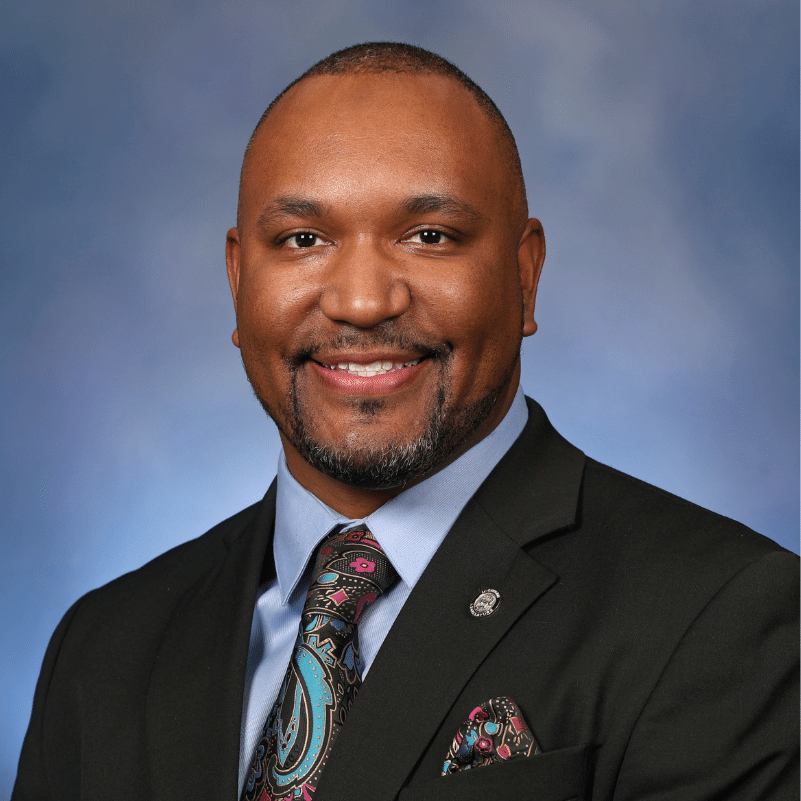
Rep. Jimmie Wilson
Sponsored bills
Maddy summaryThis bill proposes a change to the state constitution to require the University of Michigan to follow local zoning laws and ordinances for any land it acquires on or after January 1, 2027. Currently, the university operates with significant autonomy over its property, but this amendment would shift that authority to local governments for future land purchases. The rule applies specifically to the Regents of the University of Michigan and does not affect other state universities like Michigan State or Wayne State. If passed by voters, the change would ensure that new university campuses align with the planning rules of the cities or counties where they are built.
Maddy summaryHB 5120 eliminates fees for serving documents in personal protection order (PPO) cases. It amends Michigan's civil procedure law to prohibit charging fees for serving process under the Extreme Risk Protection Order Act or for any order issued in a PPO case, including petitions, orders, and related documents. This directly affects PPO petitioners (who no longer pay service fees) and process servers (who cannot charge for these specific services). The bill also clarifies that law enforcement may charge a $50 flat fee from a dedicated fund for multiple PPO-related documents served at once, but not per document. The change aims to remove financial barriers for individuals seeking protection orders.
Maddy summaryHB 5121 eliminates the cost for serving personal protection orders (PPOs) in Michigan. It directly affects individuals seeking PPOs to protect against harassment, stalking, or sexual assault by removing the requirement that petitioners pay for service of the order on the respondent. The bill amends Michigan’s court procedures to eliminate this fee, making it easier for petitioners - especially those with limited resources - to obtain and enforce PPOs without upfront costs. This change applies to all PPOs filed under the specified sections of Michigan law, streamlining the process for victims.
Maddy summaryThis bill would amend Michigan's Child Custody Act to establish a presumption that equal or approximately equal parenting time with both parents is in a child's best interest. It requires courts to inform parents about joint custody options and the presumption of equal time during custody disputes, and specifies that "joint custody" means either shared decision-making for important child welfare matters or equal physical time with each parent. The bill also clarifies that joint custody does not affect child support obligations, which remain based on each parent's resources and the child's needs. This applies directly to parents involved in custody cases and judges handling such cases under Michigan law.
Maddy summaryThis bill establishes a new Office of American Freedmen Affairs within the Michigan Department of Civil Rights to support descendants of individuals emancipated from slavery. The office would be led by a five-year director appointed by the governor and tasked with researching disparities, advising state leaders on policies, and improving access to resources for this community. Key duties include developing economic opportunities, assisting with genealogy and historical research, and submitting annual reports on the social and economic conditions of American Freedmen in the state.
Maddy summaryThis bill prohibits the sale and use of herbicides containing paraquat dichloride in Michigan, with sales banned starting December 1, 2027, and use banned by December 1, 2028. To help farmers transition away from these products, the legislation creates a state fund that will offer grants to cover the costs of switching to alternative herbicides and equipment. The bill also establishes a buy-back program to safely dispose of existing paraquat-containing products and sets a civil fine of up to $10,000 for violations of the new restrictions.
Maddy summaryThis bill creates the American Freedmen reparations commission within the Michigan Department of Treasury to study and propose reparations for individuals with ancestors who were enslaved and denied rights due to the Dred Scott decision. The commission will consist of nine members appointed by the governor, legislative leaders, and grassroots organizations, tasked with gathering historical evidence of slavery and discrimination in the state. Its primary duties include analyzing the lasting effects of slavery, recommending data collection methods to track disparities, and submitting a report with findings and recommendations to the legislature within 18 months. The legislation defines reparations broadly to include monetary payments, programs to close the racial wealth gap, and the creation of educational institutions similar to land-grant colleges.
Maddy summaryThis Michigan bill requires state agencies and local governments to collect specific demographic data from individuals they already survey. Starting in 2027, these entities must break down responses for Black, African, and Caribbean populations into three categories: descendants of enslaved Americans, those without enslaved ancestors, and those with unknown or unreported status. The law defines these groups based on ancestry and direct immigration from Africa or the Caribbean, excluding anyone with a history of U.S. enslavement from the African and Caribbean labels. By mandating these subcategories, the legislation aims to provide more granular data on racial heritage within government records.
Maddy summaryHB 5984 amends Michigan's State School Aid Act to clarify how student attendance and membership are calculated for funding purposes, particularly for special education and cyber schools. The bill defines specific rules for counting students in 'center programs' for special needs pupils and establishes detailed participation requirements for cyber school students, such as logging into lessons or engaging in virtual activities. Additionally, it updates the definition of membership to ensure accurate funding distribution based on actual student enrollment and attendance across various district types.